

ICYMI: 5 Stories From Last Week!
We featured a lot of great, original content this past week. Below are five highlights of columns, and I threw in a video of interest (if you care about your 2A rights).

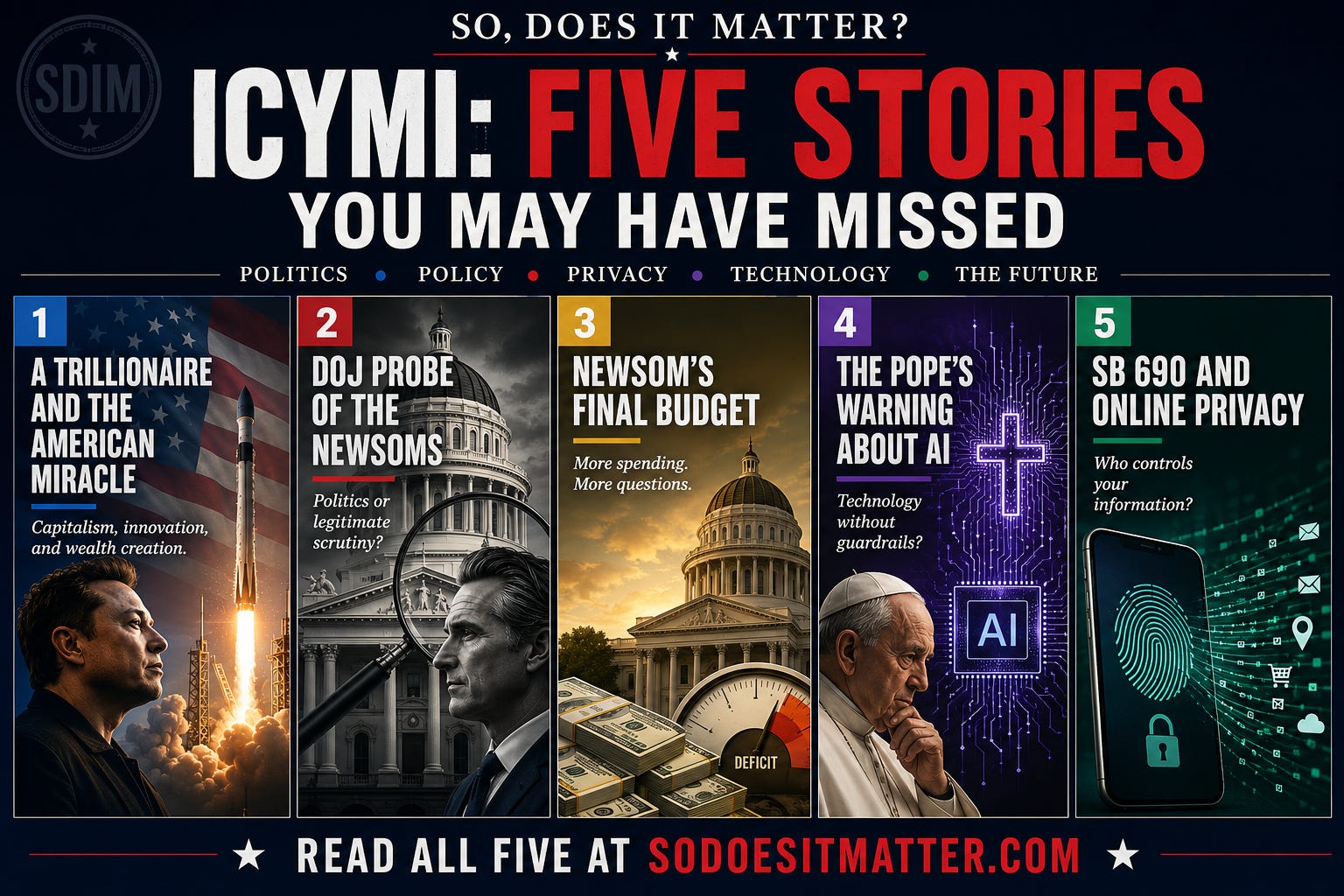
This Sunday ICYMI edition is always free for all subscribers and visitors to this Substack page! Thanks for being a part of this look at CA politics!
THIS IS A GREAT E-MAIL TO FORWARD TO PEOPLE YOU THINK MIGHT ENJOY OUR CONTENT!
Most of the last two weeks I was off for family Summer Vacation in Maui. But I have returned. Even on vacation, I made sure we had some daily content for our loyal subscribers! The five pieces from this week are below! Starting tomorrow, we’ll be back on our normal pace of things!
— Jon
BELOW ARE FIVE STORIES FROM THIS WEEK THAT YOU MAY HAVE MISSED!

Gavin Newsom Says DOJ Probe Is Political — But Take A Closer Look

2 1 A Trillionaire, And The American Miracle
Gavin Newsom’s Final Budget: More Spending, More Taxes, More Government

REMINDER, WE ARE ON A VACATION SCHEDULE THIS WEEK.
The Pope’s Warning About AI Deserves To Be Taken Seriously By Everyone

REMINDER, WE ARE ON A VACATION SCHEDULE THIS WEEK.
SB 690 Would Still Weaken Online Privacy Rights Before California Has Real Consumer Consent

REMINDER: WE ARE ON A VACATION SCHEDULE THIS WEEK.
One Interesting Video
A MAJOR CROSSROAD FOR THE SECOND AMENDMENT IS HERE!
For months, Second Amendment advocates have been waiting for the U.S. Supreme Court to act on five major firearms cases that could shape the future of gun rights in America. Each Monday has brought another orders list and another disappointment. Now, with the Court’s final scheduled orders list of the term arriving Monday morning, the stakes could not be be higher. William Kirk of Washington Gun Law explains the possible outcomes, what they would mean for gun owners, and why this could be a pivotal moment for the Second Amendment.
On This Date in 1788…
WITH A VOTE OF THE NEW HAMPSHIRE LEGISLATURE THE UNITED STATES CONSTITUTION BECAME OFFICIAL
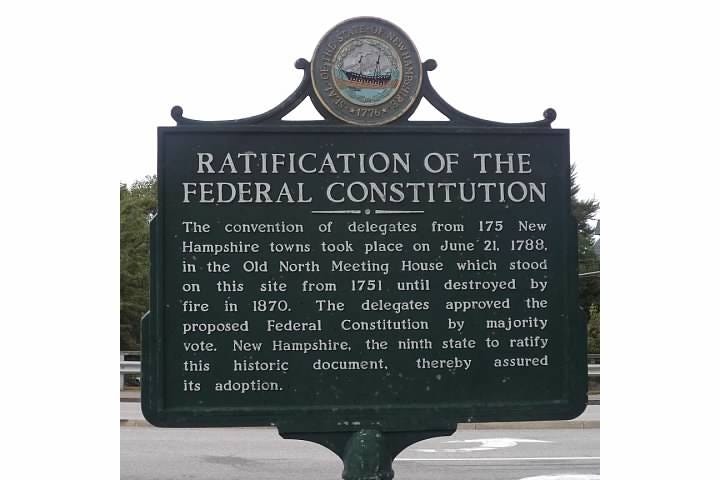
On June 21, 1788, New Hampshire became the ninth state to ratify the United States Constitution, the minimum number required for the Constitution to take effect under Article VII.
The ratification marked a decisive turning point in American history. The weak government created by the Articles of Confederation would soon give way to the stronger federal system envisioned by the Framers. While four states still had not ratified the Constitution, New Hampshire’s vote ensured that the new government would move forward.
To understand the significance of this moment, it helps to distinguish between America’s two founding documents. The United States Declaration of Independence, adopted by the Continental Congress on July 4, 1776, explained why America existed. It set forth the principles that justified independence: that all men are created equal, that they possess unalienable rights, and that governments derive their just powers from the consent of the governed.
But the Declaration did not create a functioning government. It was a statement of ideals and purpose.
The Constitution answered a different question: How would this new nation govern itself? It established three branches of government, divided power between the states and the federal government, created checks and balances to prevent abuses of authority, and provided a framework for elections, legislation, and the peaceful transfer of power.
In many ways, the Declaration provided America’s philosophy, while the Constitution provided its operating manual. Together, they remain among the most influential political documents ever written, with one explaining the nation’s purpose and the other creating the system designed to preserve it.
The Constitution remains the oldest written national constitution still in force today and continues to serve as the foundation of American self-government more than two centuries later.
By the way, it was just a few years later than the Bill of Rights, containing the first ten amendments to the Constitution was enacted — bolstering this foundational documents by endowing the people with rights upon which the government could not infringe.
Thank you for keeping us informed and aware of what is happening in California. Just trying to keep up is a full time job itself and most people can't keep up on it all. THAT is exactly what the bad guys are counting on to take advantage of the average John Q Public.