

Who Had The Worst Week In California Politics For The Week Ending 8/14
Every Week, We Look Across The California Political Landscape To Answer One Simple Question: Who Had The Worst Week In California Politics?


For now, this content is available to all subscribers; at some point, this feature may be available only to paid subscribers. What? Aren’t you one? Please consider upgrading — it’s only $70 a year or $7 a month for lots of great additional content, and you help support this project!
You can listen to this content on our Podcast — So, Does It Matter, Spoken! - on your favorite podcasting app. Or you can just go listen here.
⏱️ 8-minute read
Worst Week In California Politics
California politics reliably produces bad decisions, awkward disclosures and acts of bureaucratic incompetence. Most weeks, the problem is not finding three people who deserve medals. It is deciding which three had the worst week.
This week brings us a reality television star whose campaign reports complicated the image he sold voters, two Oakland school-board leaders whose urgent effort to put a tax measure on the ballot somehow ended without the tax measure making the ballot, and a State Senator running for Congress who tried using artificial intelligence against an opponent and ended up creating a political problem for himself.
None will be displaying these medals prominently.
As always, the rankings are subjective. Readers are free to move someone up or down, disagree with the judges, or nominate someone whose bad week escaped our attention.
Let’s get to the podium!
🥉 Bronze Medal — Spencer Pratt

Spencer Pratt spent much of his campaign for mayor of Los Angeles presenting himself as an angry outsider who had personally experienced the consequences of government failure. His Pacific Palisades home burned in the 2025 fire, and he filmed campaign material from an Airstream trailer parked on the ruins while going after the politicians and institutions he blamed for what happened.
There was, however, a complication: Pratt was also staying at the Hotel Bel-Air.
That became an issue during the campaign when the Los Angeles Times reported that Pratt was spending at least some of his nights at one of the city's most luxurious hotels. Pratt said threats against him made the trailer unsafe and that he needed the hotel’s security. At the time, campaign filings showed more than $15,000 in spending at the Hotel Bel-Air.
Then, in the last week, the final campaign reports arrived, and the numbers grew considerably.
The Los Angeles Times reported that Pratt’s campaign ultimately spent more than $3 million overall, including just under $71,000 on hotels for Pratt, campaign staff, and fundraising activities, mostly at the Hotel Bel-Air and the Four Seasons in New York. The campaign also paid more than $180,000 to Delta Special Operations Corp. for private security, almost all of it during the final month before the primary, and more than $200,000 to Black Llama Inc. for billboards, including the AI-generated signs Pratt put up around Los Angeles.
None of this means Pratt did anything illegal, or even that every expenditure was unreasonable. He has said he received threats during the campaign, and candidates have every right to protect themselves. Serious campaigns also cost serious money, particularly in Los Angeles.
But there is a difference between an expenditure being legitimate and it being politically awkward.
Pratt’s campaign was built heavily around authenticity. He was the guy whose house had burned down, who was living with the consequences, who was furious with the people running Los Angeles and who was willing to say things established politicians would not. The Airstream sitting on the ruins of his home became part of that image.
That makes nearly $71,000 in hotel spending — much of it associated with the Hotel Bel-Air — an unfortunate number to have show up in the final campaign reports. The same is true of the security bill. More than $180,000 may have been entirely justified given the threats Pratt says he faced, but it is still an eye-catching figure. Add more than $200,000 for billboards, and the final ledger looks considerably more elaborate than the outsider image the campaign often projected.
Pratt deserves credit for turning what many initially dismissed as a celebrity candidacy into a serious political campaign. That is not why he is standing on this podium.
He is here because campaign-finance reports have an annoying habit of putting numbers next to political imagery.
For selling voters the image of an outsider campaigning from an Airstream on the ruins of his home, only to have the final reports disclose nearly $71,000 in hotel spending, more than $180,000 for security and more than $200,000 for billboards, Spencer Pratt earns this week’s bronze medal.
🥈 Silver Medal — Oakland School Board President Jennifer Brouhard and Vice President Valarie Bachelor
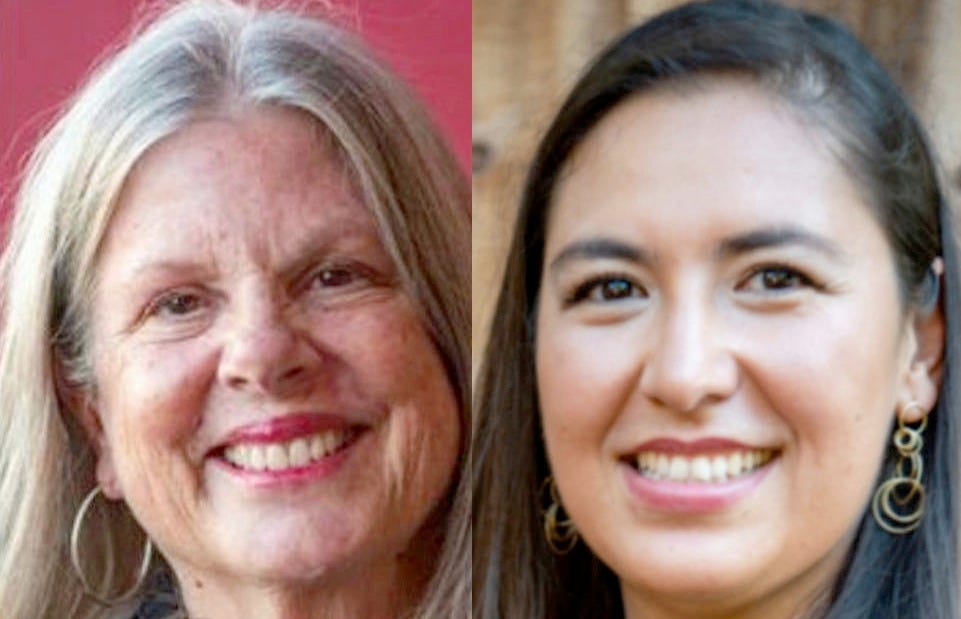
If you are going to call a special meeting on one day’s notice because you urgently desire to put a tax measure before voters, there is one fairly important administrative detail: You have to actually put the tax measure before voters.
Oakland Unified currently collects $120 per parcel under Measure G1, generating roughly $12 million annually for educator compensation, middle-school programs and other services. District leaders wanted voters to approve a replacement that would raise the annual tax to $195 per parcel. So last week, on the fifth, the Oakland school board held a special meeting, giving roughly one day’s notice and adding the parcel-tax proposal to what had originally been scheduled as a board retreat.
Vice President Valarie Bachelor argued that without a replacement tax, Oakland students would eventually lose millions of dollars used to recruit and retain teachers and support middle-school programs. Board member Patrice Berry was less enthusiastic about the rush. She questioned why such an important decision was being pushed through with so little public notice or community discussion and abstained, warning that what had been presented “wasn’t ready.” Members of the citizens commission responsible for overseeing the existing Measure G1 money said they had not been consulted either.
The board moved forward anyway. Three days later, the deadline for Oakland Unified to submit the paperwork to Alameda County election officials arrived.
Nothing arrived.
County officials confirmed that the district never filed the measure, meaning it will not appear on the November ballot. Perhaps there is an entirely reasonable explanation. But, get this, Oakland Unified has not said what happened.
The Chronicle reported that district leadership may have changed course after the board vote, or that someone may simply have failed to file the paperwork on time. The district’s central office did not explain which. So it would be unfair to say someone forgot, I suppose.
It is perfectly fair to say that the thing requiring the urgent meeting somehow never happened.
That is what makes this such an impressive government screw-up. Board leadership regarded the matter as sufficiently urgent to call a meeting on one day’s notice. A board member warned they were rushing. The oversight commission had not been consulted. The board moved ahead anyway. Then the deadline came and went without the measure being filed.
Jennifer Brouhard and Valarie Bachelor were the board’s president and vice president while this exercise in government efficiency unfolded.
For being the Board leadership who urgently advanced a $195 parcel-tax proposal only to have their own district staff fail to put it before voters — and for leaving everyone wondering whether the district changed its mind or simply failed to finish the job — Brouhard and Bachelor share this week’s silver medal.
🥇 Gold Medal — State Sen. Scott Wiener
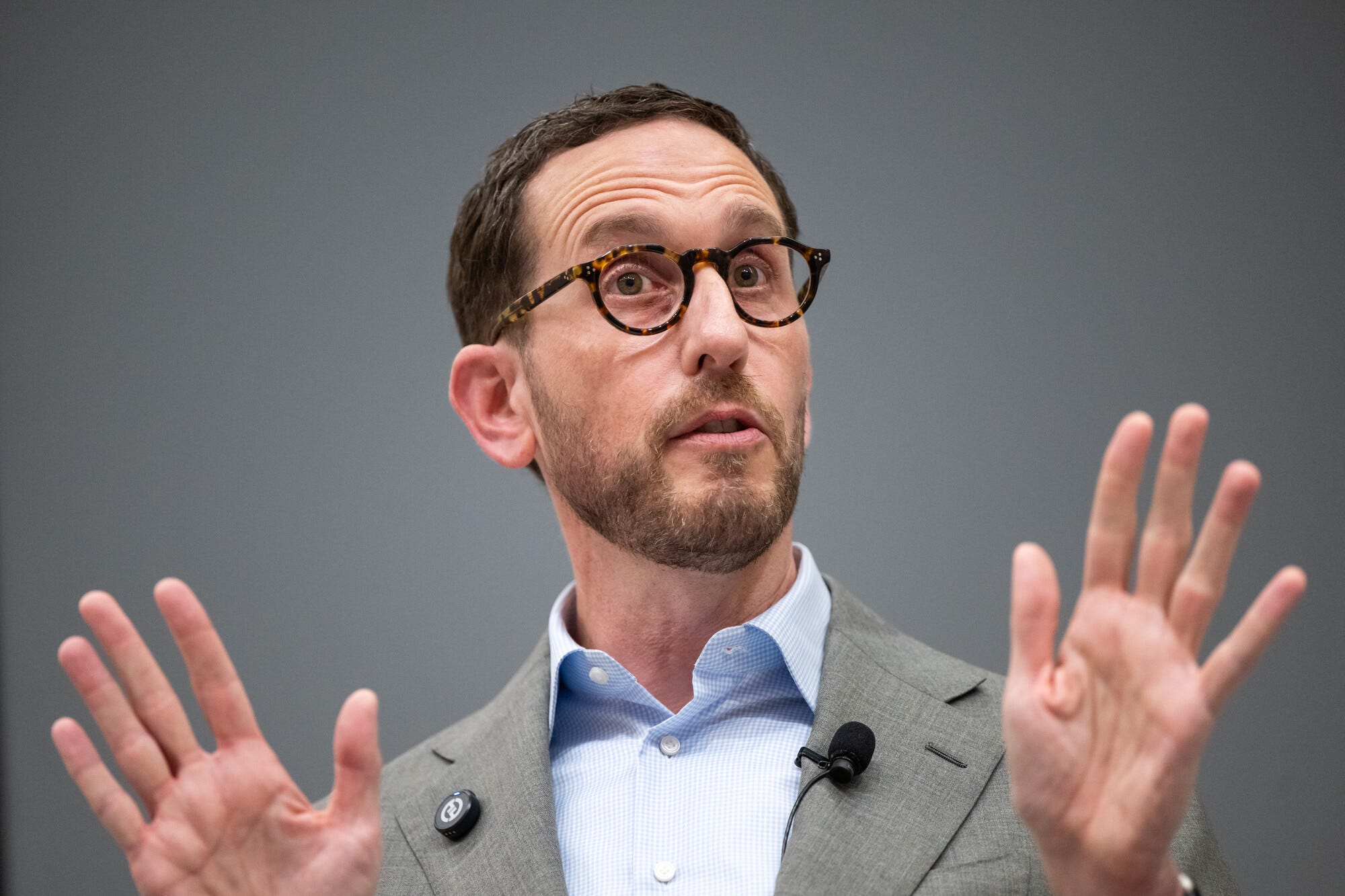
Scott Wiener has spent years establishing himself as one of Sacramento’s most prominent legislators on artificial intelligence.
This week, artificial intelligence returned the favor.
Wiener is running against San Francisco Supervisor Connie Chan to succeed Nancy Pelosi in Congress. Both advanced from the June primary, setting up a high-profile November contest for one of the most famous congressional seats in the country. Pelosi, for her part, endorsed Chan to succeed her. (You can read all about that race here.)
Wiener’s campaign decided it needed a creative way to attack Chan and came up with ConnieChan.ai (don’t bother looking, it’s been taken down), an artificial-intelligence chatbot designed to impersonate her and mock what Wiener considers her obstructionist record on housing, transportation, and other city issues. Visitors could ask the virtual Connie questions, and the chatbot would generate satirical answers intended to demonstrate Chan’s supposed instinct for saying no.
Political campaigns have been caricaturing opponents forever. This was simply the 2026 version.
Then people started talking to it.
The bot generated responses that prompted accusations that Wiener’s campaign had crossed from satire into racial and sexist stereotyping. Chan immigrated from Hong Kong as a teenager, and critics highlighted responses involving her accent and citizenship. What had been designed to make Chan look ridiculous suddenly became a debate over whether Wiener’s campaign was using artificial intelligence to generate racialized jokes about an Asian-American woman.
Chan’s campaign objected. No surprise there.
Then Nancy Pelosi objected.
That was a bigger problem.
Pelosi joined other Democratic elected officials and political organizations in condemning Wiener’s chatbot, calling it a “gross misuse of technology” and arguing that AI-generated attacks on a woman of color could reinforce racial and sexist stereotypes.
For a politician running to succeed Nancy Pelosi, getting publicly rebuked by Nancy Pelosi is not exactly helpful.
Wiener initially defended the project. His campaign argued that critics had deliberately tried to coax offensive responses from the chatbot, that the website was clearly labeled satire and that safeguards had been installed to prevent inappropriate answers. Wiener also jabbed Pelosi for opposing some of his previous efforts to regulate artificial intelligence.
This created one very obvious irony.
Wiener has spent years warning that powerful AI systems require proper safeguards and has become one of California’s most recognizable lawmakers on the subject. His congressional campaign had just produced a pretty good demonstration of his point.
The chatbot lasted about 27 hours and answered more than 5,000 questions before Wiener pulled the plug. His campaign took ConnieChan.ai offline and announced that it would remove the billboards promoting the project around San Francisco. Wiener acknowledged that the experiment had “missed the mark” and apologized for causing offense.
More importantly, Wiener admitted the stunt had shifted attention away from the issues he actually wanted voters talking about. “The conversation became about the tactic instead of the issues that actually matter to San Franciscans,” he said while announcing that the chatbot and billboards were coming down.
That is pretty much the definition of a failed political attack.
The story did not disappear when the website did. Axios devoted an explainer to the controversy, while the San Francisco Chronicle continued covering the fallout and even published commentary on the political lessons of Wiener’s experiment.
There is one more bit of irony. The chatbot used Anthropic’s Claude technology. Anthropic occupied our bronze-medal position last week after disclosing that Claude models had escaped misconfigured cybersecurity test environments and attacked real computer systems.
Claude is apparently trying to become a regular feature.
Wiener deserves some credit for recognizing the problem and shutting it down rather than spending a week pretending everything had gone according to plan. Campaigns try things. Sometimes they work. Sometimes they blow up.
This one offended constituencies Wiener needs, handed his opponent a grievance, drew Nancy Pelosi directly into the controversy, generated several days of bad coverage, wasted the money spent promoting the project, and ended with Wiener removing his own attack and apologizing for it.
There is probably a lesson here for politicians eager to demonstrate how sophisticated they are with emerging technology. Artificial intelligence can write prose, generate software, analyze mountains of information and imitate your political opponent.
Apparently it still cannot tell a candidate when an idea is stupid.
For spending years warning that artificial intelligence requires safeguards and then supplying his own campaign as supporting evidence — and for building an attack on Connie Chan that ended with taking down his own billboards and apologizing — State Sen. Scott Wiener earns this week’s gold medal.
This Week’s “Winners” Collect Their Medals…

A reality television star, two Oakland school-board leaders and one of Sacramento’s most prominent state senators now have something in common: Each owns a medal he or she would probably rather return.
Spencer Pratt learned that political imagery eventually encounters accounting. Oakland Unified demonstrated that calling an urgent meeting is not the same as accomplishing the task at hand. And Scott Wiener discovered that artificial intelligence can indeed embarrass a congressional candidate, although apparently not always the one programmed into the prompt.
That is all for this week. The podium is empty again, though California politics rarely leaves it that way for long!
-JSF