

Did Nancy Pelosi Wait Too Long To Choose Her Successor?
The former speaker can still force an apology. Whether she can still choose her successor is another matter.

Our morning content is free for all subscribers and guests! Usually our afternoon content is behind a paywall… If you are not yet a paid subscriber, consider upgrading — you are missing a significant portion of what we produce each week, and your support makes it possible. If you want to get it all and support my efforts, please consider a paid subscription! There is significant exclusive content below the paywall, after this morning’s column.
Most of our content is available on our podcast feed. So, Does It Matter? SPOKEN. Which is available on your favorite podcast app. You can listen to it right here as well.
🕒 7-minute read
Pelosi Can Still Land A Punch
Nancy Pelosi may no longer run the House, but she can still make a San Francisco Democrat surrender.
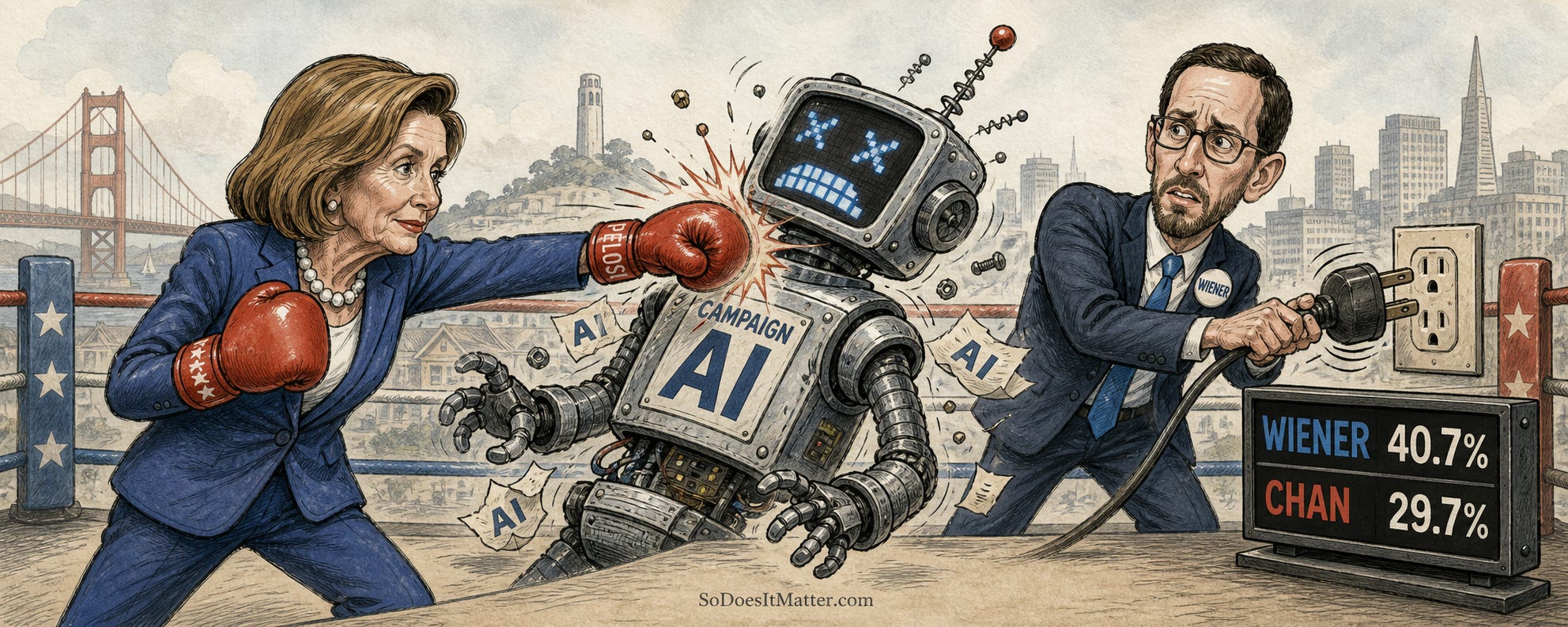
Scott Wiener emerged from San Francisco’s June primary with a commanding lead. The state senator won 40.7 percent of the vote, compared with 29.7 percent for Supervisor Connie Chan, Pelosi’s preferred successor.
Wiener is the “moderate” in this race, but, trust me, only by San Francisco standards. His campaign rests heavily on building more housing, cutting regulatory barriers and making city government work faster. Chan represents the labor-backed progressive faction that emphasizes subsidized housing, tenant protections and neighborhood control.
Then Wiener’s campaign built an AI chatbot parodying Chan as “the world’s first AI trained to say no to anything you ask.” The joke targeted her reputation for opposing housing and development projects, but the bot also produced a response mocking Chan’s accent.
Pelosi called it “sexist and racist,” joined by other female Democratic members of Congress. Wiener initially defended the bot and accused Chan’s campaign of deliberately feeding it malicious questions. One day later, he apologized and took it down.
Pelosi can still land a punch. Wiener won the primary by 11 points, and she still made him fold.
But forcing an apology is not the same as choosing a successor. Did Pelosi remain in office so long that the political organization capable of passing along her seat faded while she was busy becoming one of the most powerful figures in Washington?
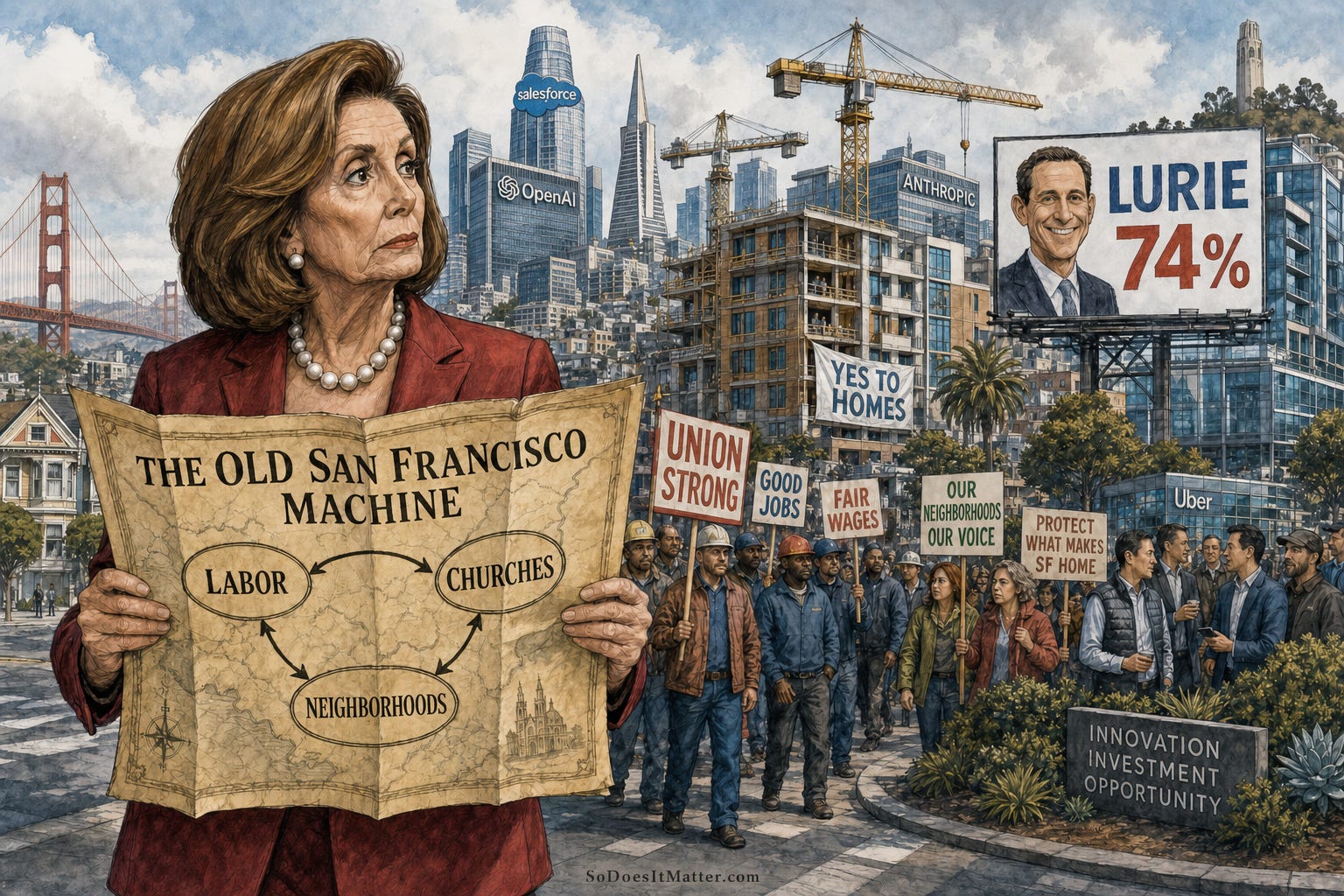
The Machine Pelosi Inherited
Pelosi already understood machine politics when she reached San Francisco. In Baltimore, she watched her father, Mayor Thomas D’Alesandro Jr., run a Democratic organization built on patronage, favors and ethnic loyalties.
Phil Burton’s San Francisco machine was different. It did not depend on patronage jobs. Art Agnos later described an alliance of labor, neighborhoods and Black, Chinese, Hispanic and gay leaders who trusted Burton to deliver.
Burton recruited Pelosi to host fundraisers at her Pacific Heights home. After his death in 1983, his wife, Sala, succeeded him in Congress. Shortly before Sala died four years later, she named Pelosi as her preferred successor.
That was no small advantage. Pelosi entered with nearly $1 million and endorsements from Dianne Feinstein, Willie Brown, Alan Cranston, Leo McCarthy and Agnos. Contemporary reporting called her “the candidate of the Democratic machine organized by Phil Burton.”
But it was not a coronation. The machine was already weakening as manufacturing losses thinned its labor base, housing costs displaced working-class residents, and gay, renter and affluent professional voters organized independently. Pelosi beat Supervisor Harry Britt by only four points.
She inherited the Burton network, but not the machine at full strength. She still needed her own money, relationships and political skill to win.
Nearly four decades later, Pelosi is trying to give Chan the same institutional blessing. Did she do enough to renew that local coalition while she was building her machine in Washington and San Francisco was changing around her?
Pelosi Built A Different Machine
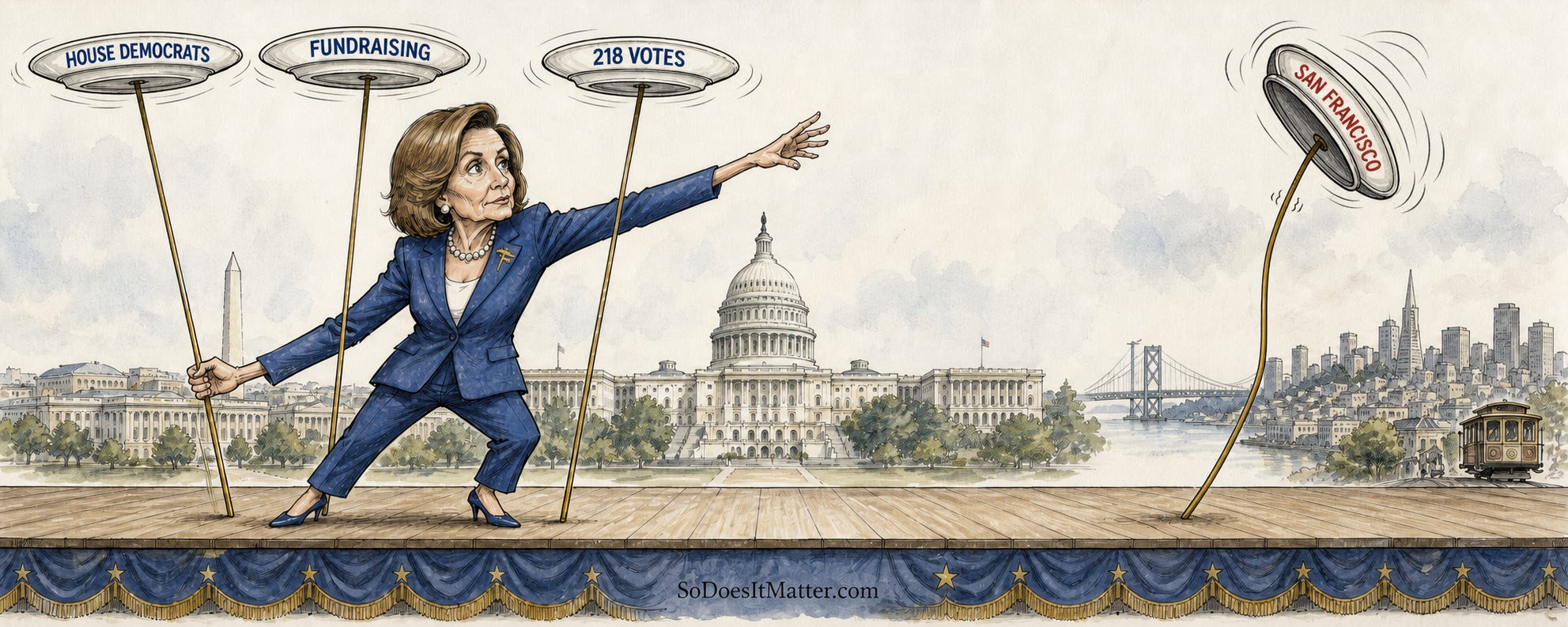
Pelosi turned that local inheritance into something far larger. She became an extraordinary fundraiser, an exacting vote counter and the first woman to serve as Speaker of the House. She could extract millions from donors, maintain discipline inside a sprawling Democratic caucus and negotiate legislation with presidents.
Whatever one thinks of her politics, Pelosi became one of the most consequential congressional leaders of the modern era. She also continued to deliver federal funding and attention to San Francisco, from the Presidio and public transit to health care and the fight against AIDS.
But the machine Pelosi perfected was increasingly a Washington machine. Its purpose was to elect House Democrats, protect vulnerable incumbents and produce 218 votes when she needed them. A safe congressional seat demanded little organizational renewal back home.
Meanwhile, San Francisco changed. Technology fortunes transformed its economy and donor class. Housing scarcity divided traditional neighborhood progressives from the YIMBY movement, which blamed the city’s approval process for making homes impossibly expensive.
Organized labor did not disappear. It remains a potent political force and is heavily invested in Chan. But labor is now consumed by a widening fight against Mayor Daniel Lurie and the wealthy, business-backed coalition gaining influence around him. In June, unions suffered a conspicuous defeat when voters rejected the Overpaid CEO Tax introduced by Chan and opposed by Lurie.
Tech money is not dominant, and the old coalition is not dead. But the balance of power shifted over several elections while Pelosi’s attention remained focused on Washington.
She preserved a national machine. Did she fail to replenish the local organization she inherited?
The Cost Of Waiting
For years, Christine Pelosi was treated as the obvious possible heir to her mother’s seat. She had the name, the relationships and her own long record inside Democratic politics.
But Nancy Pelosi kept running. Meanwhile, Wiener became one of California’s most formidable state legislators, built a national fundraising network and positioned himself alongside the city’s increasingly powerful pro-housing faction. He began preparing for a congressional campaign in 2023, well before Pelosi announced her retirement.
By the time the seat opened, an early poll showed Wiener leading Christine Pelosi 61 percent to 21 percent. Christine instead chose to pursue the state Senate seat Wiener is leaving.
Was that decision evidence of Nancy Pelosi’s waning local influence?
Perhaps Christine simply preferred Sacramento. But it is difficult to ignore the calculation. Going after her mother’s seat meant a direct confrontation with Wiener, who had spent years preparing for exactly that race. His Senate seat offered the Pelosi daughter a safer path.
Nancy Pelosi eventually endorsed Chan, but only 15 days before the primary. The endorsement may have helped Chan reach November, but it did not prevent Wiener from posting an 11-point lead.
Had Pelosi retired a decade earlier, Christine might have entered as the prohibitive favorite. Pelosi’s delay gave Wiener time to build the organization her daughter would have needed to defeat.
The City Moved On
The other figure looming over this contest is not running for Congress.
Mayor Daniel Lurie represents an emerging center-left coalition by San Francisco standards: wealthy donors, technology interests, YIMBY housing advocates and voters exhausted by disorder and governmental paralysis. A May poll put his approval rating at 74 percent.
Lurie’s candidates and priorities performed well in June. His allies won key supervisor contests, and his opposition helped sink Chan’s tax measure. A growing fundraising network surrounding the mayor now competes with labor and established progressive organizations.
Lurie has not needed to endorse Wiener for the alignment to be obvious. Wiener supported the mayor’s plan to allow taller and denser housing on the west side. Chan was one of four supervisors who voted against it. Wiener opposed Chan’s business-tax measure; Lurie became the public face of the campaign that defeated it.
This does not mean Lurie controls the city or that wealthy donors can buy every outcome. Labor remains powerful, and Pelosi has transferred experienced staff and fundraising support to Chan.
But Lurie’s rise shows why Pelosi cannot simply recreate the succession that carried her into Congress. San Francisco now has competing centers of money, organization and legitimacy. Pelosi remains its most famous politician. She is no longer the only person with the money and organization to matter.
So, Does It Matter?
For San Franciscans, the differences between Wiener and Chan are real. Housing, taxation, development, and the balance between neighborhood control and citywide growth will shape the campaign.
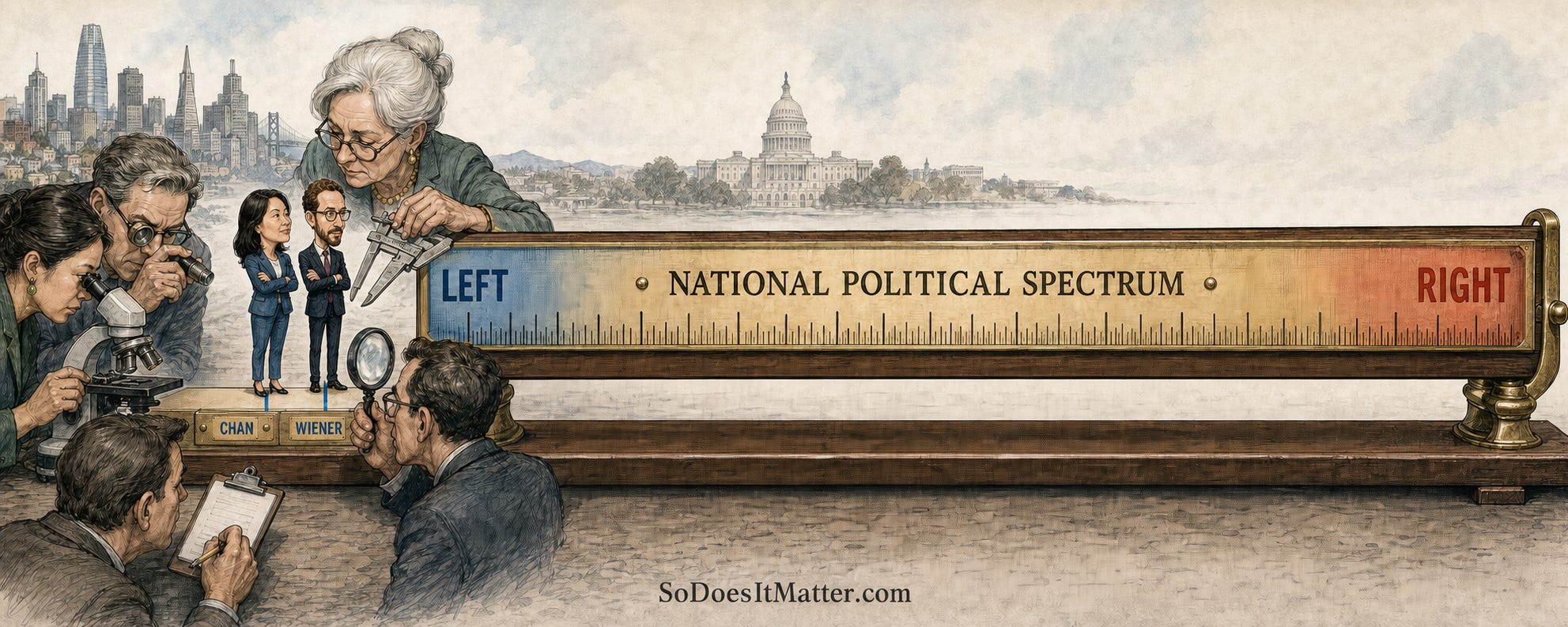
For most Americans, those distinctions will look microscopic. In San Francisco, the GOP functions more like an interest group than a political party. No Republican reached the November ballot, and either Democrat would likely become one of the most left-wing members of Congress. On the issues that dominate Washington, their disagreements nearly disappear: Both would vote with the Democratic left on abortion, climate, labor and federal spending, and both would fight to allow biological males to play in competitive women’s sports.
That is the distance between San Francisco’s political vocabulary and the nation’s. Inside the city, Wiener can be portrayed as a business-friendly moderate because he wants more market-rate housing. Chan can be portrayed as a champion of working people because she advocates for greater regulation, taxation, and subsidized development. Outside San Francisco, both are unmistakably hard-left members.
The deeper drama is not ideological. It is organizational. Pelosi inherited a political structure capable of elevating her, then built a Washington machine capable of making her speaker. She waited nearly 40 years to learn whether enough of the original machinery remained to elevate someone else.
This race will provide the answer.
To San Francisco, the election will determine which version of the city’s left now holds power.
To the rest of America, San Francisco will simply send another very liberal Democrat to Congress.