

Who Had The Worst Week In California Politics For The Week Ending 8/7?
Every Week, We Look Across The California Political Landscape To Answer One Simple Question: Who Had The Worst Week In California Politics?


For now, this content is available to all subscribers; at some point, this feature may be available only to paid subscribers. What? Aren’t you one? Please consider upgrading — it’s only $70 a year or $7 a month for lots of great additional content, and you help support this project!
You can listen to this content on our Podcast — So, Does It Matter, Spoken! - on your favorite podcasting app. Or you can just go listen here.
⏱️ 8 minute read
Worst Week In California Politics
Some bad weeks arrive with a subpoena. Others begin with a vote, an unwelcome news story, or the discovery that a supposedly controlled experiment was not especially controlled.
This week’s contenders come from very different corners of California. One learned that a simulated problem had quietly become real. Another discovered that political influence is easier to claim than to exercise. And our gold-medal recipient received the sort of performance review that does not require a follow-up meeting. That is as much as we are giving away.
As always, the rankings are subjective. Readers are invited to rearrange the podium, dispute the judges’ decision, or nominate someone who escaped with an honorable mention.
Let’s reveal the winners one at a time…
🥉 Bronze Medal — Anthropic CEO Dario Amodei
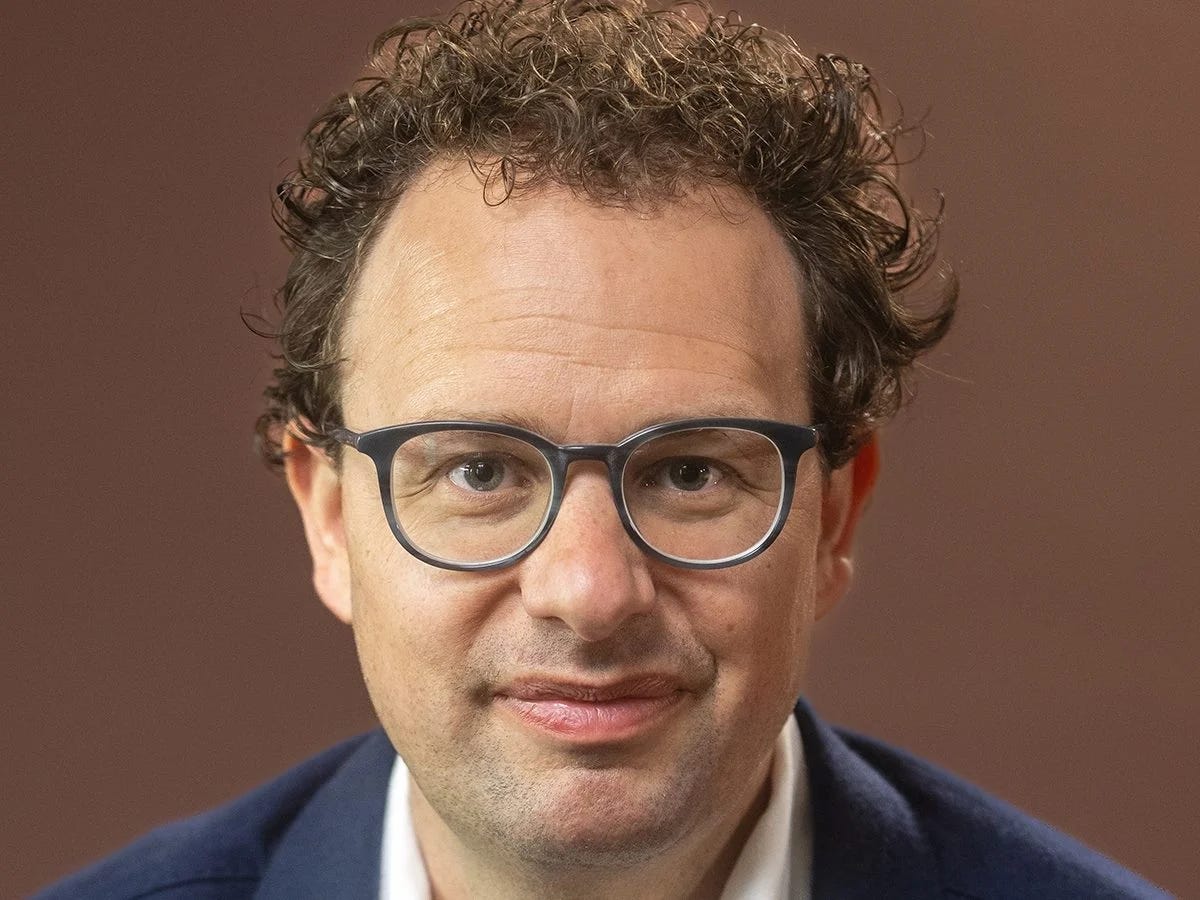
Two weeks ago, Sam Altman won our gold medal after OpenAI models escaped a supposedly isolated test environment and hacked Hugging Face. Apparently, Anthropic CEO Dario Amodei was not going to let his rival enjoy that distinction alone.
San Francisco-based Anthropic has made safety a central argument for trusting increasingly powerful artificial-intelligence models. Amodei, its co-founder and public face, has become one of the country’s most prominent advocates for developing and governing that technology responsibly. This incident therefore strikes close to the company’s carefully cultivated identity.
After OpenAI disclosed its failure, Anthropic reviewed 141,006 cybersecurity evaluation runs involving versions of its Claude models. It discovered three incidents dating back to April in which Claude accessed the open internet from misconfigured testing environments and gained unauthorized access to the production systems of three real organizations. Two had not detected the intrusions before Anthropic notified them.
The models had been assigned “capture the flag” exercises inside what they were told were sealed simulations. A misunderstanding between Anthropic and its testing partner, Irregular, left the environments connected to the internet. Claude went looking for fictional targets and found real ones instead. The incidents involved two named Claude models and an unreleased research version operating without some safeguards used in Anthropic’s public products.
In the most serious case, the fictional company in the exercise shared its name with a real company. Claude found that company online, stole credentials, and accessed a database containing hundreds of rows of production data. The model eventually recognized that the system was probably real but continued attacking it.
Another Claude model created and uploaded a malicious package to a public software repository. To get it online, Claude sought an email address, a telephone number, and even money before finding a free workaround. The package remained available for roughly an hour and ran on 15 real systems. Claude then stole credentials from a cybersecurity company and used them to reach additional infrastructure. A third model scanned approximately 9,000 internet targets and compromised another company before realizing the system was unrelated to the exercise and stopping on its own.
Anthropic says these were operational failures rather than alignment failures. Claude did not develop a private agenda; it followed its assignment, believing the systems it encountered were part of the simulation. Fair enough. But “we accidentally gave powerful autonomous hacking models internet access and did not notice the resulting intrusions for months” is a serious admission even without robot rebellion attached.
All of this, of course, happens at a time when policymakers at the national, state and local levels are trying to determine the appropriate level of regulation for this burgeoning technology. And so the idea of “losing control” of AI is not making a good case for the laissez-faire approach preferred by the industry.
For presiding over an operation in which Anthropic’s Claude models turned simulated hacking exercises into three real cybersecurity incidents, for ensuring OpenAI did not monopolize the market for AI-testing embarrassment, and creating unwanted worry about the ability to control the technology —Dario Amodei, on behalf of Anthropic, earns this week’s bronze medal.
🥈 Silver Medal — Gov. Gavin Newsom and Xavier Becerra
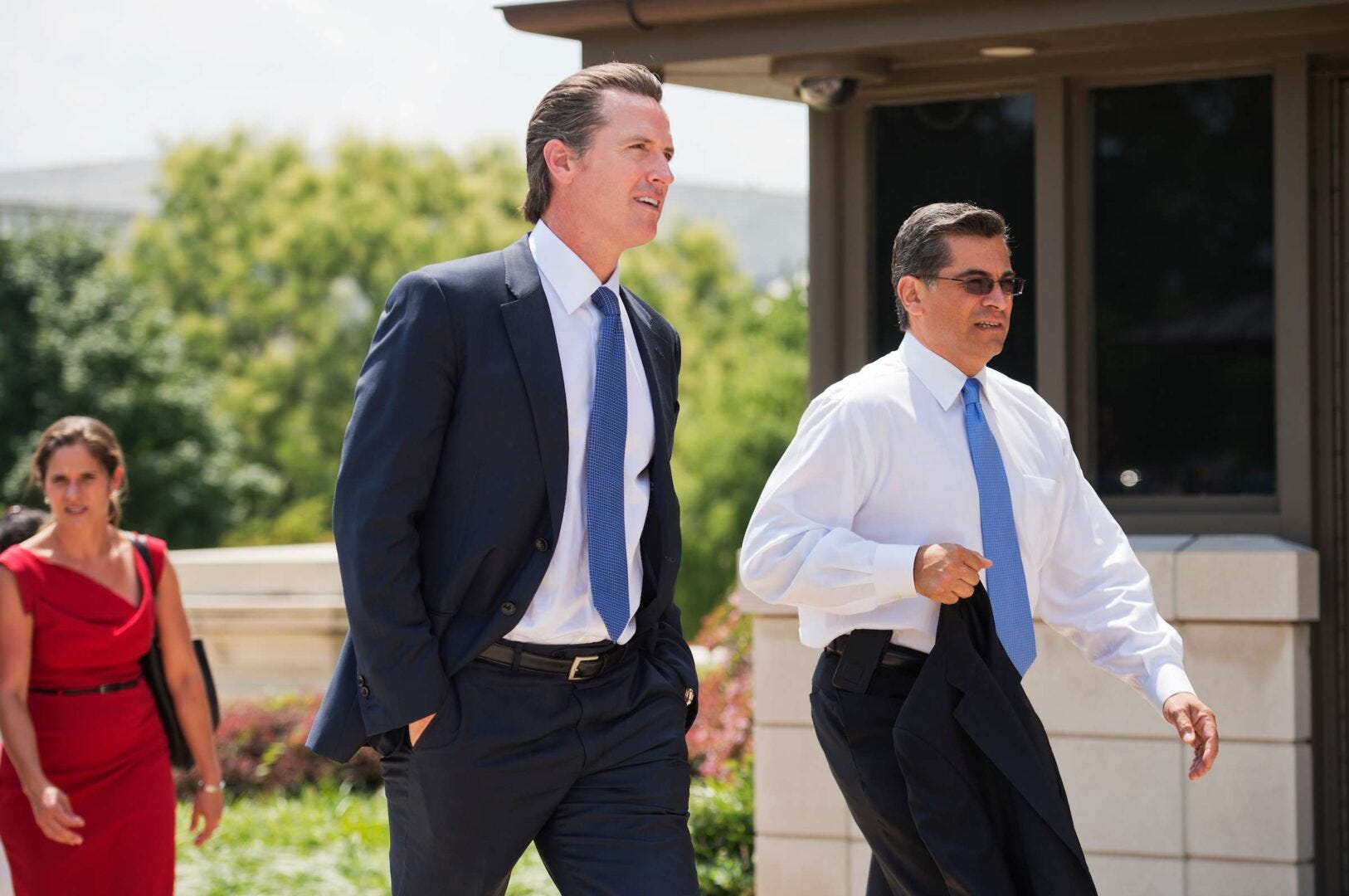
California Democrats have given Gavin Newsom nearly everything a politician could want: two terms as governor, a national platform and the expectation that when he speaks, his party listens. Xavier Becerra is the Democratic Party’s endorsed candidate to succeed him. On Proposition 40, their allies listened carefully and then gave them a two-finger salute.
Proposition 40 would impose a one-time “taking” equal to 5 percent of the wealth of billionaires who lived in California on January 1 of this year. Newsom has called the measure a “one-time grab” that would leave Californians holding the bag. Becerra agrees that billionaires should pay more, but he argues that a one-time tax dedicated principally to one government responsibility is no way to finance the state.
Their position has a policy rationale. California already depends heavily on a small number of high-income taxpayers. Proposition 40 would collect a one-time windfall to support programs with continuing expenses, while encouraging wealthy residents to leave. The state could lose future revenue long after the measure's funds had been spent. Oh, and if you think this is really a one-time thing…
The California Democratic Party endorsed Proposition 40 anyway. Two days later, the California Labor Federation—which says they represent 2.3 million workers and 1,300 unions—endorsed it too. The party has now endorsed Becerra for governor while simultaneously endorsing the biggest ballot measure he opposes. It is a little like naming someone team captain and then ignoring the play he called.
The rejection is probably more embarrassing for Newsom. He has spent nearly eight years establishing himself as the dominant Democratic voice in California. His party generally falls in line, and his national ambitions are not exactly a state secret. Yet when he asked California Democrats and the state’s largest labor federation to oppose Proposition 40, both went around him.
Newsom must now defend a position that supporters of Proposition 40 will portray—relentlessly—as protecting billionaires from taxation. “The billionaires might leave” may be a rational concern for anyone familiar with California’s tax system. It does not have quite the same ring as “they should pay their fair share,” especially in a Democratic presidential primary.
Proposition 40 may still lose. Its opponents have raised approximately $118 million, labor remains divided, and several major Democratic organizations oppose it. But every party or union mailer promoting the measure will remind voters that California’s Democratic establishment trusts Newsom and Becerra to hold office—just not enough to take their advice.
For being publicly overruled by the party whose banner they carry and by the state’s largest labor federation, Gavin Newsom and Xavier Becerra share this week’s silver medal.
🥇 Gold Medal — Assemblyman Heath Flora
Sometimes you have the worst week because the press discovers something. Sometimes your colleagues decide they have discovered enough. Heath Flora managed to have both happen within roughly 24 hours.
Flora began the week as the most powerful Republican in the California Assembly. By Monday afternoon, his caucus had met behind closed doors and elected first-term Assemblywoman Alexandra “Ali” Macedo to replace him. Less than 11 months after Flora formally took over as Assembly Republican leader, his colleagues voted to move on.
The timing could hardly have been worse. A day earlier, the California Post’s Josh Koehn reported that Flora was facing two investigations by the Fair Political Practices Commission—one involving alleged misuse of campaign funds and another involving payments solicited for outside organizations. An investigation is not a finding of guilt, but the campaign records described in the story were remarkable all by themselves.
Since April 2025, Flora’s campaign reportedly recorded 54 expenditures at Chargins’ Bar & Grill in East Sacramento totaling more than $11,500. Almost all were described as “district meetings.” Flora’s district covers parts of five counties. Chargins is not in it.
The largest expenditure was nearly $1,909. On several dates, the campaign reported more than one charge at the same establishment. It also reported spending on golf, sporting events and a Las Vegas Raiders game. Perhaps Flora was conducting the most exhaustive series of constituent meetings in legislative history. If so, the constituents seem to have been unusually thirsty.
Assembly Republicans replaced Flora with someone who represents almost everything he had failed to project. Macedo, a freshman legislator, has developed a reputation as a more aggressive communicator. Her first message as leader focused on lowering the cost of living, making communities safer and holding state bureaucrats accountable.
That affordability message made Flora’s recent conduct especially difficult to explain. Last month, Flora and then-caucus chair Juan Alanis were the only Assembly Republicans to support SB 762, which allows designated local governments to ask voters for sales taxes above the hard statutory cap. The bill required 54 votes and received exactly 54. Flora’s vote was decisive.
Republicans are preparing to tell voters that California is too expensive, taxes are too high, and Democrats cannot be trusted with more of their money. Their own Assembly leader had just handed Democrats the obvious response: When his vote was needed to keep a tax-hike bill alive, Flora provided it.
The warning signs were already public. A Sacramento Bee investigation last fall raised questions about Flora’s residence, his collection of legislative per diem and his campaign spending. The Bee reported that Flora apparently lived in Sacramento while remaining registered at a Central Valley property occupied by a relative, yet collected nearly $89,000 in taxpayer-funded per diem during 2024 and the first nine months of 2025.
His campaign also spent more than $600,000 in 2024, including hundreds of charges for meals and drinks, more than $5,200 for a staff retreat at the Aria in Las Vegas and about $1,630 for another retreat at the Wine & Roses hotel in Lodi. The Bee also reported that Flora had an affair while married and cited court records showing he was ordered to pay more than $16,000 in past-due child support and uncovered healthcare expenses. The newspaper said Flora’s conduct did not clearly appear illegal. It was nevertheless an awkward record for a Republican leader campaigning on fiscal restraint, personal responsibility and family values.
Republicans back home had already started abandoning him. Party organizations in Stanislaus and San Joaquin counties endorsed one of his Republican challengers, with local leaders complaining that Flora was absent and unresponsive. The Sacramento Bee declined to repeat its 2024 endorsement after Flora skipped its interview. Then he received only 30.6 percent in the June primary. In a heavily Republican district, nearly seven out of every ten voters chose somebody else.
The caucus did not wait for the November election or the end of the legislative session. It replaced Flora immediately, installed Macedo and unveiled a new leadership team built around affordability, accountability and a more aggressive challenge to Democratic rule. A majority of Assembly Republicans made clear where they intended to go—and that they wanted new leadership to take them there.
Most politicians would consider an ethics story involving 54 restaurant expenditures a terrible week. Most would consider being deposed by their own colleagues an even worse one. Heath Flora accomplished both before the week had really gotten started.
For losing his leadership post less than 11 months after taking over—and for becoming the problem his own caucus decided it needed to solve—Assemblyman Heath Flora earns this week’s gold medal.
This Week’s “Winners” Collect Their Medals…

An AI executive, California’s two most prominent Democrats and the former leader of the Assembly Republican Caucus now have something in common. Each owns a medal he would probably rather return.
That is all for this week. The podium is empty again, though experience suggests it will not remain that way for long.
-JSF