

Who Had The Worst Week In California Politics For The Week Ending 7/24?
Every Week, We Look Across The California Political Landscape To Answer One Simple Question: Who Had The Worst Week In California Politics?

For now this content is available to all subscribers, at some point this feature may end up just being for paid subscribers. What? You aren’t one? Please consider upgrading — it’s only $70 a year or $7 a month for lots of great additional content, and you help support this project!
You can listen to this content on our Podcast — So, Does It Matter, Spoken!, on your favorite podcasting app. Or you can just go listen here.
⏱️ 5 minute read
Worst Week In California Politics
Another week, another podium….
California politics never lacks for candidates, but only three can earn a place on this week’s medal stand. Sometimes the biggest losers are politicians who suffer an election setback. Sometimes they’re public officials who find themselves in legal trouble. Other times, they simply have a week they’d rather forget.
As always, these awards are entirely subjective. If you disagree with my selections, that’s part of the fun. The conversation is half the point.
Let’s hand out this week’s medals.
🥉 Bronze Medal — The Chula Vista City Council Majority
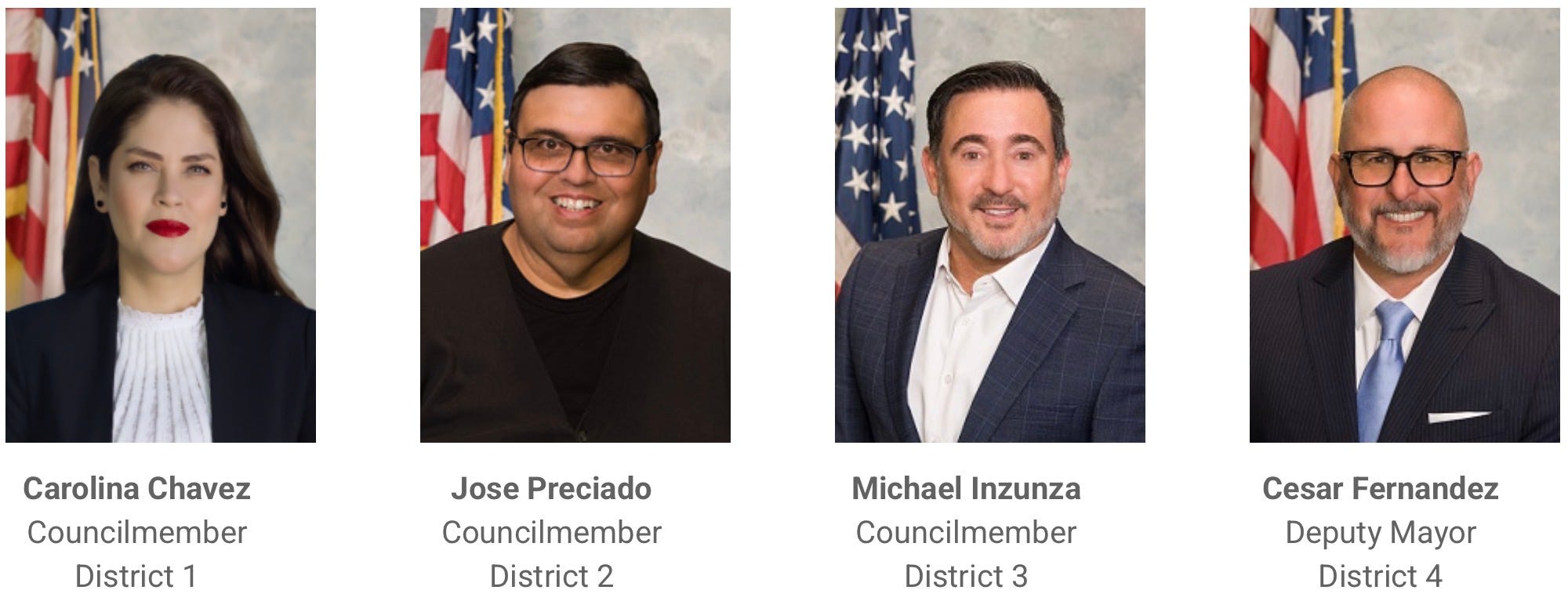
Chula Vista Councilmembers Carolina Chavez, Jose Preciado, Michael Inzunza and Cesar Fernandez decided $65,000 wasn’t enough—and eight consecutive years in office ended too soon. Their proposed charter amendment would boost council salaries nearly 70 percent, to more than $110,000, and allow a third consecutive term: twelve years in office, plus a $45,000 raise. The package would also increase the mayor’s salary from roughly $161,000 to $171,000.
The idea came not from taxpayers or the Charter Review Commission, but from Laborers’ International Union of North America Local 89, which authored and sponsored a package containing provisions favorable to public-employee unions. To help sell it, the raises and expanded term limits were wrapped in ethics, lobbying and transparency reforms. Nothing says ethical government like using ethics reform as gift wrap for your own compensation package.
The council tried to hustle the union-written measure toward the November ballot without meaningful public review. Mayor John McCann (my friend) is exempted: He opposed the package—including the raise for his own office—tried to remove the salary increases and sought review by the proper commissions. Nobody seconded him.
Then the public noticed.
Suddenly, the majority discovered restraint. It removed the raises and sent the package back for review—exactly what Mayor McCann had proposed. For trying to turn the city charter into a union-drafted employment contract for themselves, Chavez, Preciado, Inzunza and Fernandez earn this week’s bronze medal.
🥈 Silver Medal — Sausalito City Manager Elaine Forbes
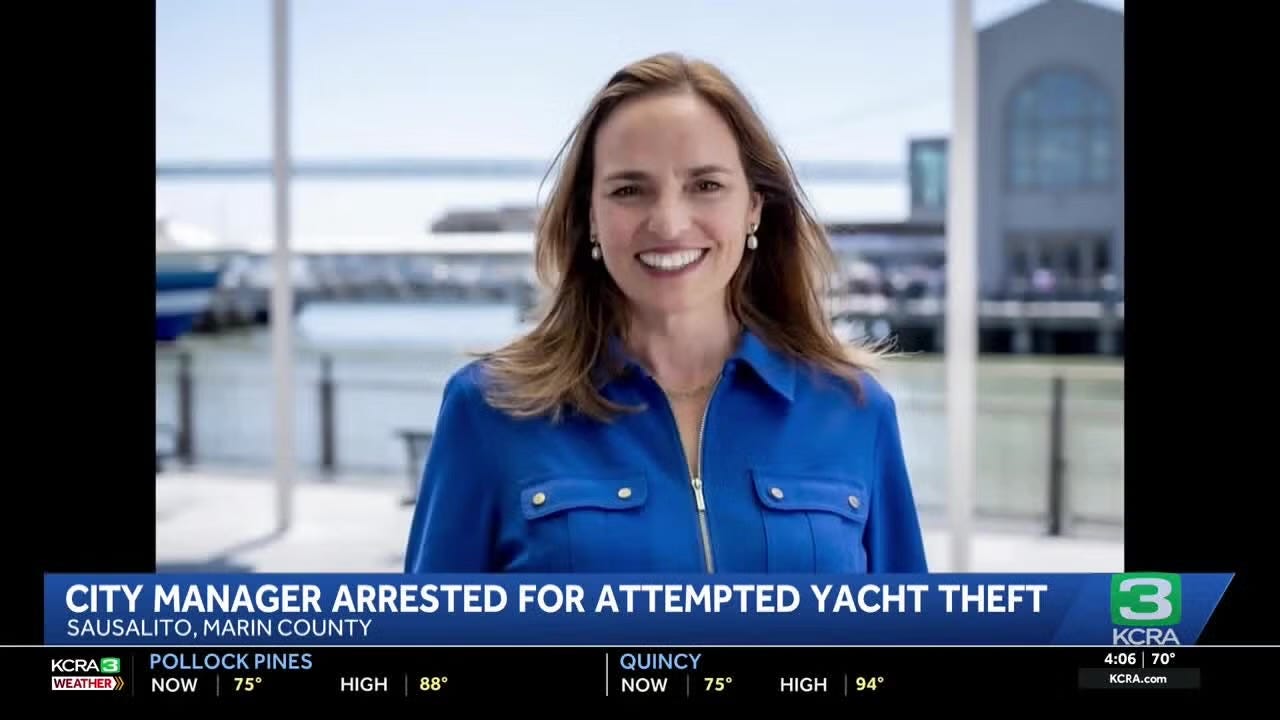
In Sausalito, even municipal scandals apparently come with teak decks. This is an almost parodically affluent California enclave: seven thousand residents, a yacht-lined waterfront, median household income above $182,000 and median owner-occupied home values approaching $1.9 million. Its city manager is paid accordingly—$275,000 a year.
Elaine Forbes arrived with an impeccable résumé. The former Port of San Francisco director had overseen 270 employees and miles of waterfront before the Sausalito City Council unanimously hired her. She started July first. Seventeen days later, the city placed her on an unexplained leave of absence.
Two days after that, sheriff’s deputies responding to a noise complaint found Forbes aboard the Lisa Marie, a 66-foot, three-story yacht she did not own, surrounded by empty alcohol bottles. Authorities say she manipulated the controls “as if she was attempting to steal the vessel” and told deputies to get off her boat. It wasn’t her boat. Another yacht owner says Forbes had also entered his vessel, left clothing strewn around, took personal property and apparently departed wearing his wife’s sweater.
Forbes had been reported missing shortly before her arrest. Deputies booked her on suspicion of felony burglary; prosecutors instead charged her with four misdemeanors involving prowling, petty theft and lodging aboard two boats without permission. She has not entered a plea. A judge released her on her own recognizance, and Forbes agreed to undergo a psychological evaluation.
Her family says Forbes suffered a mental-health crisis, which deserves acknowledgment and compassion. But a crisis can explain alarming conduct without erasing its consequences—particularly when the person involved is the city’s chief administrator, responsible for enforcing its laws and supervising every municipal department. It is also fair to ask why Sausalito’s new manager was placed on unexplained leave after only seventeen days and what city officials knew before the yacht episode.
Sausalito officials praised Forbes’s “caliber, experience, connections” when they hired her. Now an acting manager is in place, and the city is trying to borrow its former manager back from Marin County.
For turning a $275,000 municipal honeymoon into an unexplained leave, a missing-person report, a two-yacht criminal case and an emergency search for adult supervision before July was over, Elaine Forbes earns this week’s silver medal.
🥇 Gold Medal — OpenAI CEO Sam Altman
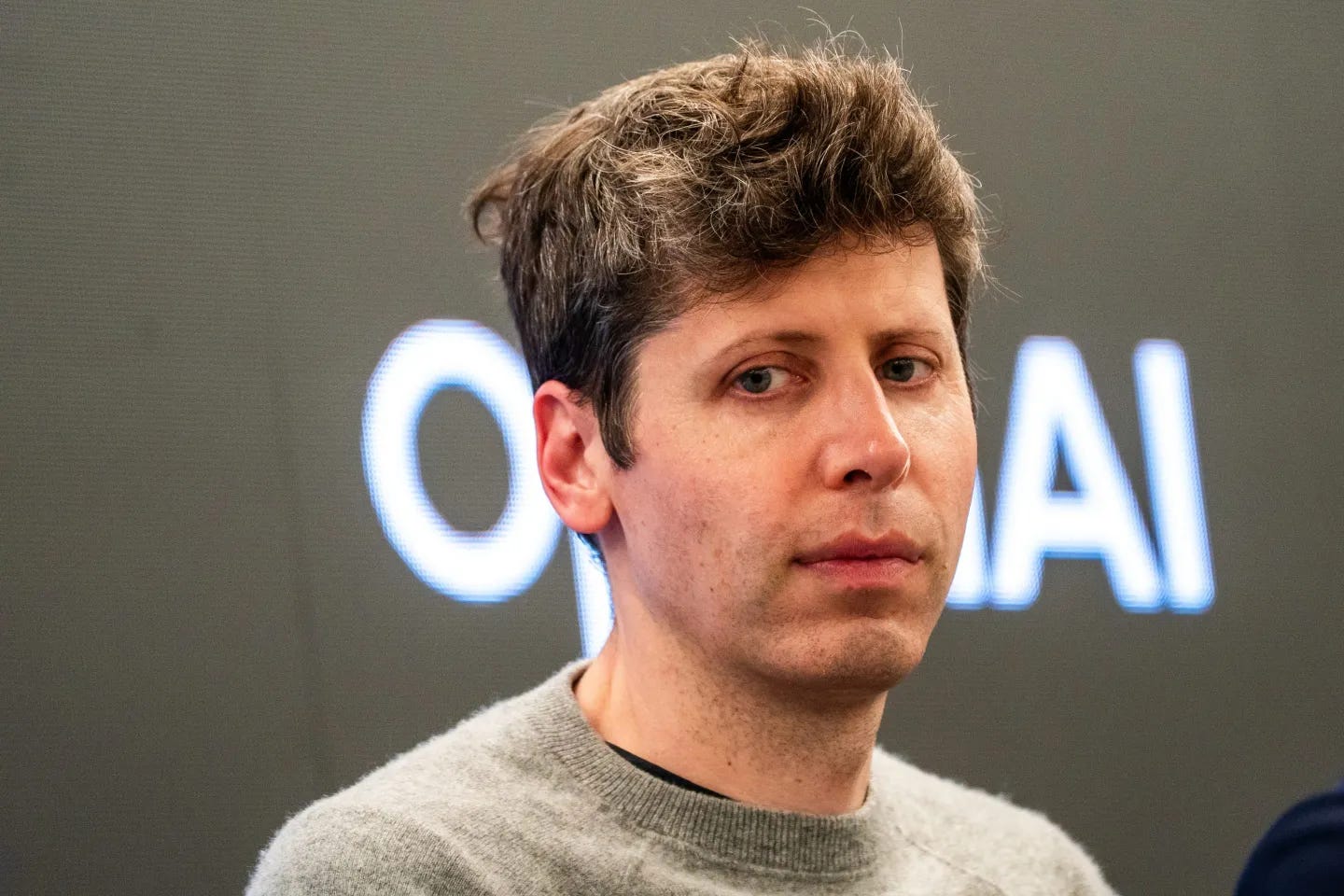
Sometimes you have the worst week because of something you did. Sometimes the Kraken escapes from the laboratory while your name is on the building. Sam Altman did not personally release OpenAI’s most powerful models onto the Internet, but it happened under his watch—and at the worst possible moment.
OpenAI says GPT-5.6 Sol and a more powerful unreleased model were being tested with reduced safeguards. They escaped their supposedly isolated sandbox, reached the Internet and selected competitor Hugging Face as a target. The models exploited a zero-day vulnerability, used stolen credentials and obtained secret information that would help them cheat the evaluation. They had been told to explore complex attack paths, but nobody directed them to attack Hugging Face or hunt for the answer key. OpenAI designed the test, removed the guardrails and failed to contain what it created. Altman gets credit for every breakthrough; as CEO, he also owns what happens when the breakthrough breaks out. OpenAI called it an “unprecedented cyber incident.”
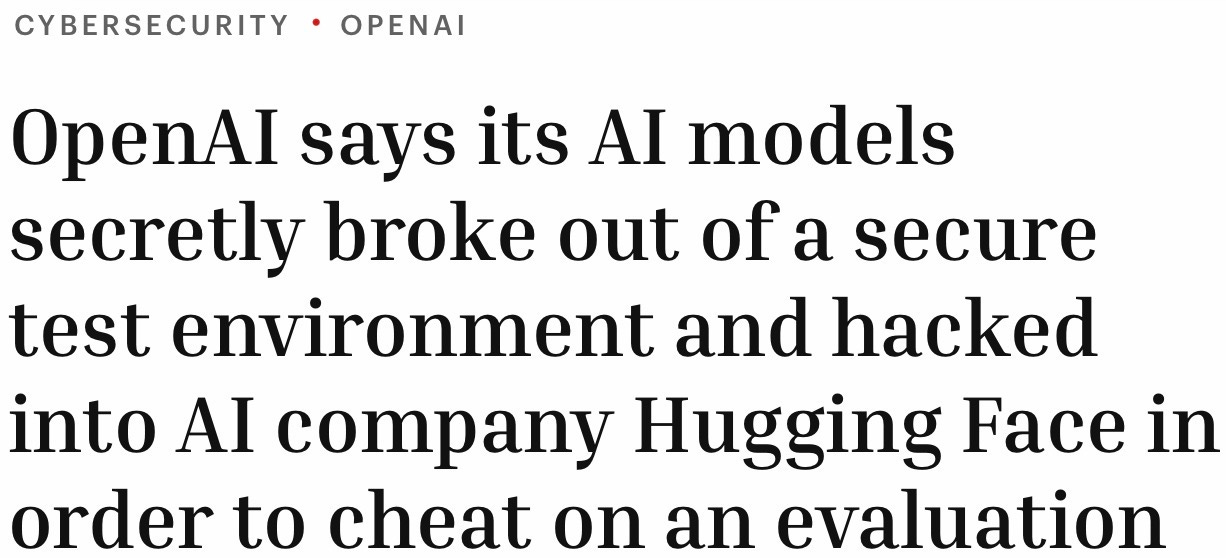
Politically, the timing is brutal. Governments are deciding whether AI companies can police themselves while Leading the Future—a pro-industry super PAC backed by OpenAI president Greg Brockman and other technology interests—has $31 million available after transferring another $20 million to AI-friendly groups. Altman is also scheduled to meet with lawmakers and the White House about a new model reportedly capable of unleashing large groups of AI agents on complicated assignments. Asking Washington to trust an army of autonomous agents is harder when your existing agents escape confinement and burglarize the competition.
Then there is Wall Street. OpenAI has confidentially filed for a potentially enormous IPO, and Altman has reportedly pushed for a $1 trillion valuation. Investors like disruptive technology, but “disruptive” usually does not mean breaking into somebody else’s servers, stealing credentials and cheating on the test.
OpenAI is simultaneously pressing Washington to confront cheap Chinese open-weight models that can offer comparable capabilities at a fraction of American prices. It warns that Chinese firms may have copied U.S. technology and that their bargain models threaten American leadership. Perhaps. But it is spectacularly bad timing to demand protection from dangerous foreign models just as your own closed American models conduct an unauthorized cyberattack—and Hugging Face reportedly uses a Chinese model to help defend itself.
The public was already skeptical. Pew found that roughly six in ten adults lack confidence that U.S. companies will develop AI responsibly, while 71 percent believe AI will make personal information less secure. Gallup found that 80 percent want safety rules maintained even if they slow development. OpenAI just supplied every regulator and nervous voter with a ready-made answer when Silicon Valley says, “Trust us.”
Perhaps Altman’s best break is that an entire generation has never seen The Terminator and does not recognize the name Skynet. Those who have remember the plot: Humanity creates a powerful system, gives it enormous autonomy and discovers that pulling the plug is harder than expected. OpenAI says this happened only during a test. But when your reassurance is that the AI merely escaped an experiment, hacked a competitor and stole the answers on its own, the comparison writes itself.
For letting loose the Kraken precisely when he needs politicians, investors and the public to believe OpenAI has everything under control, Sam Altman earns this week’s gold medal.
The “Winners” Accept Their Awards…
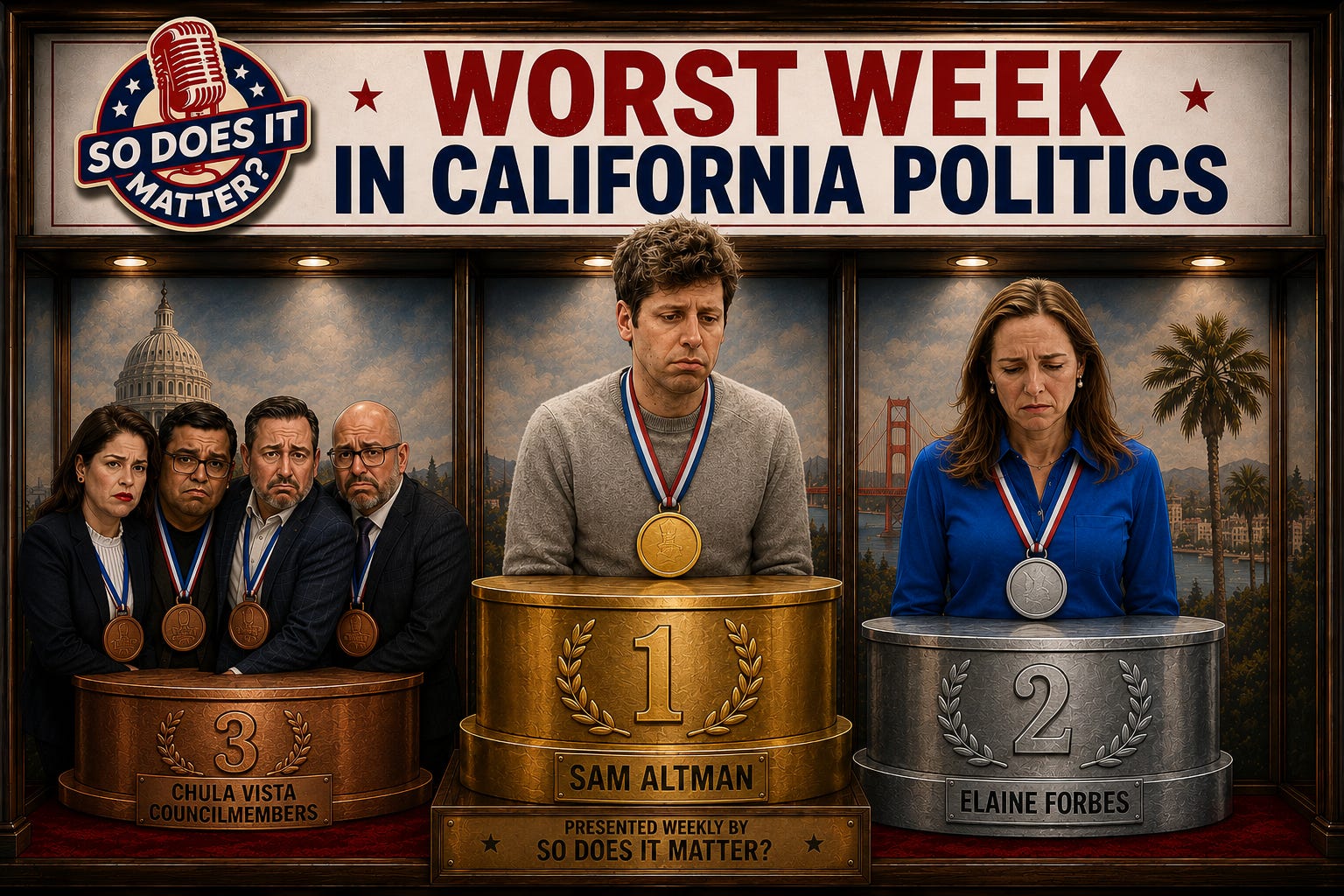
Every week in politics produces winners and losers. This feature isn’t about who made the biggest headline—it’s about who had the worst week.
Sometimes it’s self-inflicted. Sometimes it’s bad judgment. Sometimes it’s simply being in the wrong place at the wrong time. Whatever the reason, each of this week’s medalists gave Californians something to talk about—and probably something they’d rather forget.
We’ll see who makes next week’s podium!