

With Prop. 40 A Public Employee Union In California Wants A Wealth Tax. Other Countries Already Tried It. Hint: Doesn’t Go So Well
A new study of wealth taxes around the world offers California voters a warning before they vote on one this November.

Typically, our afternoon content is behind a paywall — or there is something extra for our paid subscribers. If you are not one, please consider upgrading. You are missing a significant portion of what we produce each week, and your support makes it possible.
THIS PIECE HAS NO PAYWALL AS WE OCCASIONAL FEATURE AFTERNOON COLUMNS FOR FREE READERS — YOU KNOW, SO YOU KNOW WHAT YOU ARE TYPICALLY MISSING!
You can listen to this and all of our content on our podcasting channel, So Does It Matter? SPOKEN! You can find it on your favorite podcasting app, or right here.
🕒 8-minute read
California’s $100 Billion Bet
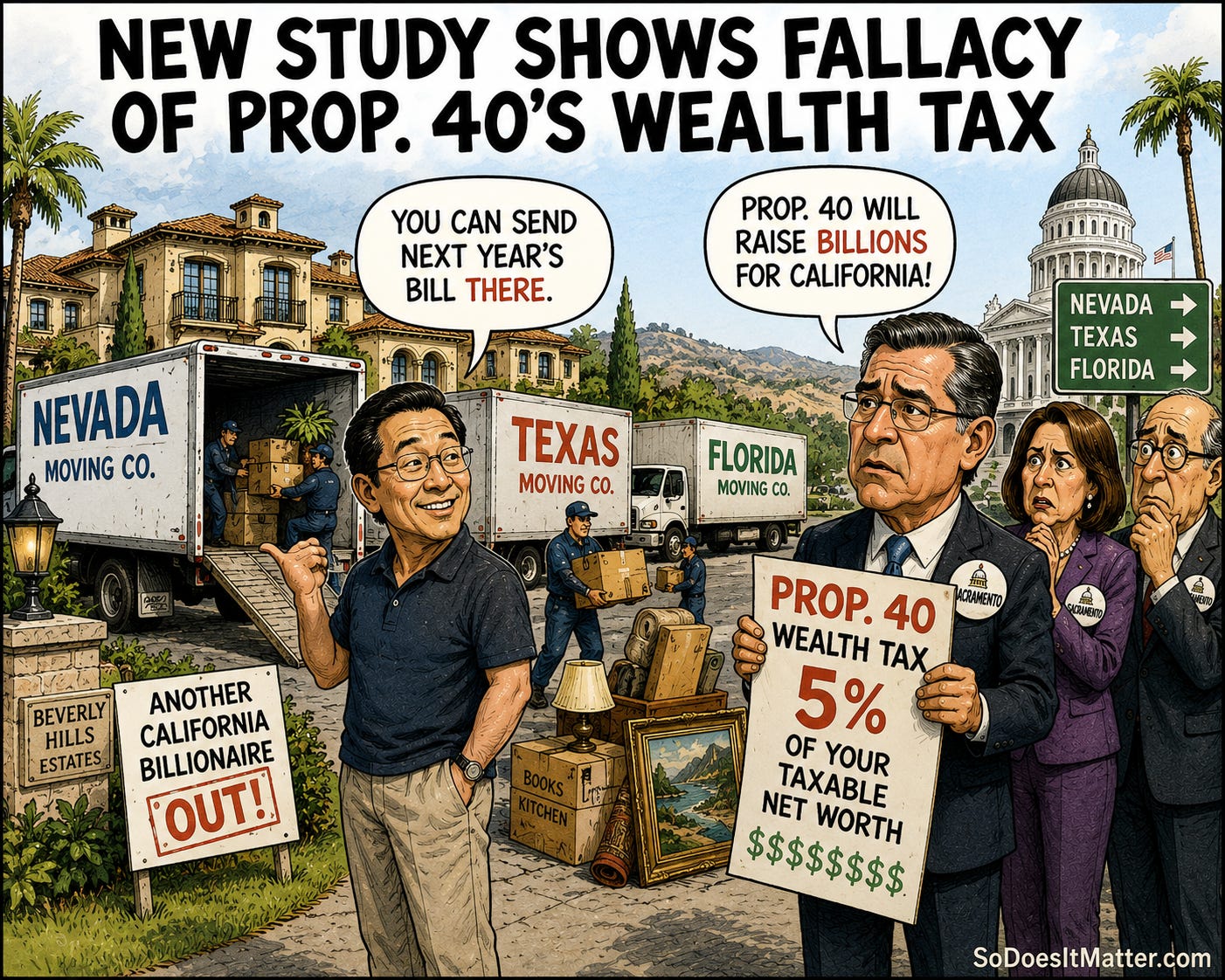
California voters will decide this November whether to approve Proposition 40, the 2026 Billionaire Tax Act, which would impose a one-time 5 percent tax on the taxable net worth of people who were California residents on January 1 and had net worth above $1 billion.
Supporters say Prop. 40 could raise roughly $100 billion. You can see the political appeal. Take a relatively small percentage from a tiny group of extraordinarily wealthy people and spend it on health care and other government programs.
Before California tries it, voters might want to know what happened to the countries that got there first.
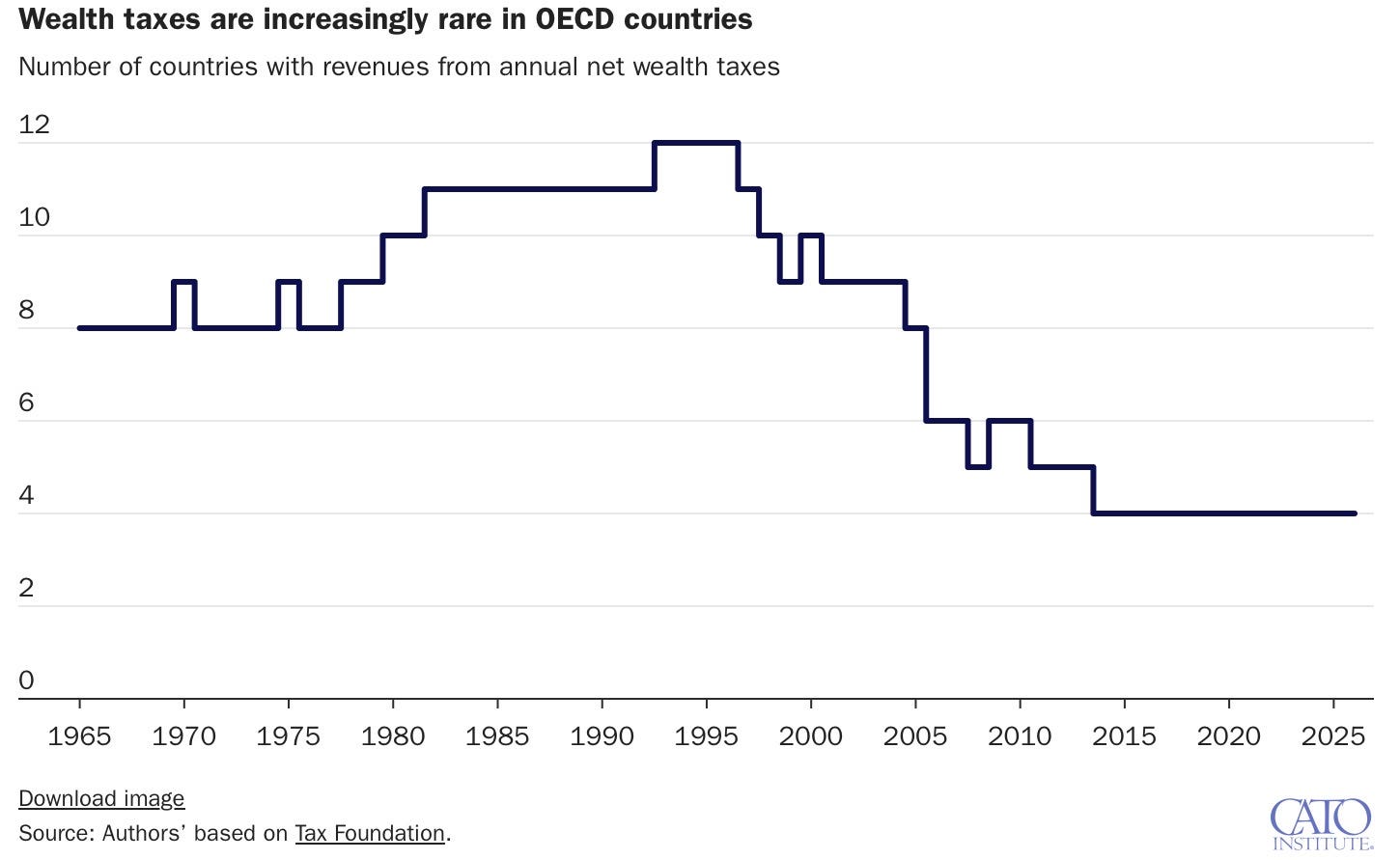
A new CATO Institute study released today by economists Adam Michel and Chris Edwards provides some pretty compelling history. In 1990, 12 OECD countries imposed annual wealth taxes. Today, just four do. Austria, Denmark, Finland, France, Germany, Ireland, Luxembourg, the Netherlands and Sweden are among those that tried wealth taxes and eventually abandoned them.
Governments Learned The Hard Way
Why did so many countries give them up? CATO points to limited revenue, complicated administration, people finding ways around the tax and wealthy taxpayers simply leaving. A 2018 OECD examination reached much the same conclusion.
Norway increased taxes on wealth, dividends and capital gains in 2022. Wealthy Norwegians started relocating. Norway’s Ministry of Finance calculated that people who emigrated during 2022 and 2023 took $14.1 billion in deferred income with them, representing about $5 billion in forgone tax revenue.
But Spain may be the example Californians should pay the most attention to. When Madrid effectively eliminated its regional wealth tax, its population of wealthy taxpayers grew roughly 10 percent relative to other Spanish regions during the first five years. A 2025 study found that regions losing wealthy taxpayers to Madrid lost six times more personal income-tax revenue per departing taxpayer than they gained from their wealth taxes.
They collected the wealth tax and still came out behind.
California Makes Leaving Easier
Spain is particularly relevant because wealthy taxpayers could escape one region’s wealth tax without leaving the country. Sound familiar?
If you are a Norwegian trying to get away from a national wealth tax, you have to leave Norway. That is a pretty big life decision.
If you are a Californian, you can move to Nevada.
Or Texas. Or Florida.
Economists Enrico Moretti and Daniel Wilson studied Forbes 400 billionaires and found that 35 percent of local billionaires leave states that impose an estate tax.
Prop. 40 anticipates this, taxing those who were California residents on January 1, 2026, even if they relocate later.
Fine. But California can’t require them to stick around afterward.
The Taxpayer Is Worth More Than The Tax
That is a serious problem in a state extraordinarily dependent on wealthy taxpayers.
The highest-earning 2.5 percent of Californians already provide 49 percent of state personal income-tax revenue. When those taxpayers leave, Sacramento loses the income and capital-gains taxes they would have paid in future years.
This isn’t just CATO making the argument. California’s own nonpartisan Legislative Analyst says some billionaires are likely to leave because of Prop. 40 and estimates the resulting loss of ongoing income-tax revenue could reach hundreds of millions of dollars or more every year.
CATO also cites a Hoover Institution analysis estimating that California billionaires currently pay between $3.3 billion and $5.8 billion annually in state income taxes. Hoover tried to calculate both sides of the ledger — what California might collect from Prop. 40 and what it could lose later as billionaires leave. Its estimate: California ultimately comes out about $25 billion behind.
And wealth isn’t cash. Someone worth $10 billion because he owns a huge chunk of the company he created doesn’t have $10 billion sitting in his checking account. Paying a wealth tax can mean selling assets or borrowing money just to come up with the cash for the tax bill.
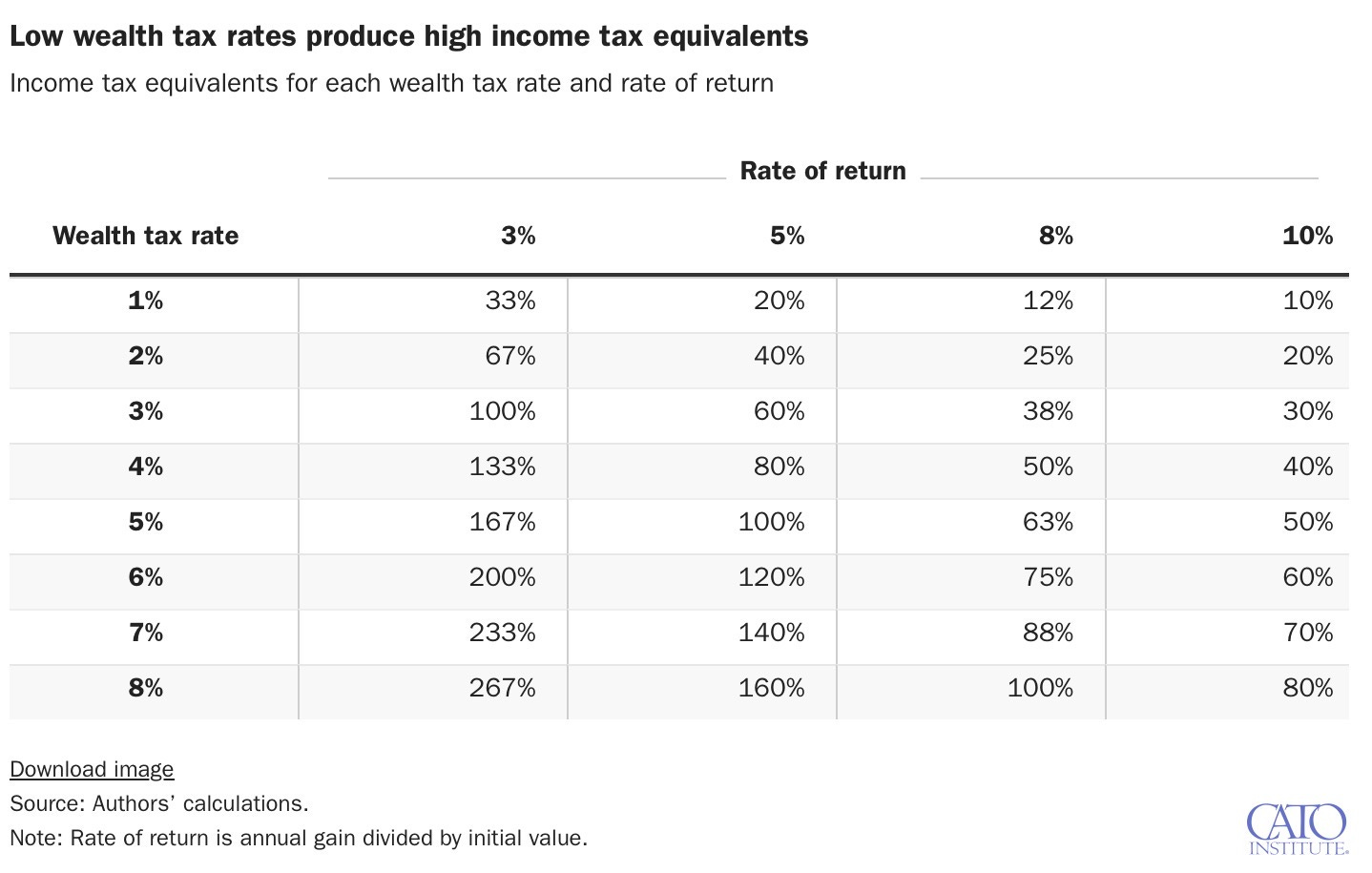
The $100 billion sales pitch assumes California can take 5 percent from an enormous pool of wealth and essentially everything else stays the same.
Why would we assume that?
Before Sacramento Asks For More
There is another part of this debate that bothers me.
Before California creates another tax, how about accounting for the enormous amount of money Sacramento already collects?
California allocated nearly $24 billion for homelessness and housing over five fiscal years, yet the State Auditor found the state had failed to consistently track and evaluate whether its homelessness programs were cost-effective.
Then there is EDD. It ultimately estimated that roughly $20 billion in pandemic unemployment benefits were likely fraudulent. The problems didn’t disappear with COVID. The State Auditor says EDD remained a high-risk agency in 2025, with roughly $1.5 billion in improper payments during 2023 and 2024 and more than $500 million in estimated fraudulent payments in 2024 alone.
Now the federal government has deferred $867.5 million in Medi-Cal reimbursements while it reviews suspected fraud, noncompliance and questionable billing patterns. California disputes the allegations, and we’ll see where that investigation goes.
These aren’t rounding errors. We are talking about billions lost to fraud, billions appropriated to programs whose results the state failed to adequately track, and another huge government program now facing federal scrutiny.
Before Sacramento comes up with another way to collect money, how about doing a better job with the money it already has?
So, Does It Matter?
Of course California’s billionaires can afford to pay more taxes. That’s not the question. The question is whether Prop. 40 leaves California better off.
Most OECD countries that tried wealth taxes eventually walked away from them. California now wants to try one while depending heavily on precisely the taxpayers it could encourage to leave.
Maybe Sacramento collects billions from them once. But California has to live with what happens after the check clears.
Europe discovered that a wealth tax can give wealthy people a reason to leave the country.
California is betting its billionaires won’t leave the state.
That’s a much easier trip.
California voters are well advised to vote no on this ill-advised and cynical ballot measure.
Read It For Yourself
Here is a link to the CATO study, in case you want to go deeper. There’s a lot more in it than I wrote about.
More Content
I did hosted great podcast with Joshua Rauh, one of the economists who worked on the Hoover Institution study. You can watch that below!