

The Pardon: We Abolished the King — But Kept His Power
The ancient origins and modern consequences of America’s unchecked pardon and commutation authority

The Most Monarchical Power We Never Gave Up
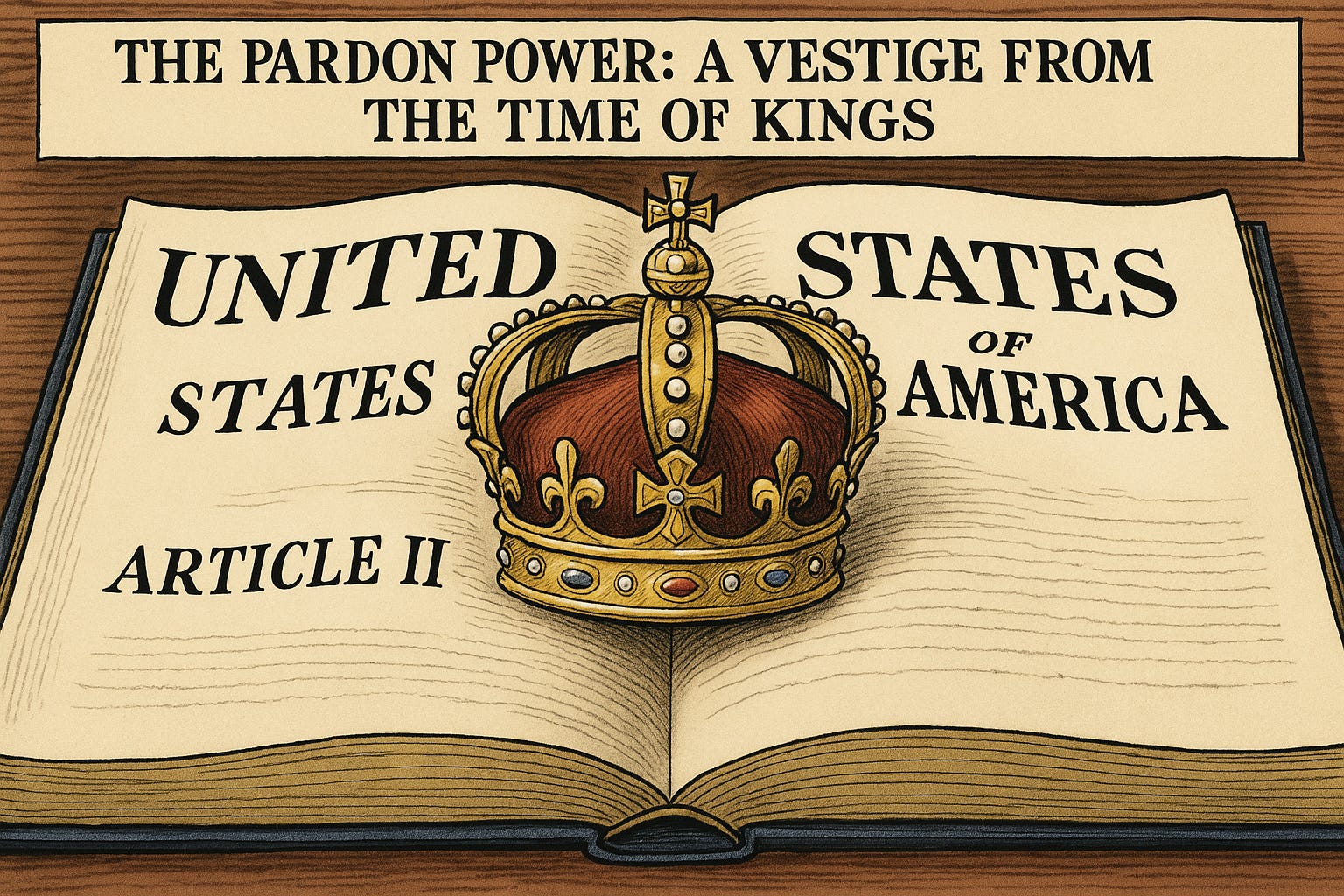
Among all the powers vested in modern American government, few are as ancient, as sweeping, and as lightly examined as the power to pardon and commute criminal sentences. We live under a constitutional system built on divided authority, a layered process, and checks on power. And yet, embedded in both our federal and state constitutions is a power that predates representative government altogether — a power born not of democracy but of empire, monarchy, and divine right.
The power to erase a crime, shorten a sentence, or override a jury’s verdict is one of the oldest expressions of sovereign authority in human history. In ancient Rome, the emperor did not merely enforce the law; he embodied it. He could condemn — or forgive — by personal decree. Clemency was not a legal right. It was a favor granted from the top down.
As kingdoms replaced empires, the structure hardly changed. Across Europe and the Near East, monarchs claimed divine authority. If punishment flowed from God through the king, then forgiveness did as well. Mercy was not procedural. It was personal. And it stood above the law.
In medieval England, that idea hardened into doctrine. Crimes were prosecuted in the name of the Crown. Because the king was the source of justice, only the king could withdraw it. The royal prerogative of pardon became absolute, personal, and largely unreviewable. It survived the Magna Carta and the slow rise of Parliament. Even as royal power shrank elsewhere, it remained untouched here.
That is the power we inherited.
This rest of this post is for paid subscribers (as with most afternoon content)…
To read the full column — including how this ancient, kingly power migrated into the U.S. Constitution, why the Founders knowingly kept it, and how modern presidents and governors are using it today — you’ll need to upgrade.
Paid subscribers get full access to all premium analysis, and about 40% of our total content is unlocked when you upgrade.
If you value independent, constitutional reporting and want access to the complete analysis, you can subscribe now to unlock the rest of this post instantly.
What paid subscribers will see in the whole column:
How this royal power quietly entered the U.S. Constitution
The Founders’ private unease about keeping it
Recent uses by influential figures that reignited the debate
How California used this authority in a sweeping way
Why does this power clashes with the modern separation of powers
The reform question almost no one in politics wants to touch
