

The Los Angeles City Council Reversed Course, Pulling Non-Citizen Voting Ballot Measure — What Happened?
In this analysis for the California Post, I explore the about-face on this very controversial (and ill-advised) measure…

REMINDER - WE HAVE OUR BIGGEST SALE OF THE YEAR GOING ON RIGHT NOW — UPGRADE TO A PAID MEMBERSHIP FOR $55 FOR THE YEAR — FOREVER. YOU ARE GUARANTEED THIS RENEWAL PRICE IN PERPETUITY! SALE ENDS JULY 4 (TOMORROW) AT MIDNIGHT… ACT NOW.
Our morning content is free for all subscribers and guests! Usually our afternoon content is behind a paywall…. If you are not yet a paid subscriber, consider upgrading — you are missing a significant portion of what we produce each week, and your support makes it possible. If you want to get it all and support my efforts, please consider a paid subscription!
You can also listen to this post (and the full California Post column) on our podcast feed, So, Does It Matter? SPOKEN. It is available on your favorite podcast app. And you can listen to it here.
LA Tried To Pass Noncitizen Voting Without The Details
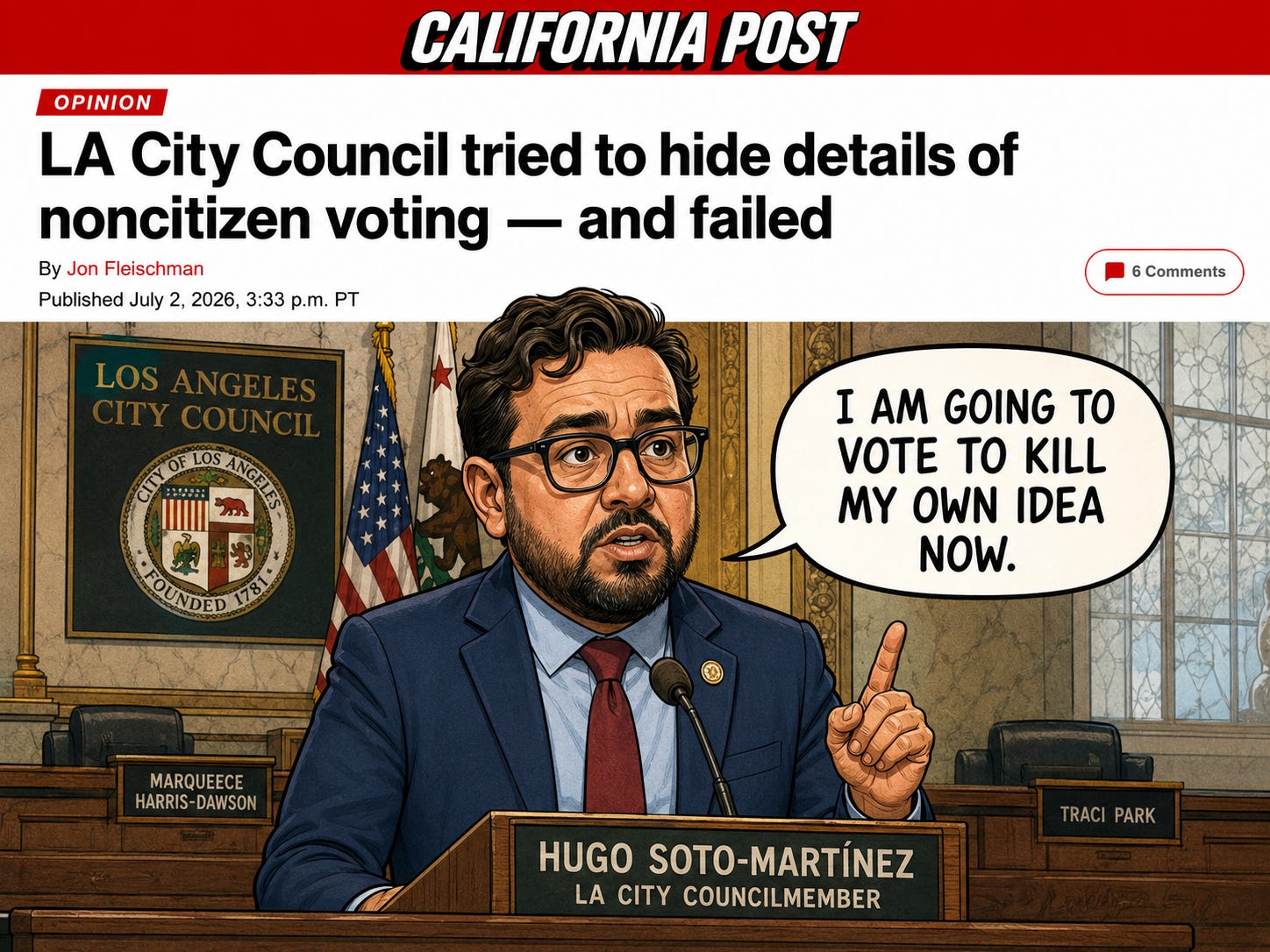
My latest California Post column looks at what happened after the Los Angeles City Council voted to move noncitizen voting toward the ballot — and what happened when someone finally asked the obvious question:
Who exactly would be voting?
For ten days, supporters insisted critics were overreacting. This was merely the beginning of a conversation. The details would come later.
Then the details came.
Would eligibility include green card holders? DACA recipients? Temporary visa holders? Illegal aliens? Would Los Angeles need a separate election system? What would happen to voter information collected by the city?
Suddenly, those questions became unavoidable.
In my full California Post column, I examine how the City Council moved forward on a politically explosive issue before answering some of its most fundamental questions — and why even several supporters appeared uncomfortable once the specifics started appearing on paper.
The broader issue extends well beyond noncitizen voting.
Increasingly, California politics operates on a simple formula: approve the concept first, figure out the consequences later. Voters are asked to trust that the difficult questions will be resolved somewhere down the road by future officials, future regulations, or future legislation.
That approach may work for minor policy disputes.
Voting rights are not a minor policy dispute.
Who votes, how elections operate, what information government collects, and what protections exist for participants are foundational questions in a democracy. Those answers should come before voters are asked for approval, not afterward.
By Tuesday, the proposal had gone from moving toward the ballot to being pulled unanimously for further study.
That reversal tells its own story.