


You can listen to this post on our podcast feed, So, Does It Matter? SPOKEN. It’s available on your favorite podcasting app, or you can find it here.
⏱️ 3.5-minute read
What The Supreme Court Actually Did
The starting point here is simple. The U.S. Supreme Court just dealt a major setback to state laws banning so-called conversion therapy for minors. In its ruling against Colorado’s law in an overwhelming 8-1 decision in Chiles v Salazar, the Court made clear that when the government bars licensed counselors from engaging in certain talk-based therapy because it disapproves of the viewpoint expressed, it creates a serious First Amendment problem.
That matters because Colorado’s law was modeled in large part on California’s own ban. The Court was not just addressing a technical dispute over professional regulation. It casts doubt on the basic constitutional theory underpinning laws that allow one therapeutic viewpoint while punishing another.
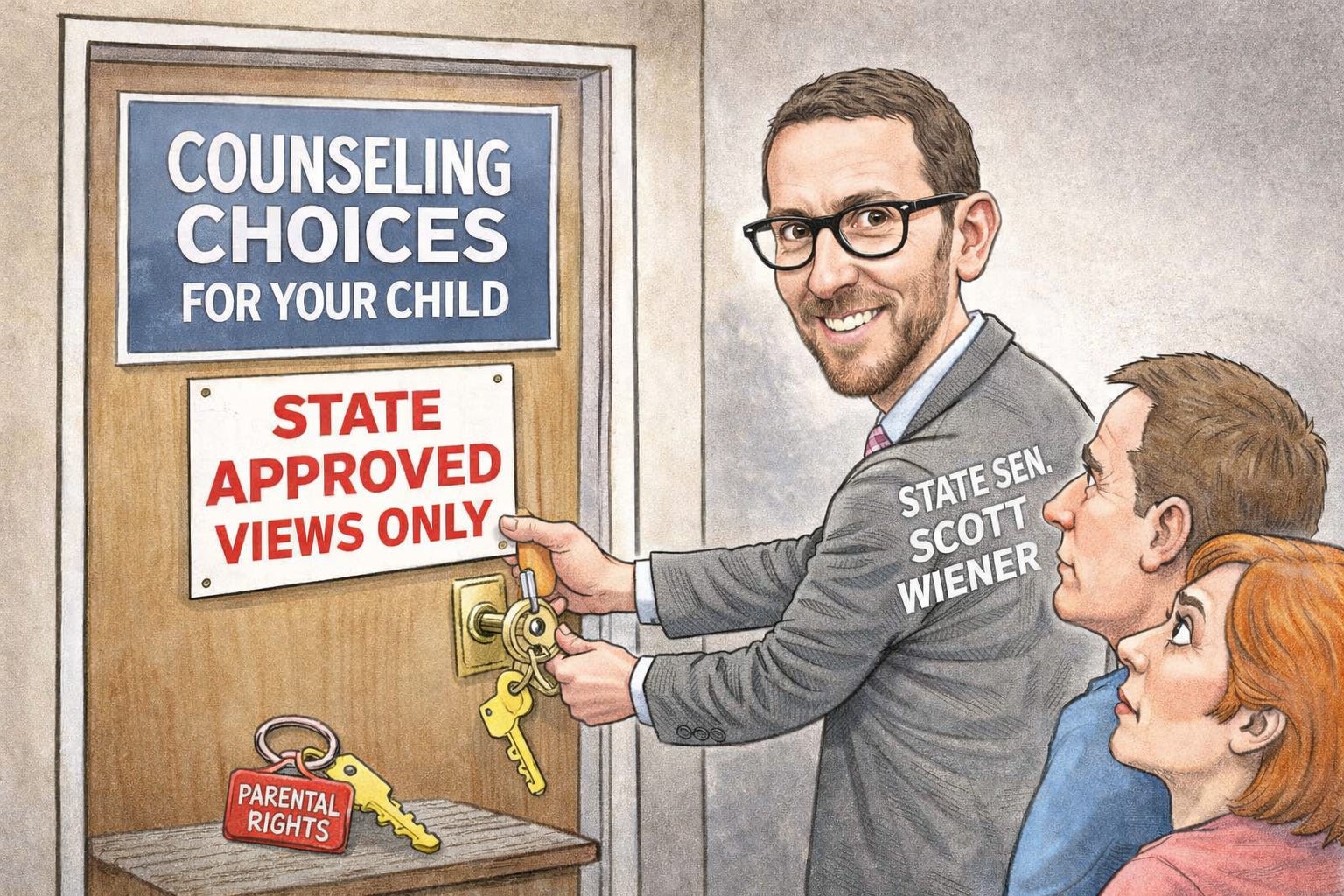
That is the context for what is happening in California now. The Supreme Court effectively told states that they cannot simply relabel speech as conduct and regulate it at will. Sacramento should have taken that as a warning to slow down and reconsider. Instead, State Senator Scott Wiener (D-San Francisco) is looking for a new route around the obstacle.
Wiener’s New Workaround
As the San Francisco Chronicle reports, Wiener and allied activists were already preparing a backup plan while the Colorado case was moving through the courts. That backup plan is Senate Bill 934.
According to the Chronicle, SB 934 would move away from relying mainly on professional discipline and instead open the door to civil malpractice lawsuits against providers. It would dramatically extend the time someone has to sue, potentially allowing a person who underwent the therapy as a minor to bring a claim decades later, up until age 40. The article also says the bill would strengthen those claims by allowing expert testimony built around the alleged scientific consensus about the harms of conversion therapy.
That is not a small procedural change. It is the core of the strategy. If California’s direct ban is now constitutionally vulnerable, then the state will try to make the counseling functionally impossible through massive legal exposure. In plain English, Sacramento is trying to make this counseling so risky and so expensive that few, if any, providers will touch it.
That is why the Chronicle's quote from Wiener matters. He called the issue “very high-stakes” and said the Supreme Court’s ruling “forced us to think as creatively as possible.” That is a revealing statement. It sounds less like respect for constitutional limits and more like a politician searching for a workaround.
Why This Is Still A Free Speech Problem
The strongest argument against Wiener’s bill is not that every form of this counseling is wise or effective. That is not the point. The point is that parents generally have the right to decide what kind of counseling, moral guidance, and faith-informed therapy their children receive, so long as there is no coercion, fraud, or abuse.
Once the government starts dictating which voluntary conversations are allowed inside a therapist’s office, it is no longer merely regulating professional standards. It is picking winners and losers in a battle of ideas. That is exactly the constitutional danger the Supreme Court identified.
Supporters of SB 934 will say it is different because it is framed as a malpractice law rather than a direct restriction on speech. But that argument is weaker than it sounds. Courts look at substance, not just labels. If the practical effect of the bill is to punish one side of a therapeutic conversation through lawsuits, fees, and long tail liability while the other side remains culturally and legally protected, then California is still targeting disfavored speech.
There is also a basic fairness problem here. Parents dealing with a confused or struggling child often want options. Some want affirming therapy. Others want counseling rooted in their religious convictions. Others want a therapist who will help a child slow down, ask questions, and work through difficult feelings without pushing a predetermined outcome. In a sane system, those families are not treated as suspects.
So, Does It Matter?
What Scott Wiener is proposing looks very much like an end run around the Supreme Court’s free speech ruling. California may no longer be able to ban certain counseling the old-fashioned way, so the new plan is to threaten providers with years of legal exposure and crushing financial risk.
That should concern anyone who cares about free speech, parental rights, or the limits of state power.
The argument here is not that the government must endorse every counseling method. It is that the government should not punish voluntary, talk-based counseling chosen by parents and patients simply because Sacramento dislikes the viewpoint behind it. California had its warning from the Supreme Court. Instead of respecting that warning, Scott Wiener appears determined to find a more elaborate way around it.
I just came face to face with you in the hallway. hope to catch up with you this weekend just to say thanks for the substack