

Reporters And Political Observers Need To Stop Using Prediction Betting Odds As Indicators Of Trends In Campaigns
Market prices from prediction sites are not polls, not voter sentiment, and not reliable proof that a campaign is rising or falling.

Our morning content is free for all subscribers and guests! You can also listen to this post — along with my California Post column — on our podcast feed, So, Does It Matter? SPOKEN. It’s available on your favorite podcasting app. You can listen directly here.⏱️ 4 min read
That said, if you appreciate this kind of “calling balls and strikes” deep-dive analysis on California politics, why don’t you upgrade? It helps me to do more! It’s not much!
We usually have extra content on posts for our paid subscribers. Below this column, under the paywall, I have about a five-minute video “rant” on this topic. “Must see TV,” as they say.
Political Reporters Have Found A New Toy
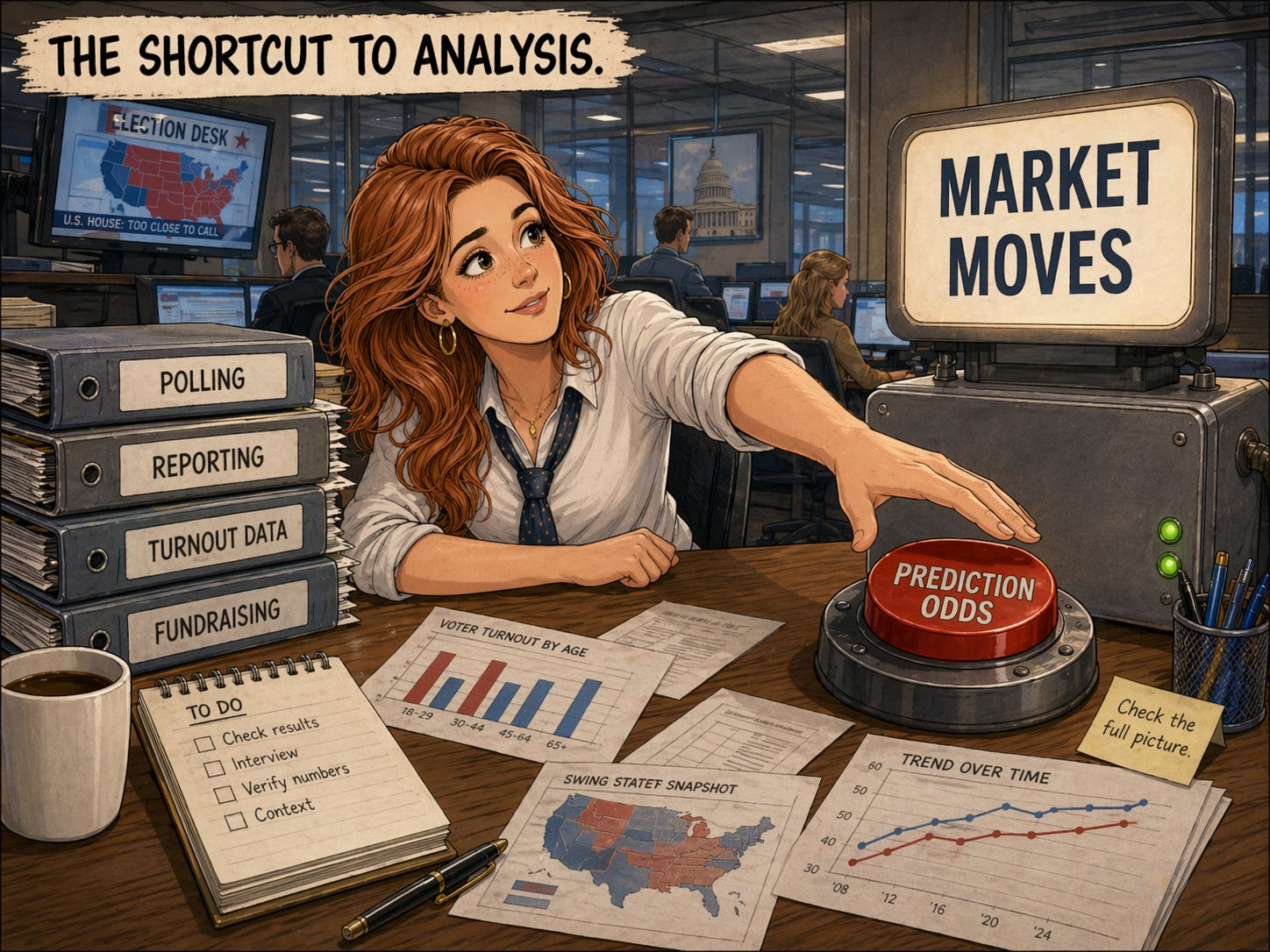
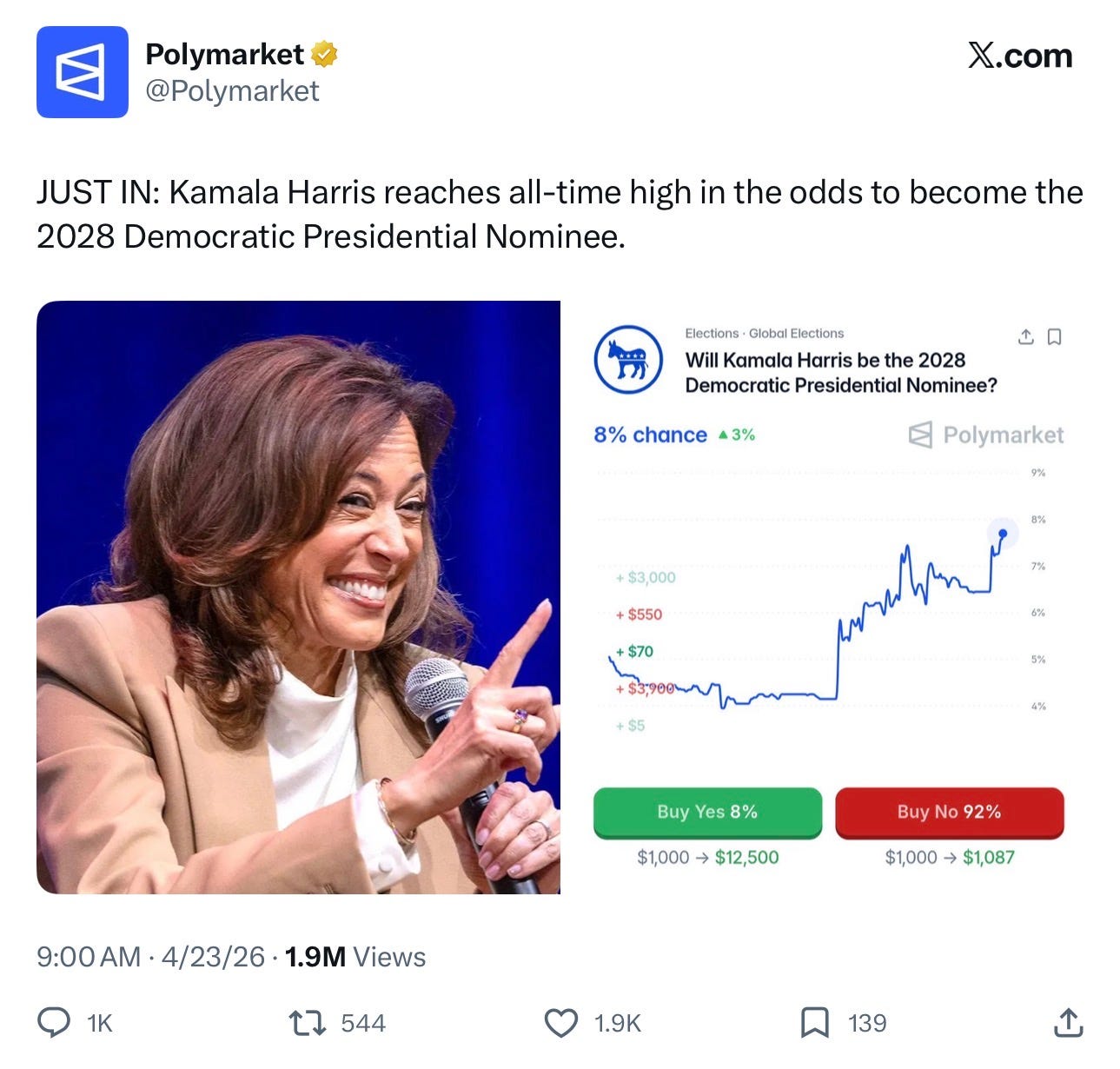
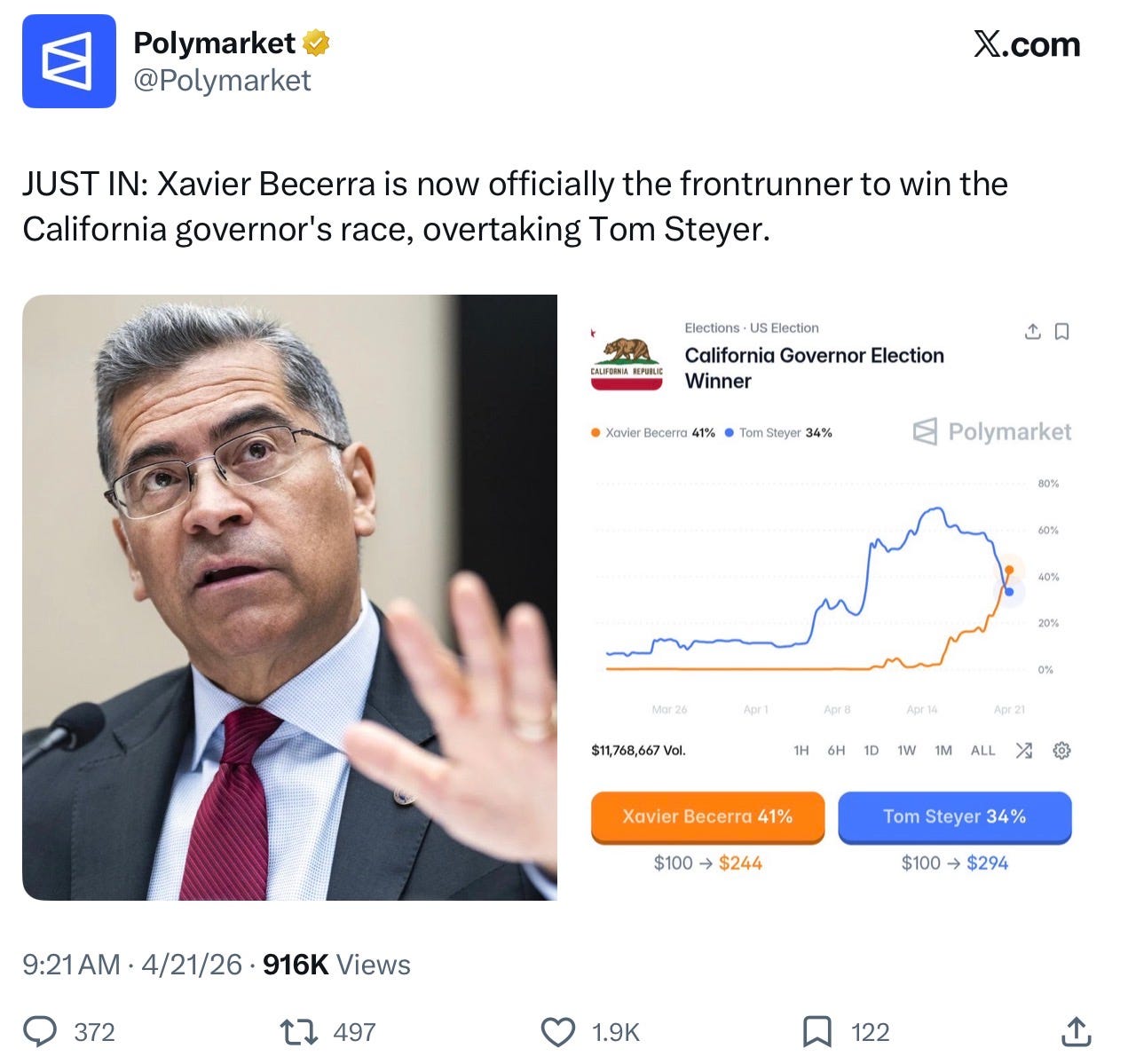
Political reporters have found a new toy. More and more of them are pointing to political betting markets as if they are campaign indicators. A candidate is “up” on Kalshi. A governor’s race is “moving” on Polymarket. A long shot is “surging” because the odds changed overnight.
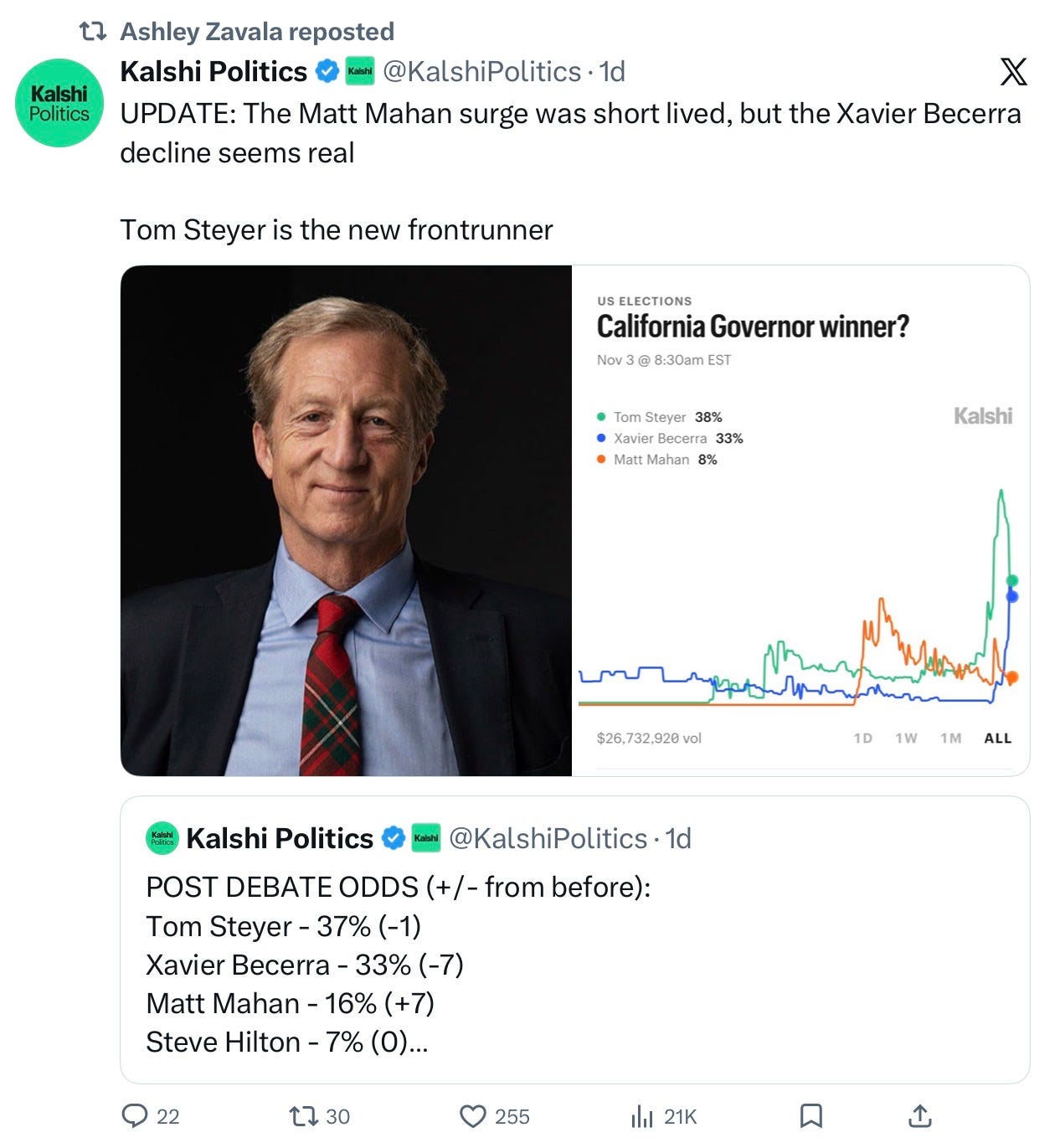
It makes for a great screenshot. It gives everyone something to talk about. And it creates the illusion that we are seeing real-time campaign intelligence. But these markets are not polls, voter surveys, or campaign field reports. They are betting lines produced by a small, self-selected group of people willing to bet on political outcomes.
Treating those odds as evidence that a race is moving does not make anyone look sophisticated. It makes them look lazy. It is clickbait journalism dressed up as analysis.
These Are Markets, Not Voters
A poll, at least in theory, is designed to measure public opinion. It asks voters what they think. It uses a sample, methodology, weighting, and margins of error. You can argue about whether a poll is good or bad, but you can at least examine how it was conducted.
A betting market is not that. It tells you where money is moving among people who have chosen to participate. Those participants are self-selected. They are not a representative cross-section of the electorate, and there is no reason to assume they are even voters, or even Americans.
Depending on the platform and its rules, the people moving these markets could include political obsessives, professional traders, campaign operatives, major donors, foreign interests, or people with no connection to the election at all. It could be a California voter, a candidate, a wealthy financial backer, someone overseas, or the Chinese government. The odds do not tell you who is behind the money. They only tell you where the money moved.
The Motives Are Not Clear Either
The average voter in Fresno, Riverside, Modesto, Orange County, or San Diego is not sitting around moving money into political prediction markets to register a view about the governor’s race. That is not how normal people participate in politics. They vote. They talk to friends. They donate sometimes. They answer polls occasionally. They do not usually treat elections like financial contracts.
We also do not know the motives of the people who do participate. Some may be trying to make money. But in political races, profit may not be the only motive. Some may be wagering to skew the odds, knowing that outfits like Kalshi and Polymarket have every incentive to promote dramatic charts and sudden market shifts to attract media attention.
The Magic Phrase Is Information Aggregation
The defense of these markets usually comes wrapped in a nice-sounding phrase: they “aggregate information.” That sounds impressive. Almost scientific. But slow down. What information? From whom? Obtained how? Weighted by what? And with what motive?
Once you pull that phrase apart, it is a lot less impressive. These markets do not aggregate voter sentiment. They aggregate the behavior of bettors. Those bettors may be reacting to public polling, rumors, herd behavior, private conversations, guesses, hedges, or a desire to profit from volatility. Or they may be trying to move the market.
If reporters, pundits, campaigns, and social media influencers treat betting-market odds as campaign news, the odds themselves become a target. Move the odds, and you may generate a headline, a viral post, a donor email, or a narrative that your candidate is suddenly gaining steam.
A Market Can Be Moved
These markets are based on money. A large enough player, or a coordinated group of players, can affect the price. That is not speculation. That is how markets work. If enough money moves in one direction, the odds move.
Now ask who might have an incentive to move them. A candidate. A campaign consultant. A donor. A super PAC. A foreign actor. A wealthy partisan. A trader who wants to create momentum and then profit from the reaction. A campaign that wants a screenshot showing its candidate “surging.” Lots of people could have an incentive.
That does not mean every movement is manipulated. It does mean the movement itself should not be treated as neutral evidence of what voters are thinking. The bigger danger is that once journalists and political analysts treat these betting lines as campaign indicators, campaigns and their allies have a reason to game them.
Political Journalism Should Know Better
These platforms have every incentive to make their odds seem newsworthy. Of course, they post charts, hype changes, and push out social media content every time a candidate rises or falls. That is marketing.
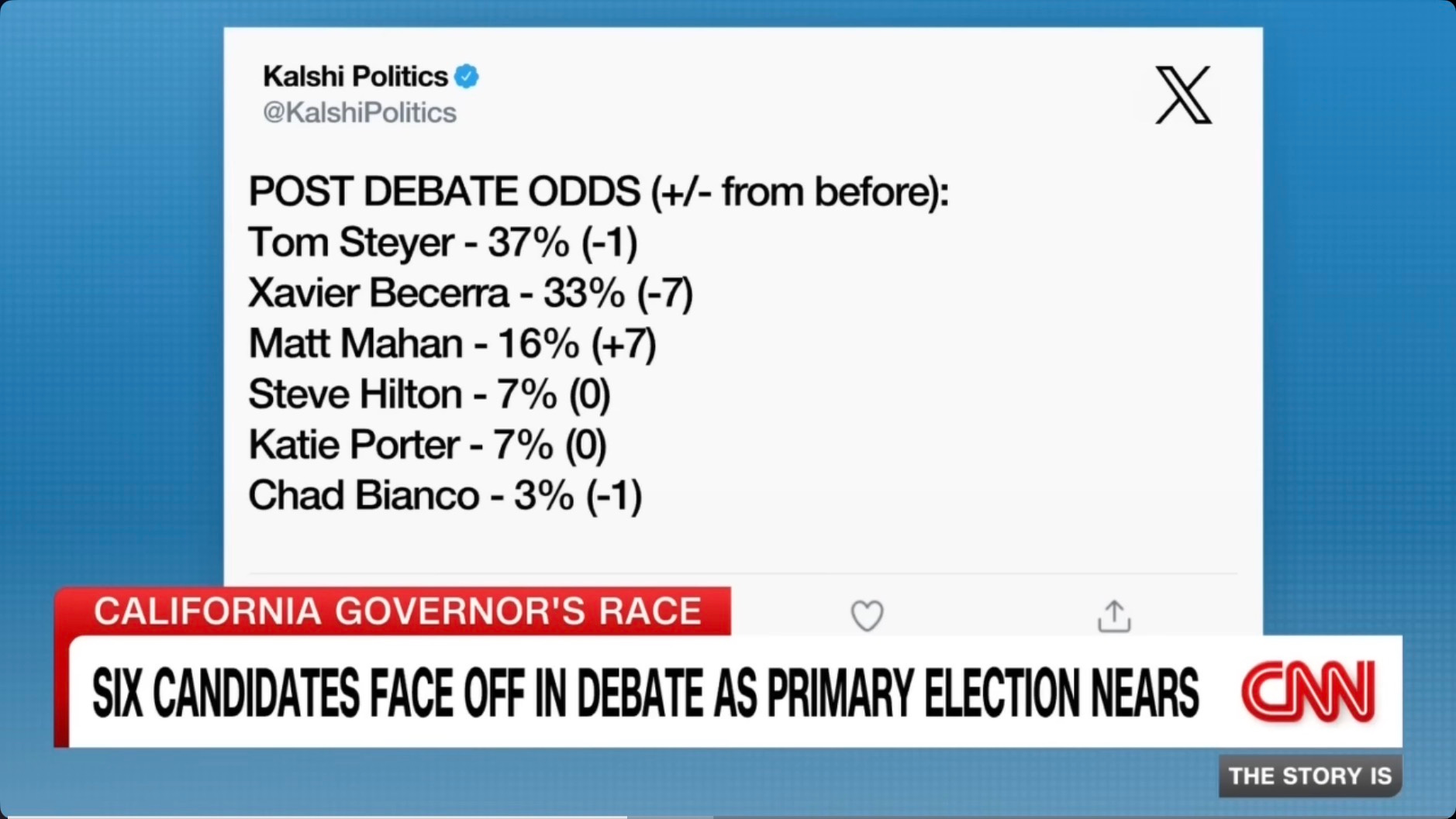
The more reporters cite the odds, the more legitimacy the platforms gain. The more legitimacy they gain, the more traffic they get. The more traffic they get, the more money flows into the markets. When political reporters turn these odds into clickbait, they are not merely reporting. They are helping promote the product.
The graphics also look authoritative. A chart with percentages moving up and down feels empirical. It looks like data. It looks like insight. But a clean graphic can still be built on a dirty premise. Putting a clean chart on speculative trading by a nonrepresentative group of bettors does not turn it into a voter signal.
So, Does It Matter?
This is how fake indicators become real campaign narratives. Nobody should be shocked when candidates promote betting odds that make them look strong. Campaigns spin. That is what campaigns do. If a poll helps, they use it. If a fundraising number helps, they use it. If a betting market screenshot helps, they will use it too.
But reporters, analysts, pundits, and serious political observers should know better. If you believe these betting markets have no reliable bearing on what is actually happening with voters, then stop using them as if they do. Stop posting the odds as campaign movement. Stop turning betting lines into clickbait. Stop giving free advertising to platforms whose business model depends on making their odds look politically meaningful.
Stop laundering market prices into political analysis. And stop pretending that a number moved by gamblers, insiders, whales, partisans, and possible manipulators tells us where voters are headed. It does not. It tells us where the money moved. That is not democracy. That is speculation with a scoreboard.
Video Rant
Below the paywall, I have a short but energetic video on this whole issue. Enjoy!
