

*New Survey* Americans Still Fear Big Government, but the AI Era Is Making People Even More Anxious About Big Tech
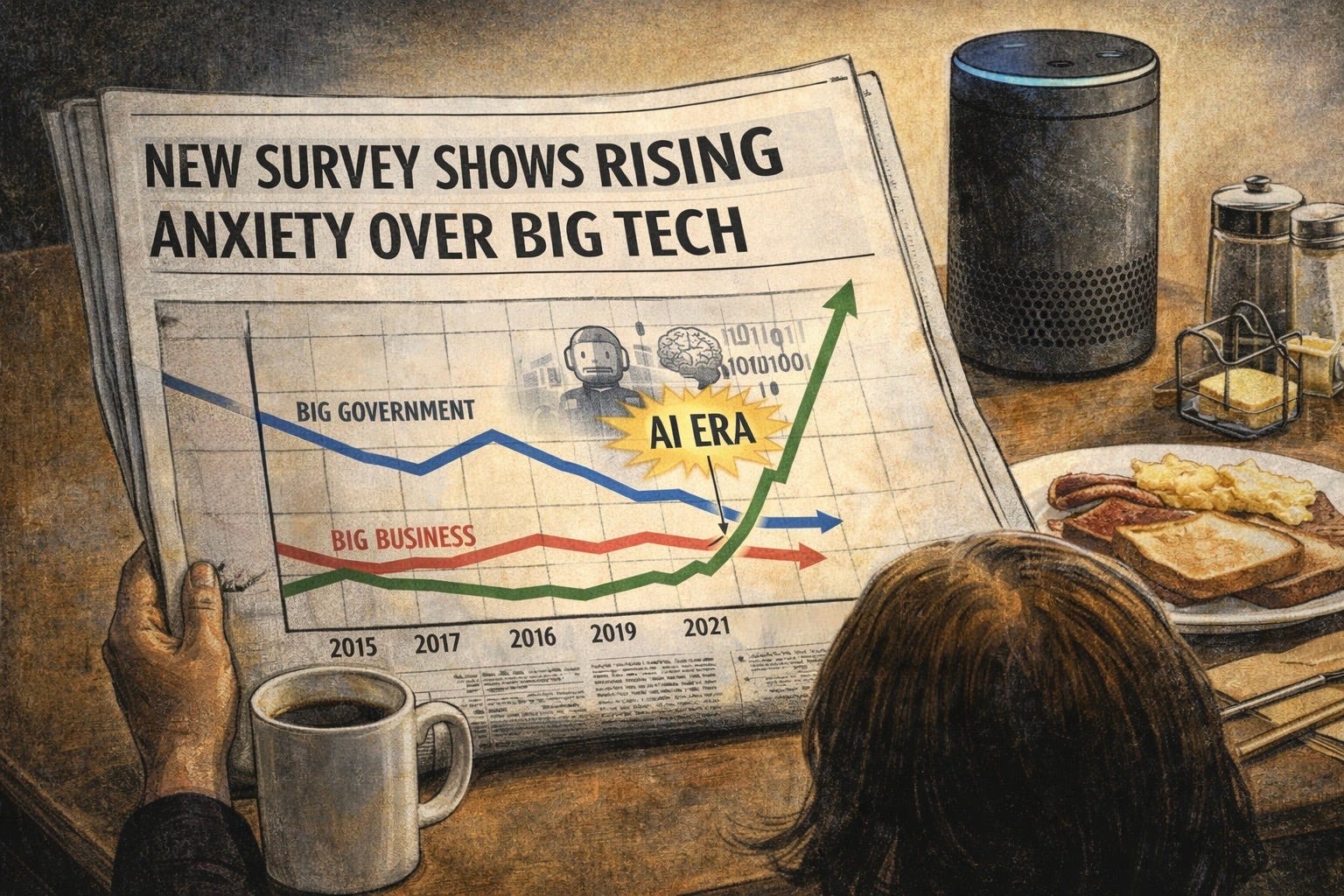
A new Gallup poll shows that more people are uneasy about technology companies as artificial intelligence changes how power works in society.

Afternoon content is typically paywalled for premium subscribers, but not this column. Enjoy!
🕒 6 min read
The Old Answer Still Leads, but Things Are Changing
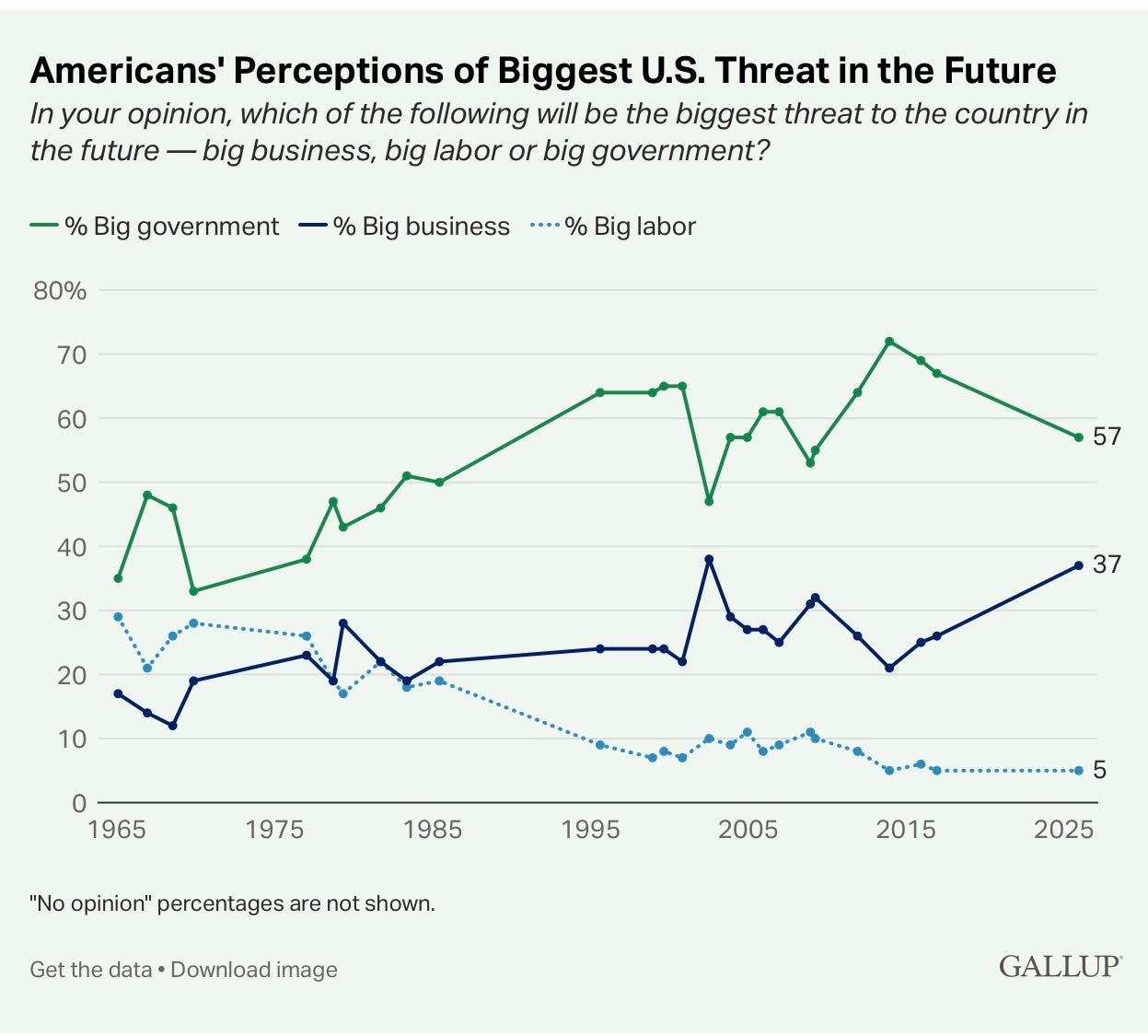
For decades, most Americans have said that ‘big government’ is the greatest long-term threat to the country. A new Gallup survey shows this is still the top answer, but it is not as dominant as it used to be.
Now, 57 percent of Americans see big government as the biggest threat to the country’s future. This is still a clear majority, but it has dropped from nearly 70 percent in the last decade. The change does not mean people trust Washington more. Instead, it shows that people are uneasy about more institutions, not just government.
Only 5 percent of people see big labor as the greatest threat. The real shift in public opinion is happening elsewhere, as new centers of power have grown quickly and often without much public attention.
Big Business Is Rising — But Big Tech Is the Real Story
Worry about big business is still growing. Now, 37 percent of Americans say it is the greatest threat to the country’s future, matching the highest level Gallup has ever recorded.
This skepticism makes sense. Mergers have reduced competition in many industries. Corporate lobbying is stronger and more effective. Prices often seem unrelated to normal market forces. Many people think big companies play by different rules than small businesses and regular consumers.
Still, big business is not seen as a bigger threat than big government. The real change shows up when Gallup asks a different version of the question that better matches how power works in daily life today.
Heightened Concern About Big Tech — And Why I Think AI Is Driving It
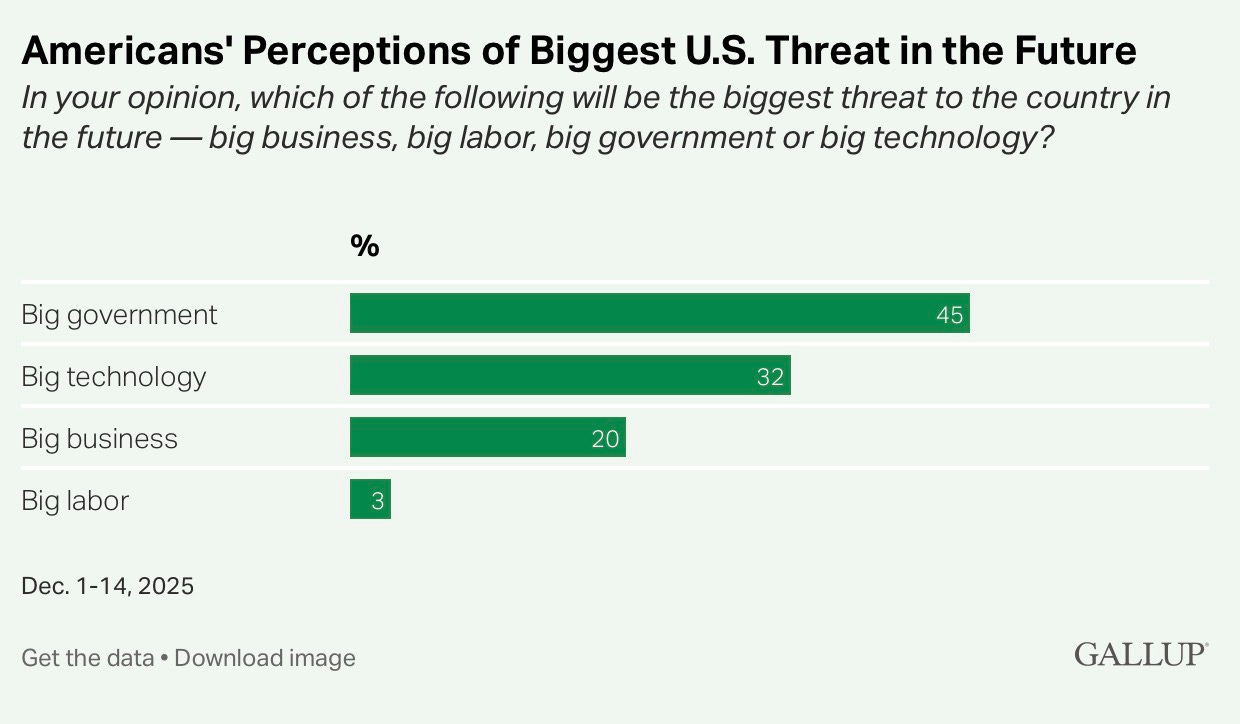
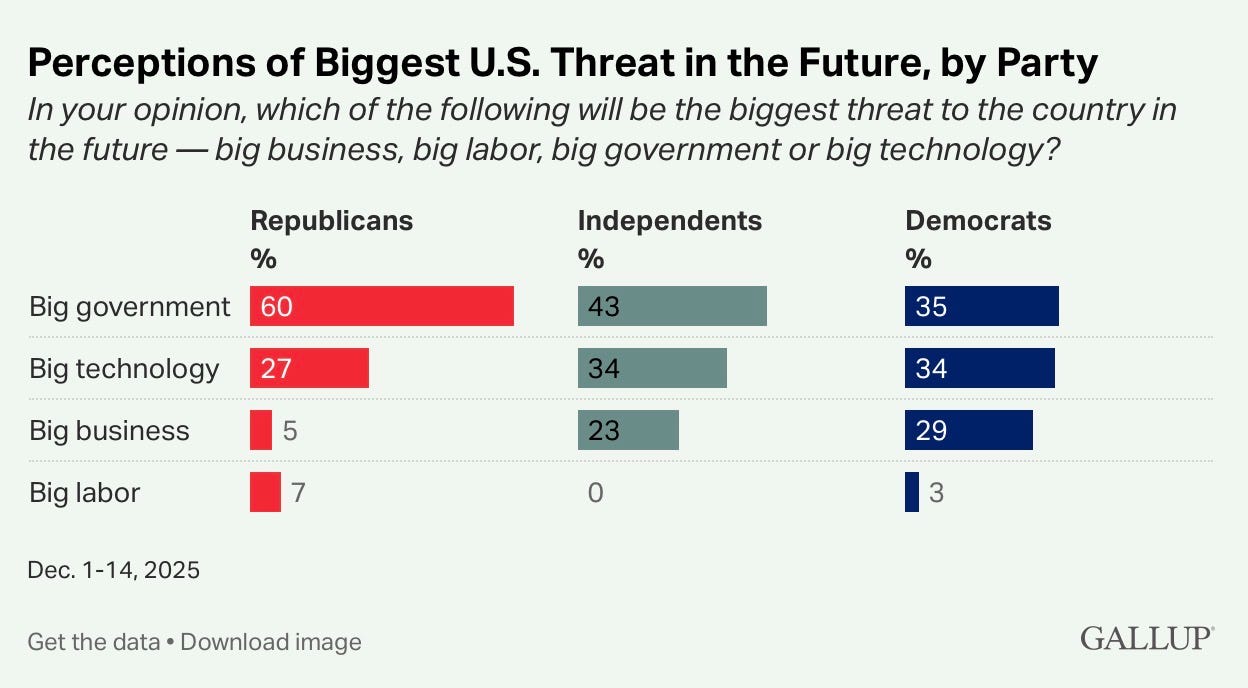
In another version of the survey that included ‘big technology’ as a fourth choice, almost one-third of Americans picked it as the greatest threat to the country’s future. This put big tech ahead of big business and just behind big government. This result clearly shows that people are more uneasy about the power of technology companies.
Gallup does not ask people why they feel this way or which parts of technology worry them most. In my opinion, though, it is hard to separate this new anxiety from the rapid rise of artificial intelligence in the last two years.
AI has gone from being a niche idea to something people use every day at work, in schools, in the media, and in government, all in a very short time. Technology companies are not just places for communication or business anymore. They are now using systems that evaluate, predict, recommend, and prioritize, often on a scale that replaces human judgment instead of just helping it.
How many stories do people need to read about an AI chatbot telling someone to get a divorce, or even encouraging self-harm, before the worry becomes too big to ignore?
Those stories resonate not because they are representative, but because they feel like warning signs. They point to technology that does not simply transmit information, but can influence decisions, emotions, and behavior, often without clear guardrails or accountability.
Why AI Makes Big Tech Seem Different
Technology companies have always been influential, but artificial intelligence makes that influence much bigger. Decisions that people used to make are now built into computer code. Choices that were once discussed in public are now made instantly by systems that few people understand or can question.
What unsettles many Americans is not innovation itself, but speeMany Americans are not worried about innovation itself, but about how fast and how big these changes are. Government power grows through laws and rules, usually slowly and in public. AI-driven power grows through software updates, private models, and terms of service that people have to accept to take part in modern life.ost consequential decisions affecting employment, speech, education, and personal well-being may increasingly be shaped outside traditional democratic accountability, and without the checks normally associated with public authority.
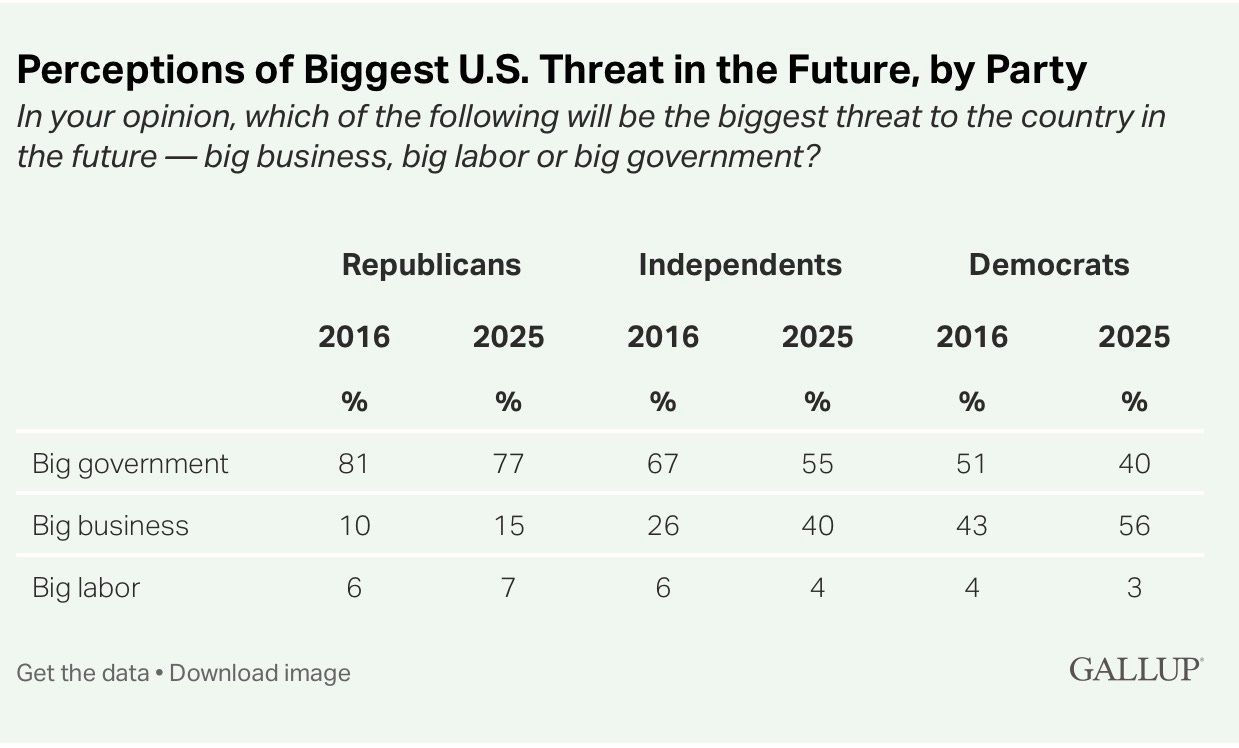
That concern crosses party lines. Republicans remain most wary of government power, but a growing share now point to technology companies. Independents split nearly evenly between government and tech. Democrats distribute their concern across government, business, and technology.
The main issue is not political beliefs. It is the discomfort people feel about concentrated power that is not checked by the public.
So Does It Matter?
This data matters because it captures a shift in how Americans understand risk in the modern age. Big government remains the default concern, but the rapid rise of artificial intelligence has forced a broader reckoning about where authority now resides.
AI has changed technology companies into something new. They are not just businesses anymore—they design systems that shape people’s lives. When private companies have as much influence as regulators, the line between public and private power starts to blur.
Americans are not against progress or new ideas. They are showing concern about changes that happen too fast, without enough safeguards, and about power that has no clear limits. The poll suggests that people want more caution before too much power is concentrated, and before decisions that people used to make are handed over to machines for good.
If you have not read it (or watched it, as it is presented in written and video form) - I have a lot to say about my concerns about the fast-development of AI technology without proper guard-rails…
Artificial Intelligence Has No Guardrails, and That Should Worry Us All

Welcome back to the “real world” with the holidays now behind us. A reminder that our morning content is available to all subscribers and visitors. To access all of our content (the remaining 40%), please consider a paid subscription! This initial piece is a thoughtful look at an important topic that will dominate 2026.