


Our morning content is free for all subscribers and guests! Usually our afternoon content is behind a paywall… If you are not yet a paid subscriber, consider upgrading — you are missing a significant portion of what we produce each week, and your support makes it possible. If you want to get it all and support my efforts, please consider a paid subscription!
Most of our content is available on our podcast feed, So, Does It Matter? SPOKEN. Which is available on your favorite podcast app. But this would not make sense to listen to, as it is heavily reliant on charts.
🕒 8 min read
The Civic Knowledge Problem
Nearly half of Americans do not know what America’s 250th anniversary commemorates.
According to a new survey from the Cato Institute, only 53 percent of Americans correctly identified the adoption of the Declaration of Independence as the event being celebrated this Fourth of July. Twenty-three percent said they were not sure. Others guessed the Constitution, the Pilgrims landing at Plymouth Rock, the first presidential election or the founding of Jamestown. Among Americans under 30, the number answering correctly fell to just 39 percent.
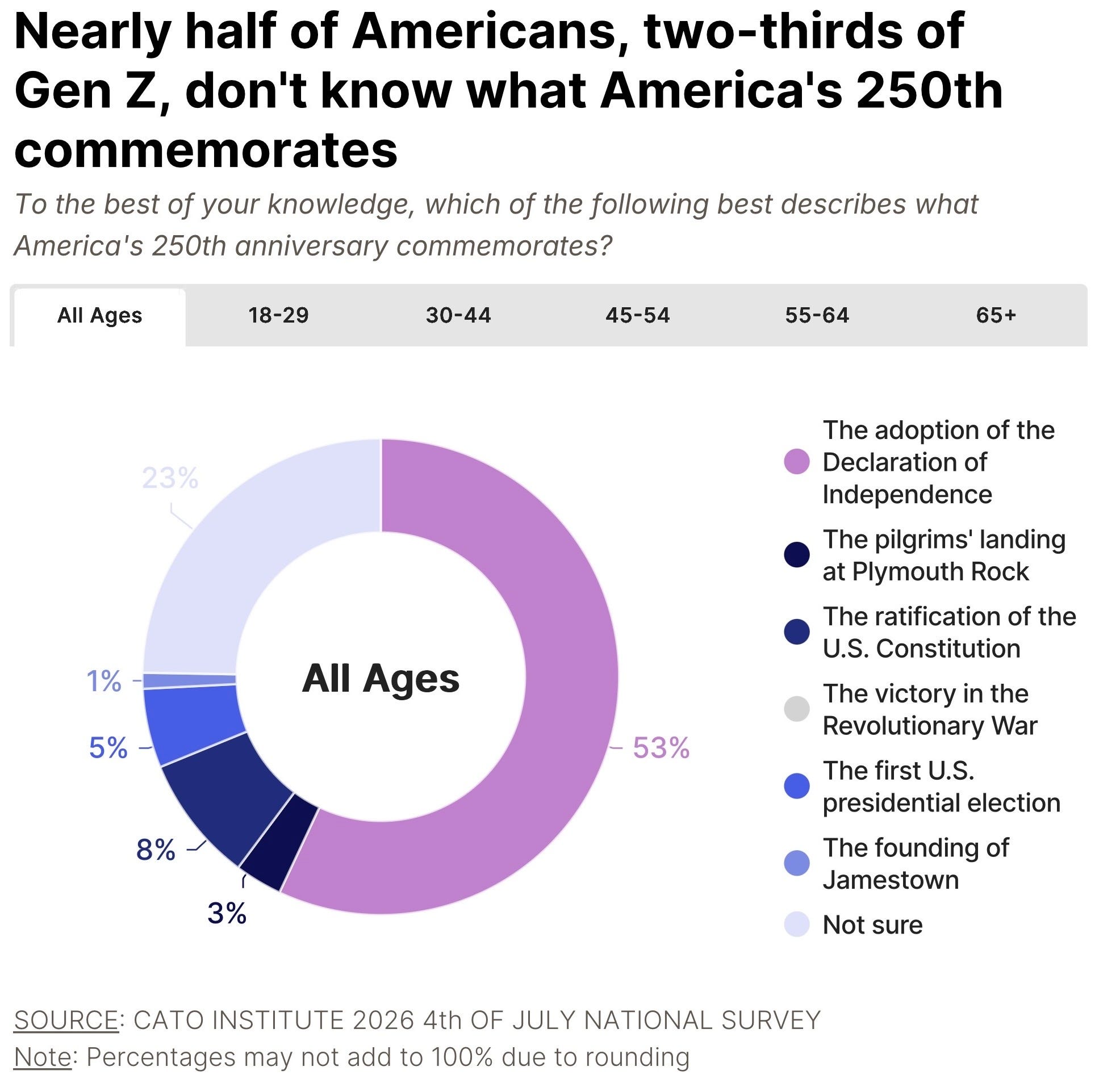
Manipulate the chart (by age cohort) here.
That finding would be alarming enough on its own.
But it turns out Americans have not forgotten the principles of the American Founding nearly as much as they have forgotten the history behind them.
The broader civics findings are even more sobering. Fifty-eight percent of Americans do not know that the Constitution’s primary purpose is to establish and limit the powers of government. Fifty-five percent do not know that the Supreme Court has the final say in constitutional disputes between the judiciary and the president. Nearly half cannot correctly identify the three branches of government.
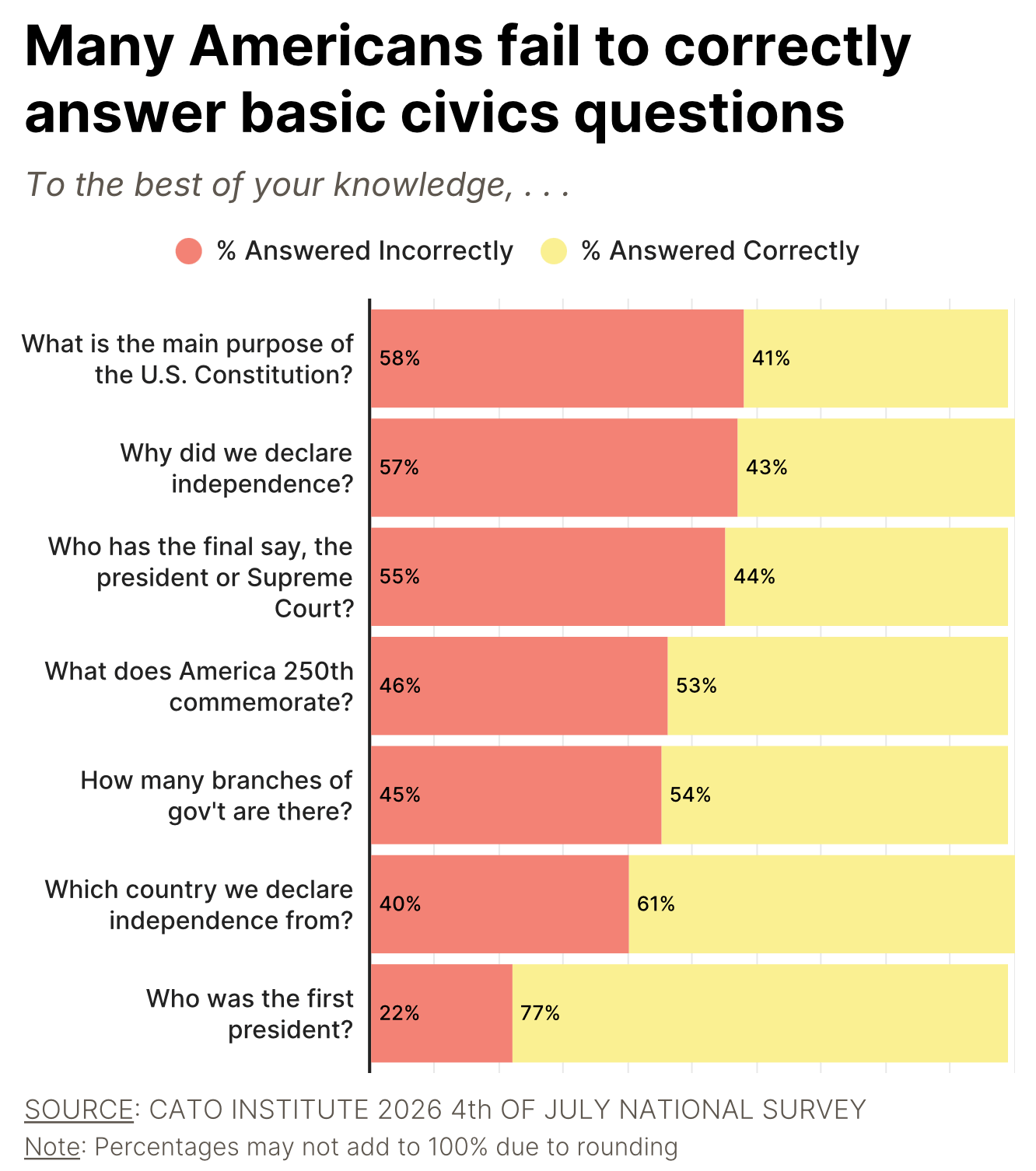
Perhaps the most concerning finding is that this is largely a generational problem. Gen Z performed worse than every other generation on all seven civic knowledge questions included in the survey. Only 36 percent of Americans under 30 correctly identified the Constitution’s primary purpose, and 61 percent could not identify what America’s 250th anniversary commemorates.
This is not a Republican problem. It is not a Democratic problem.
It is an American problem.
Americans Still Think Like The Founders
Spend enough time on social media or cable television and you could be forgiven for believing Americans have abandoned the Constitution, rejected the Founding Fathers and lost faith in the American experiment altogether.
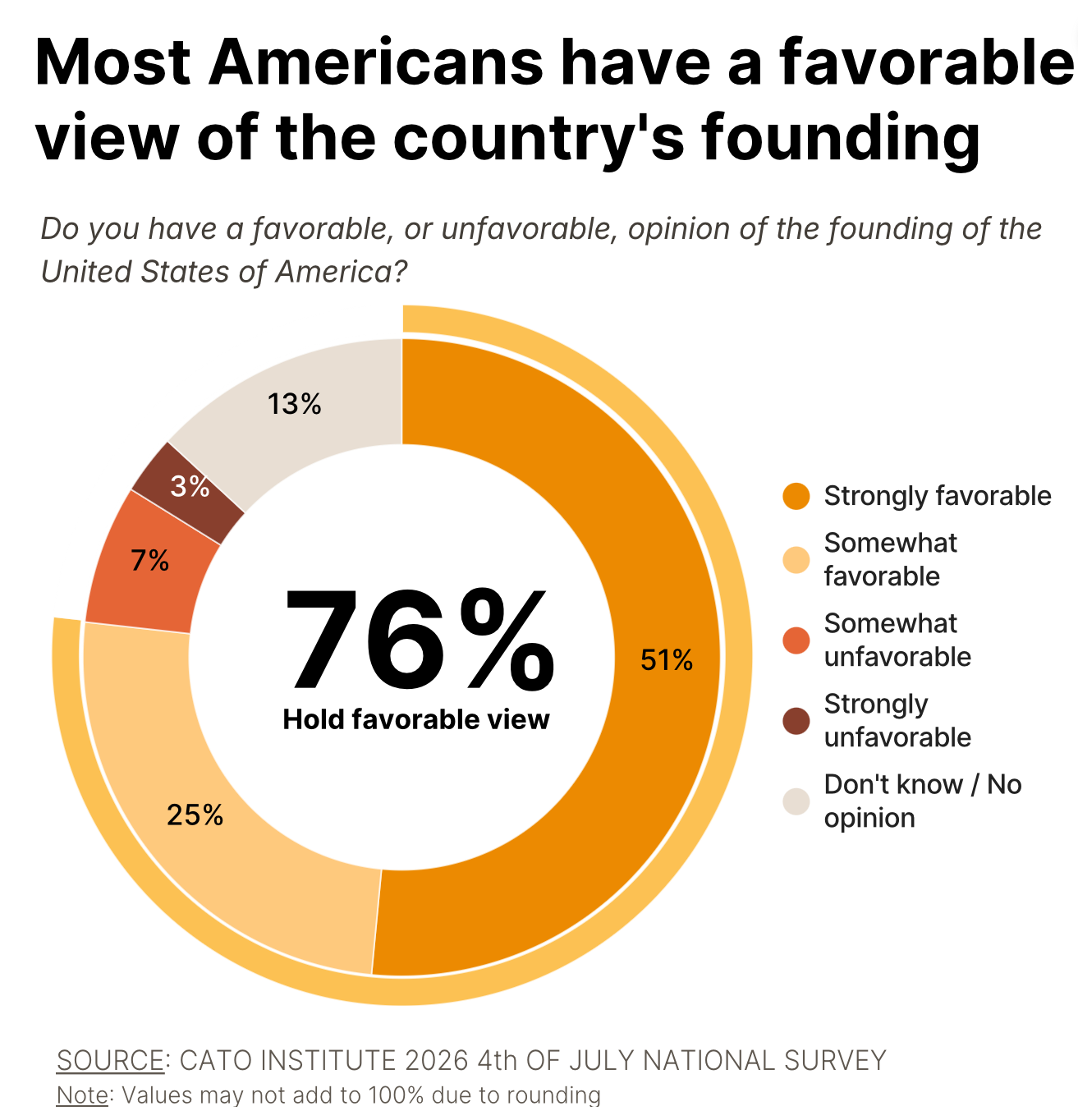
The survey suggests otherwise.
Americans continue to hold remarkably traditional views about government power and constitutional restraints. By a margin of more than three to one, Americans say they would rather have a government with divided powers and checks and balances, even if it means government moves more slowly and accomplishes less.
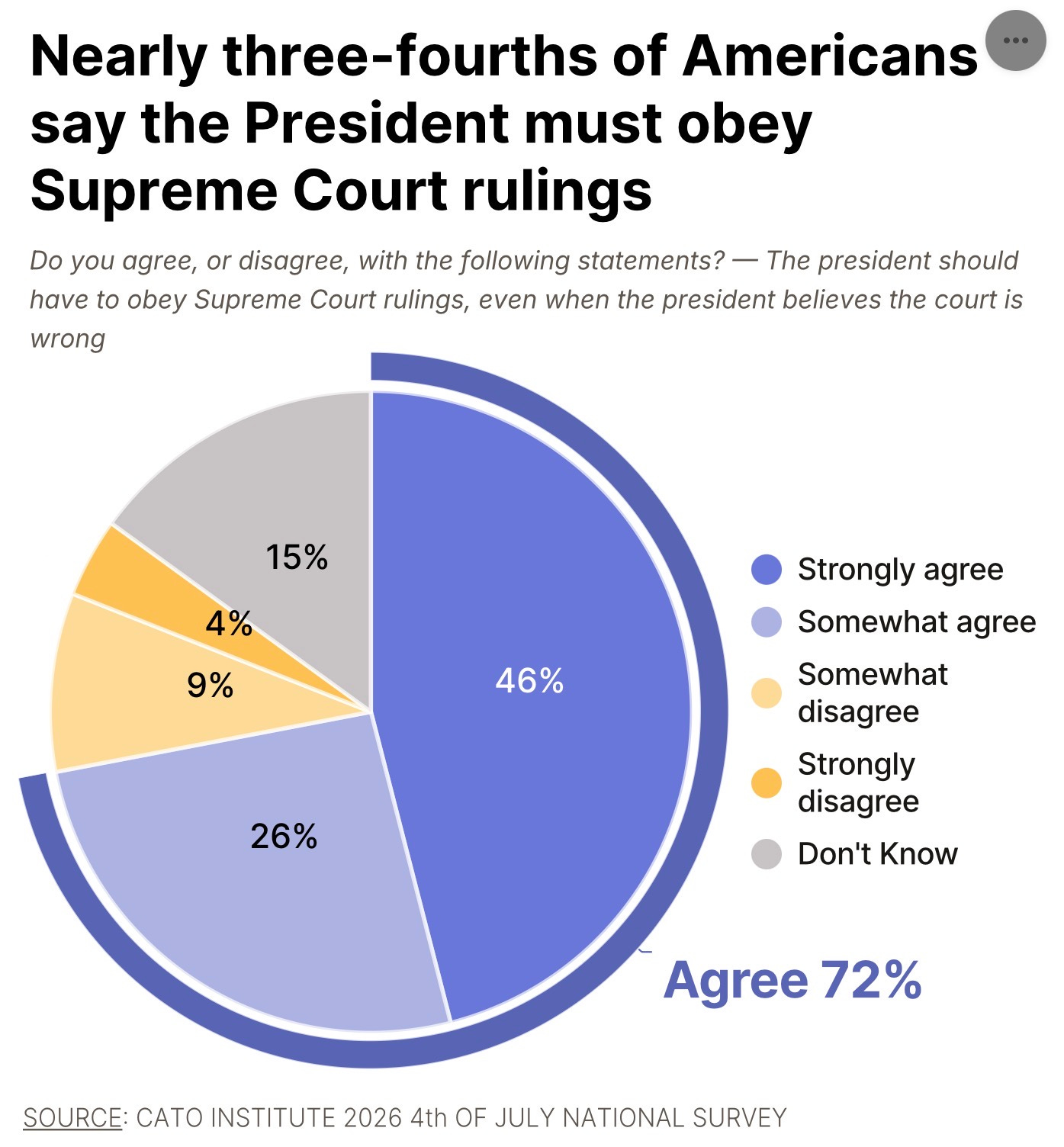
Americans also overwhelmingly reject the idea that presidents should be free to ignore the courts. Nearly three-quarters say presidents must obey Supreme Court rulings, even if they disagree with them politically or believe the court reached the wrong result. Majorities of both Democrats and Republicans agree.
Perhaps most encouraging, Americans remain deeply skeptical of concentrated political power itself. A majority say no political party should ever be trusted with too much power, regardless of which party happens to be in office. Democrats and Republicans agree on that principle as well.
James Madison would likely recognize these instincts immediately. Most Americans have never read the writings that became known as the Federalist Papers, but they continue to support the very system of separated powers and institutional restraints the Founders deliberately designed to protect liberty.
Americans Want These Values Passed Along
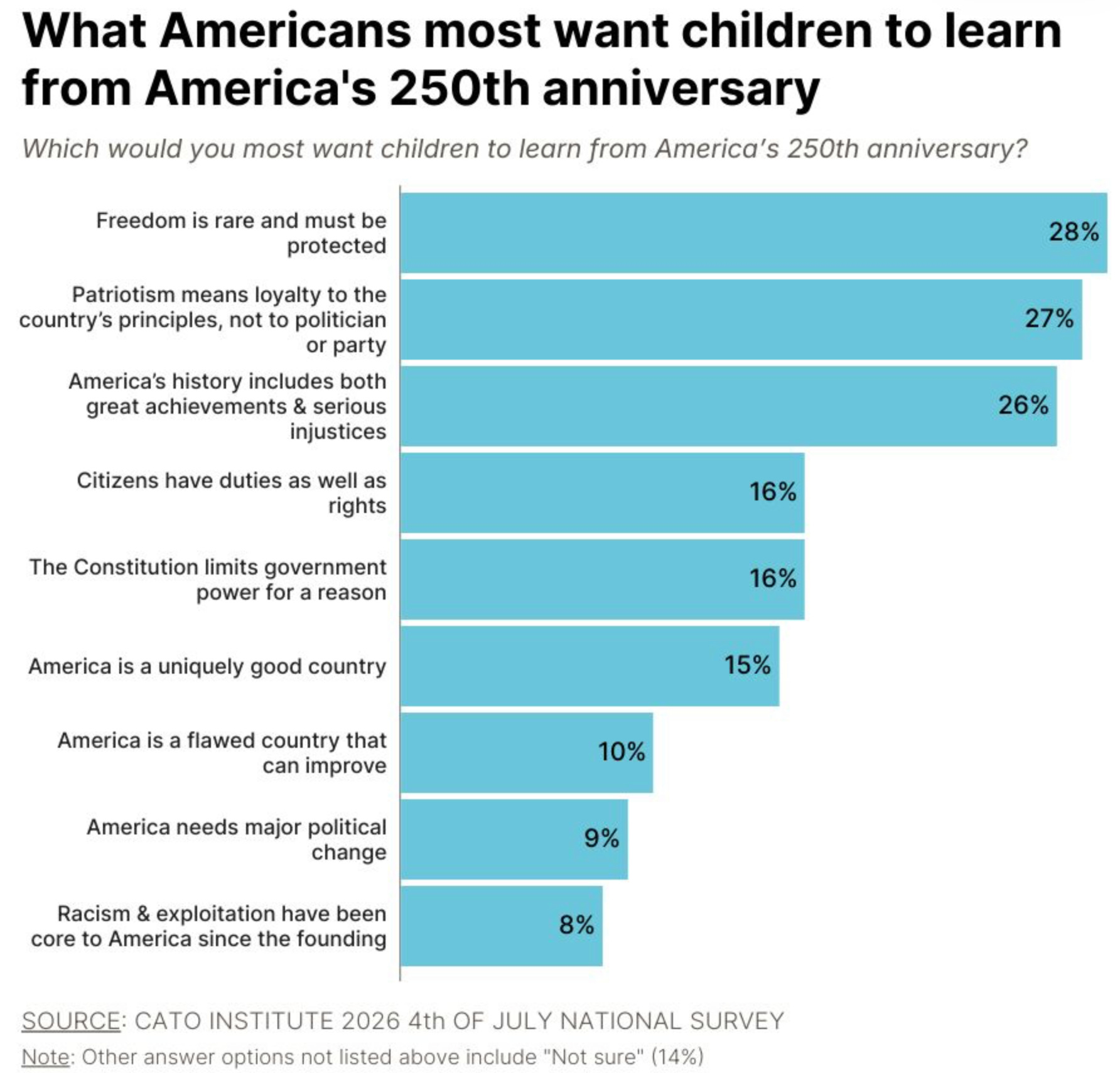
The survey also asked Americans what lessons they most want children to learn from America’s 250th anniversary.
The answers were revealing.
Americans did not choose nationalism, military strength or partisan politics. Instead, the most popular response was that freedom is rare and must be protected. Close behind was the belief that patriotism means loyalty to principles rather than loyalty to politicians. Americans also wanted children to understand that the country’s history includes both extraordinary achievements and serious injustices.
There is an enormous amount of wisdom packed into those answers.
Americans appear to understand that patriotism and honesty are not mutually exclusive. A country can celebrate its achievements without pretending it has never made mistakes. Likewise, a country can acknowledge mistakes without concluding that its history is nothing more than oppression and failure.
That balance may be one of the healthiest findings in the entire survey.
Americans Still Believe In The Founding
Despite these gaps in civic knowledge, Americans continue to hold overwhelmingly positive views of the nation’s founding and the principles that emerged from it.
Americans also overwhelmingly continue to embrace the rights and freedoms most closely associated with the Founding era. Freedom of speech topped the list of the country’s most important liberties, followed by voting rights, equal protection under the law, freedom of religion and due process protections.
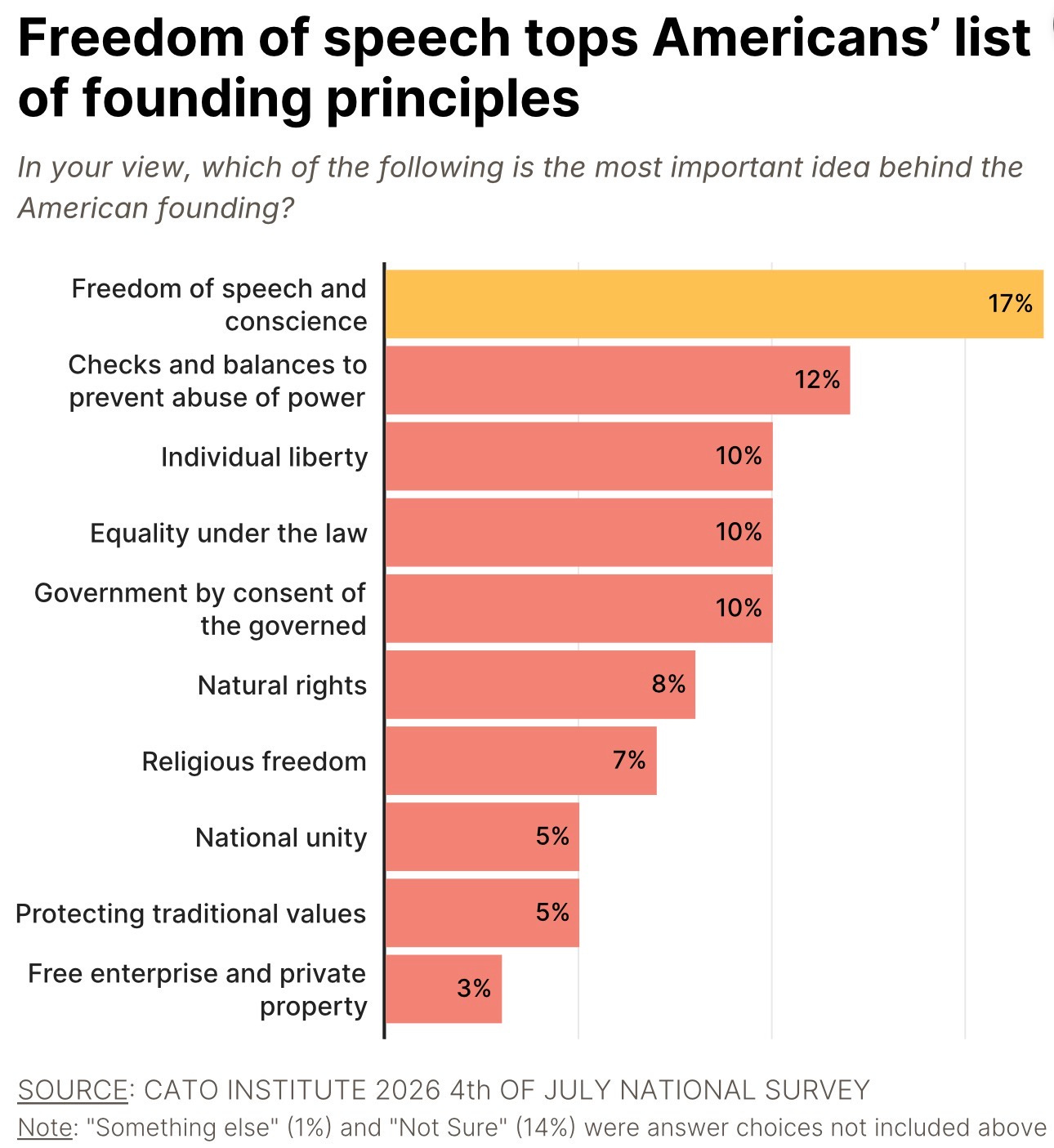
What is particularly striking is how closely this list resembles the concerns of the Founders themselves. Americans continue to prioritize speech, religion, due process and legal equality over economic guarantees or government benefits.
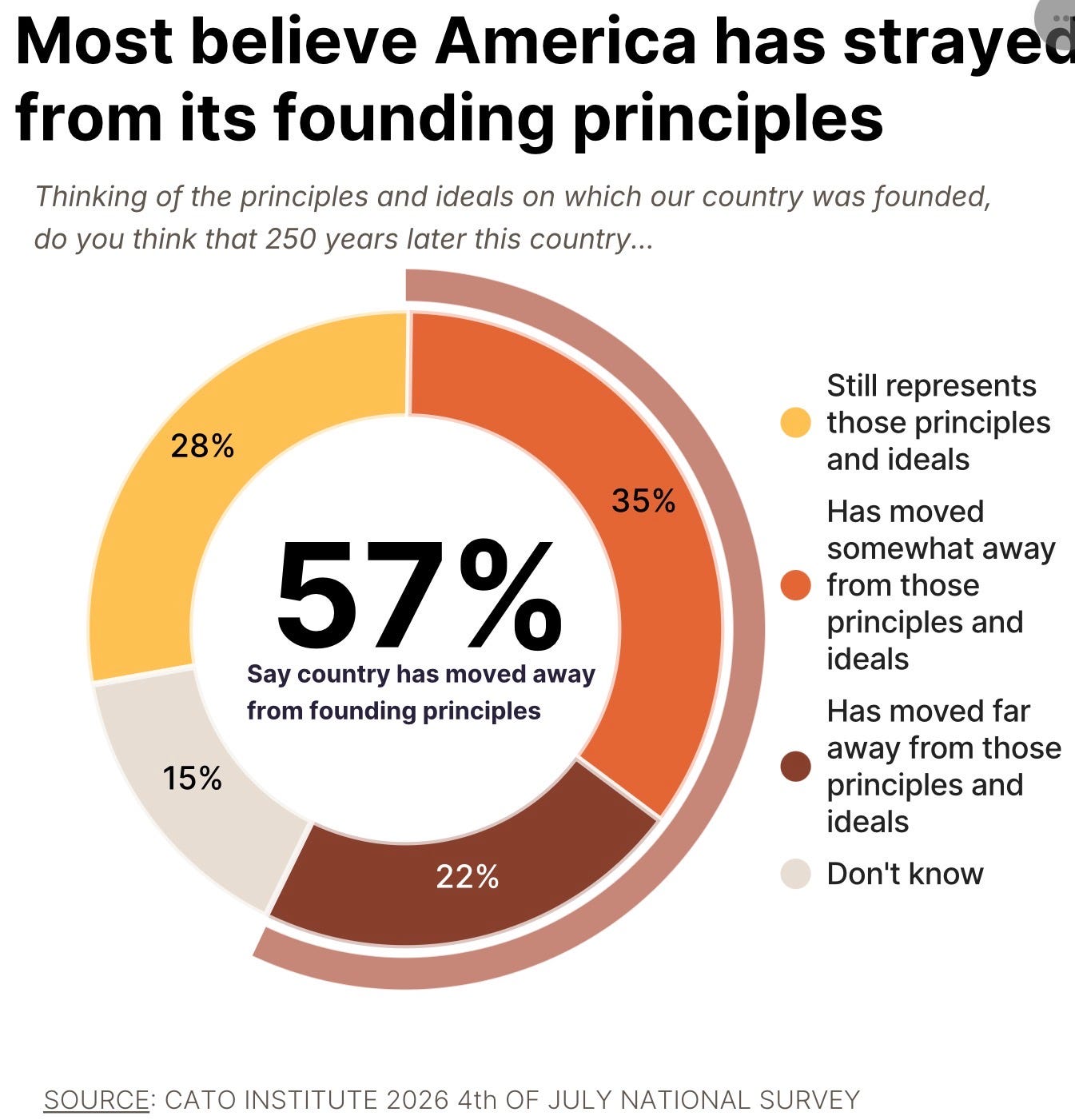
At the same time, a majority of Americans believe the country has moved somewhat or far away from the principles on which it was founded. Americans have not abandoned the American idea. Many simply worry that America itself may be abandoning it. More than half even worry that the United States could someday stop being a free country altogether.
So, Does It Matter?
The Cato survey offers both a warning and a reason for optimism as America approaches its 250th anniversary.
The warning is obvious. A constitutional republic depends on citizens who understand the institutions that govern them. A nation cannot preserve principles that its people no longer understand well enough to explain.
The reason for optimism is equally clear.
Americans still believe in limits on government power. They still believe presidents should obey courts. They still distrust concentrations of authority. They still cherish freedom of speech, due process and religious liberty. They still admire the country’s founding and want the next generation to understand it.
The appetite for self-government remains strong.
The challenge for America’s next 250 years may be rebuilding the civic knowledge necessary to sustain it.
Methodology And Link
The Cato Institute’s Fourth of July 2026 Survey was conducted online by Morning Consult from June 25-26, 2026, among a nationally representative sample of 2,253 American adults and carries a margin of error of plus or minus two percentage points.
You can review the full survey article here. There’s a LOT more there than I pulled out.