


We write our afternoon columns with our paid subscribers in mind. While everyone can read some of this piece, only subscribers get full access. [Now Unlocked!]
⏱️ 6-minute read
The Announcement Everyone Expected — and the Record It Avoids
This weekend, Los Angeles Mayor Karen Bass officially launched her re-election campaign with a downtown rally focused on familiar topics: affordability, safety, and challenging Washington. The announcement was expected, the timing made sense, and her message was crafted to show confidence and certainty.
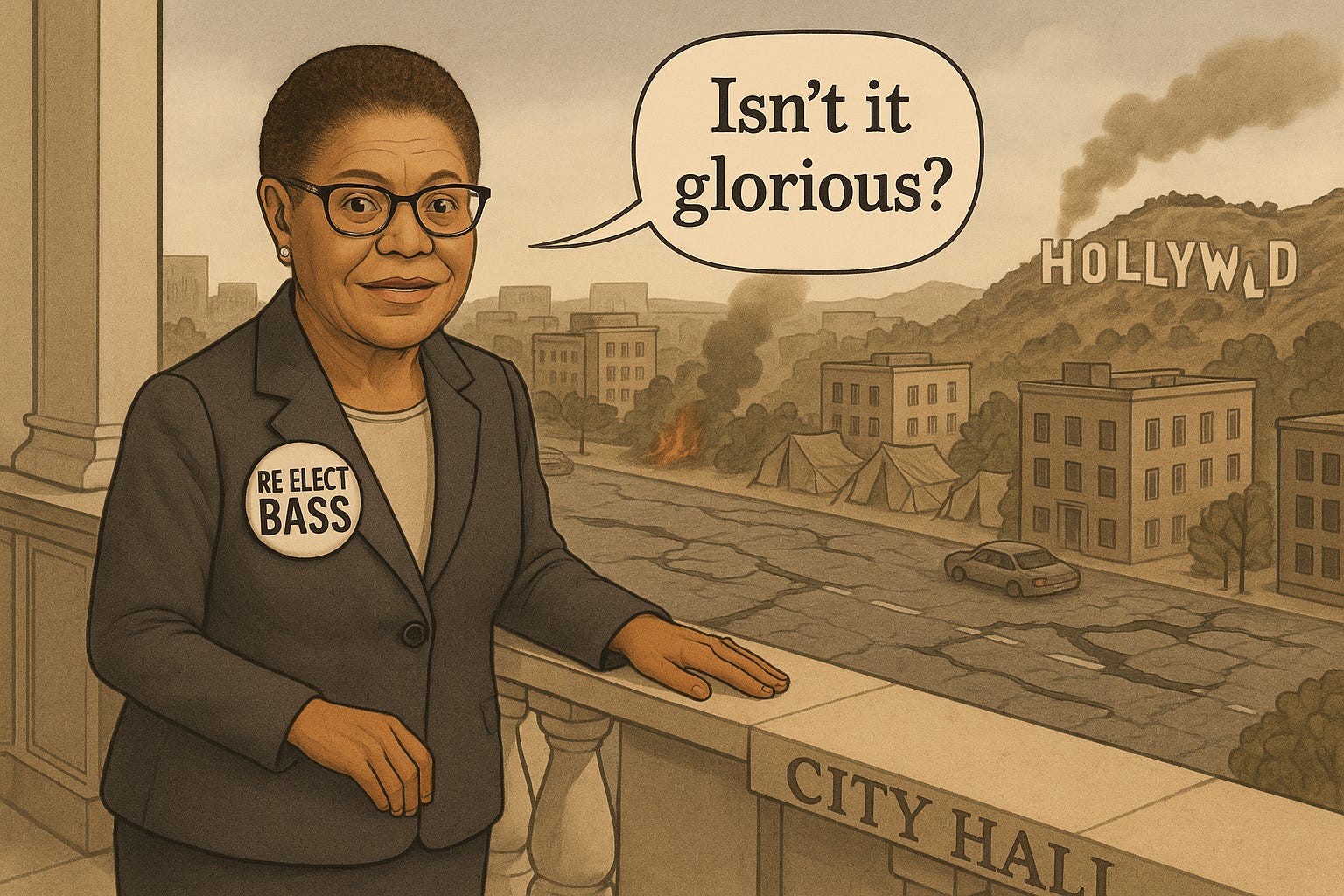
But she has not seriously addressed the problems facing the city she wants to lead for the next 4 years, other than, perhaps, to make them worse
By any fair measure, Karen Bass has been a poor mayor for Angelenos. Since she took office, the city has become less affordable, less functional, and less ready for the future. The difference between her promises and what she has delivered is obvious.
As I reviewed the mayor’s record for this column, it quickly became clear that there is too much to cover in just one piece. This overview is meant to give a big-picture look, not every detail. As the campaign continues, we’ll have time to dig deeper into these issues. For now, the goal is to step back and see how much has gone wrong under this administration.
And yet, that record alone may not prevent her from being re-elected. Bass starts this race as the clear favorite, backed by powerful groups, public-sector unions, and a political scene that often values appearances over real results. But being likely to win is not the same as deserving it. Before the campaign turns into a battle of slogans and turnout, we should take a closer look at her record.
Because when you do, the list is not short. It is overwhelming.
A City That Costs More and Delivers Less
Karen Bass promotes herself as focused on affordability, but Los Angeles now shows how a city can spend more and still deliver less. Bigger budgets have not led to better services, smoother operations, or a better quality of life.
The city faces serious budget problems, partly because labor deals guarantee payroll growth even as basic services struggle to keep up. At the same time, lawsuits and settlements cost hundreds of millions each year—money that doesn’t fix streets, house families, or add police officers.
Residents feel the impact directly. Taxes rise, fees increase, and services deteriorate. Trash pickup is unreliable, street repairs are (painfully) slow, and City Hall’s promise of affordability no longer matches what people experience.
Who Actually Governs Los Angeles?
One reason change is so hard at City Hall is that the mayor doesn’t hold all the power. Public employee unions have significant influence over budgets, staffing, work rules, and politics in Los Angeles.
These unions are organized and well-funded, and they play a key role in city elections. Any mayor who relies on them has limited room to make tough changes, and fundamental reforms often get blocked before they’re even discussed.
Under Bass, this problem has only gotten worse. Payroll remains protected as services decline across many departments. Real reform is set aside in favor of political stability, making the city less flexible and slower to respond, even when quick action is needed.
Homelessness Spending Without Accountability
Nothing shows the gap between good intentions and real results more than homelessness. Los Angeles continues to spend significant sums, but fundamental questions about what’s working remain unanswered.
Independent audits show the city can’t reliably track how much it spends or what it’s actually buying. Contracts are unclear, oversight is weak, and results are inconsistently measured. Spending continues to rise, but encampments persist, and neighborhoods deteriorate.
Major programs are promoted as major successes but often prove costly stopgaps. Temporary fixes replace real solutions. The city changes definitions and softens metrics, but continues to spend money regardless of effectiveness. For a city that claims to value data, this lack of transparency is difficult to justify.
Public Safety in an Era of Managed Decline
Los Angeles is preparing to host the Olympics and the World Cup, which will test every aspect of public safety and city management. But the city still struggles with police staffing, hiring, and morale, even as trust in public safety is shaky.
Budget choices have often prioritized payroll over building operations. Staffing shortages continue, even as people report crimes that hurt businesses, tourism, and neighborhood stability.
Over the weekend, I was watching one of Rick Caruso’s bevy of social media posts on the dysfunction that is Los Angeles, where he said he’d heard from an inside source at LAPD that the levels of sworn personnel are at an all-time (recent) low. He said, for budgetary reasons, that the newest Police academy class was cancelled. Damning.
Public safety needs more than promises or speeches. It takes sufficient staff, proper training, and effective deployment. This administration still hasn’t solved that fundamental problem.
Crisis Leadership, Scandals, and the Cost of Dysfunction
The Palisades Fire was a key test for Los Angeles leadership and revealed significant shortcomings in the city’s ability to respond and recover. The mayor's absence during the crisis looked bad (she was on a federally government-funded junket to Africa at the time), but a bigger issue emerged later: residents faced slow permit approvals, confusion, and poor communication during the recovery.
These problems aren’t just limited to emergencies. Los Angeles continues to lose money due to lawsuits, settlements, and remediations for management mistakes and poor oversight. The city’s leadership has also faced repeated corruption scandals, abuse of the permitting process, conflicts of interest, and ethical failures.
None of this requires personal corruption; it simply requires ongoing failures in oversight and accountability. These aren’t one-off problems. They show a system in which there are few consequences, the status quo is rewarded, and taxpayers bear the cost in both money and lost trust.
The Olympic Time Bomb
City Hall continues to present the 2028 Olympics as a significant opportunity. It could be, but it also poses important financial and operational risks, given strict deadlines and global scrutiny.
Important decisions about who will fund public safety, transportation, sanitation, and emergency services remain unresolved. The city faces significant risks as its finances weaken, and there won’t be time to improvise once the events begin.
The International Olympic Committee won’t overlook mismanagement, understaffing, or slow bureaucracy. They will call out these problems. Oh yes, when the financial troubles continue, guess who is on the hook? We are—the taxpayers.
So, Does It Matter?
This matters because cities don’t become successful by accident. They either face brutal realities or keep repeating old mistakes.
Mayor Bass did inherit some of these problems, as dysfunction in Los Angeles city government certainly predates her arrival. But she has worked hard to make things worse. I think she has spent more time managing negative stories than addressing the real issues. Compassion without competency doesn’t help those in need. Spending without accountability doesn’t bring justice. Leaders who depend on politics can’t make fundamental changes.
This column gives a broad overview for a reason. Each of these failures deserves and will get a closer look as the campaign goes on. But even from a distance, the problems are clear.
Voters will hear a lot about intentions during this campaign. They should demand real results instead, because Los Angeles can’t afford another four years of repeating the same mistakes.