

In Malibu, The Fire Is Over - But The Math Has Just Begun - Plus Gavin Newsom's Gas Folly, And How It's Helping Beijing
Not everyone who lost a home in Malibu is super-wealthy. And many were not carrying enough insurance to replace their homes. And then there is the government. What does all of this mean?

Our morning content is free for all subscribers and guests! Usually our afternoon content is behind a paywall…. If you are not yet a paid subscriber, consider upgrading — you are missing a significant portion of what we produce each week, and your support makes it possible. If you want to get it all and support my efforts, please consider a paid subscription! This afternoon content is not paywalled because has a link to the California Post, which is paywall-free (they make their money from ads).
You can also listen to this post (and the full California Post column) on our podcast feed, So, Does It Matter? SPOKEN. It is available on your favorite podcast app. And you can listen to it here.
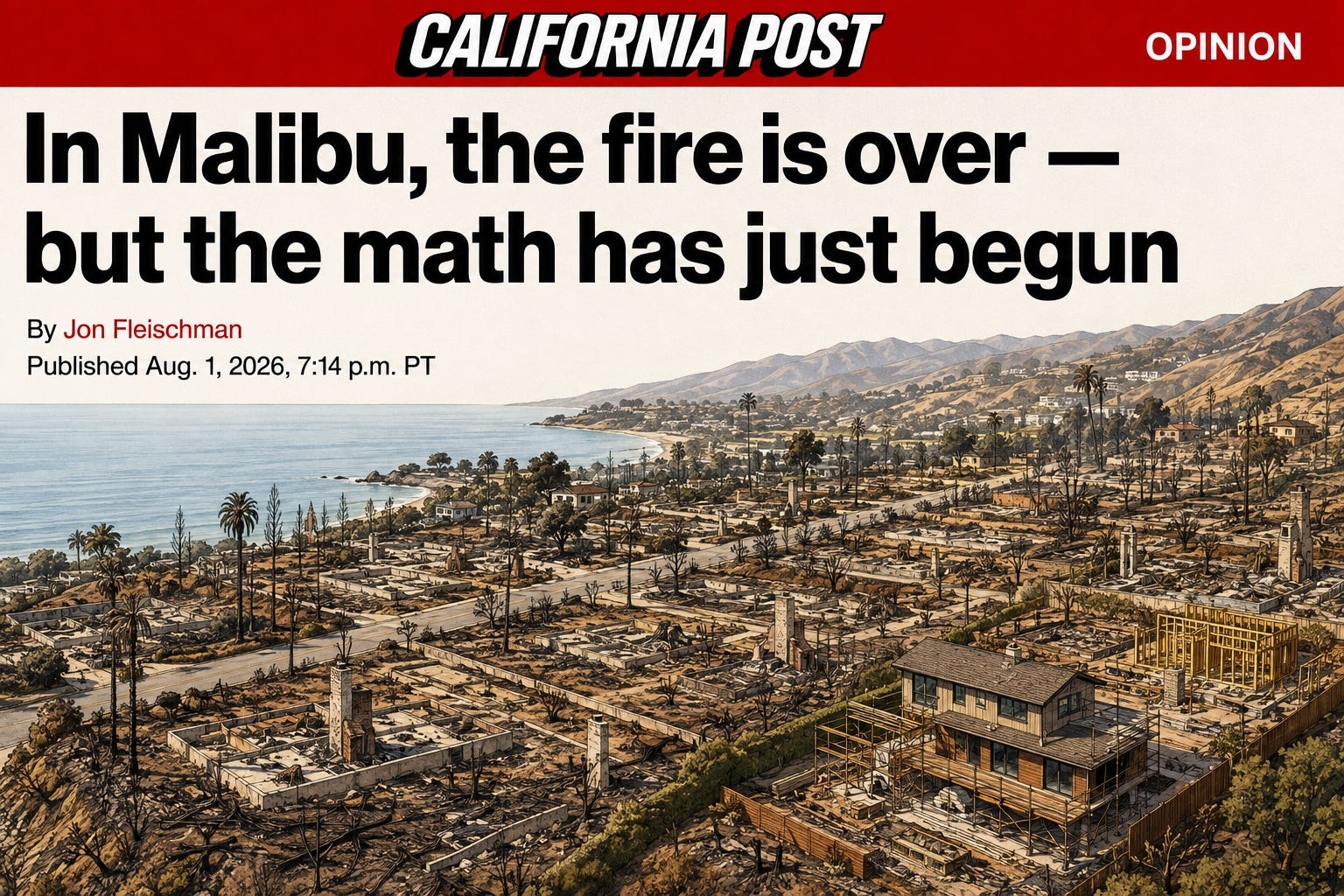
In Malibu, the Fire Is Over — but the Math Has Just Begun
My latest California Post column looks at why rebuilding Malibu after the Palisades Fire is not simply a permitting problem — and how the financial realities may quietly reshape who owns the city for generations.
The fire is out. The debris is being cleared. Permits are moving.
But for many Malibu homeowners, the hardest part is only beginning.
Rebuilding along the coast can cost millions more than insurance will cover. Engineering requirements, seawalls, septic systems, utilities, construction inflation and months of delay can turn an already painful decision into an impossible financial equation.
Government deserves plenty of blame. Every unnecessary permit, bureaucratic hurdle and avoidable delay makes rebuilding more expensive. Families who have already lost their homes should not have to spend years fighting public agencies before they can rebuild or move on.
But even if every approval were issued tomorrow, many homeowners would still confront the same question:
Where do they find the missing millions?
That is the part of the story that gets lost when the debate focuses entirely on government incompetence. Streamlining permits matters. Cutting red tape matters. But neither creates the enormous amount of private capital needed to close the gap between an insurance payout and the actual cost of rebuilding in Malibu.
Malibu is often portrayed as a playground for billionaires. The reality is more complicated. Many families bought decades ago, inherited their homes or became wealthy on paper as property values rose. An expensive lot does not necessarily mean its owner has several million dollars sitting in the bank.
A family can own an $8 million property and still be unable to finance a $5 million rebuild. That does not make them poor. It does make the decision to sell entirely rational.
Every month of delay adds carrying costs, uncertainty, and pressure. Every new engineering requirement pushes the final bill higher. Every dollar not covered by insurance reduces the number of longtime owners who can realistically return.
In my full California Post column, I examine why some residents may have no rational choice but to sell — and what happens when disaster, underinsurance, regulation and soaring construction costs collide in one of California’s most valuable communities.
The coastline will recover. Homes will rise again. Restaurants will reopen, and Malibu will remain one of the most beautiful places in California.
But the rebuilt city may not belong to the same people who lived there before the flames.
👉 Read my full column in the California Post HERE. (No Paywall)
But Wait, There’s More — A BONUS Column…
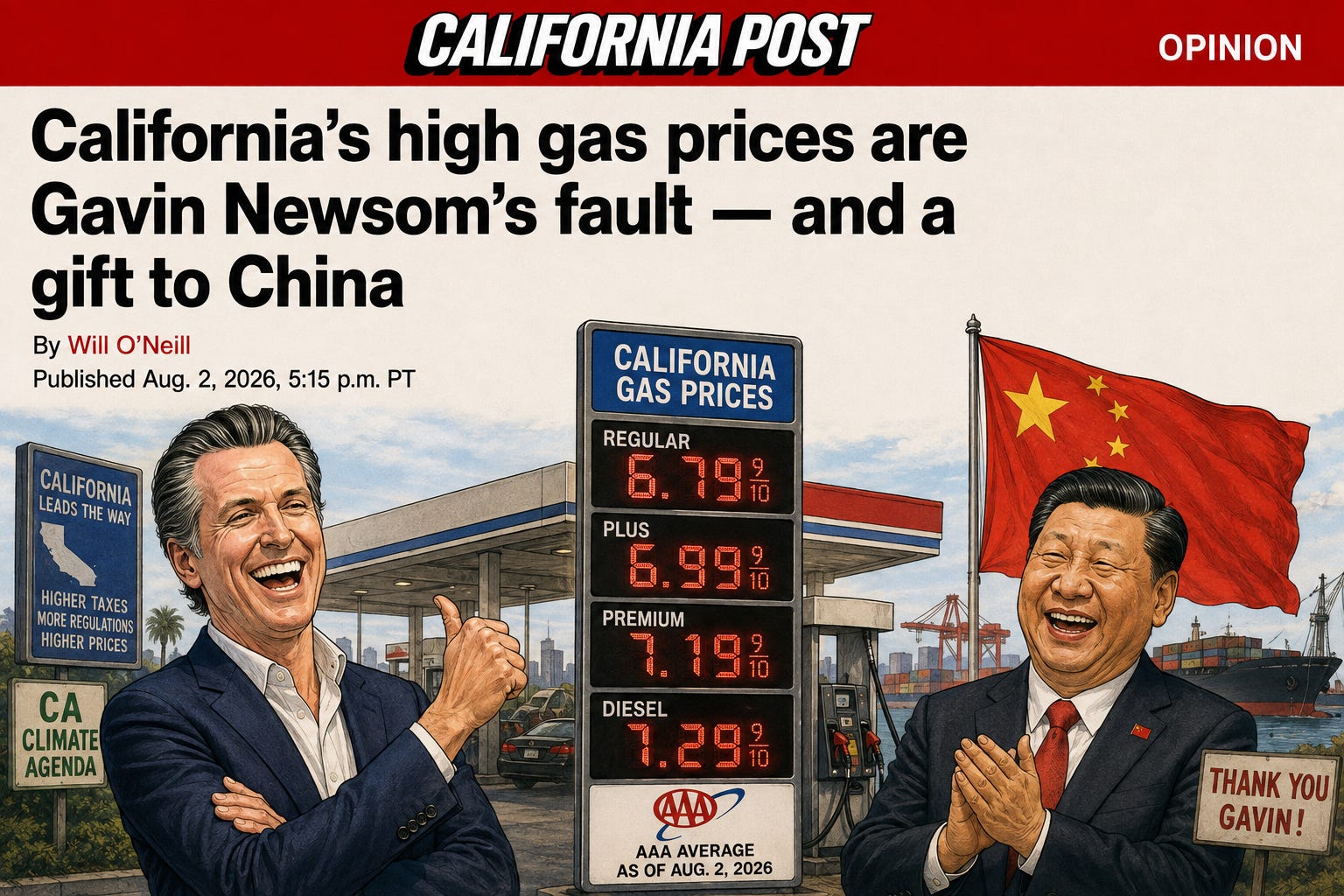
California’s High Gas Prices Are Gavin Newsom’s Fault — And A Gift To China
My close friend Will O’Neill has written a sobering column for the California Post, and I wanted to share it with you.
Will, who is the Chairman of the Republican Party of Orange County, explains how California’s political leaders have spent decades making choices that have driven up energy costs, weakened our refining capacity, and left families dangerously exposed to disruptions overseas. While Governor Gavin Newsom blames oil companies, speculation, and global turmoil for gas prices approaching $6 a gallon, Will shows that Sacramento’s policies have made every crisis worse.
California has lost nearly half its refineries over the past two decades. It requires a specialized gasoline blend that cannot easily be replaced when supplies are interrupted. The result is greater dependence on fuel shipped from Asia and the Middle East—including markets shaped by China and regimes hostile to American interests.
This column is one big reminder that California’s absurd lack of affordability—worse than anywhere else—is not an accident. It is the result of bad choices made by Democrats in Sacramento, decade after decade, with no sign of stopping anytime soon.
Below is a preview. As with the column I shared above, click the link beneath it to read Will’s piece on the Post’s website. You will want to do this.