

Government Should Never Fund The Press
Newsom’s latest media grants cross a line government should never cross

Our morning content is free for all subscribers and guests! Usually our afternoon content is behind a paywall… If you are not yet a paid subscriber, consider upgrading — you are missing a significant portion of what we produce each week, and your support makes it possible. If you want to get it all and support my efforts, please consider a paid subscription! Today there is exclusive content below this column for paid subscribers.
You can also listen to this post on our podcast feed, So, Does It Matter? SPOKEN. It is available on your favorite podcast app. And you can listen to it here.
⏰ 6 minute read
A Dangerous Line
Here’s something every California taxpayer ought to think about.
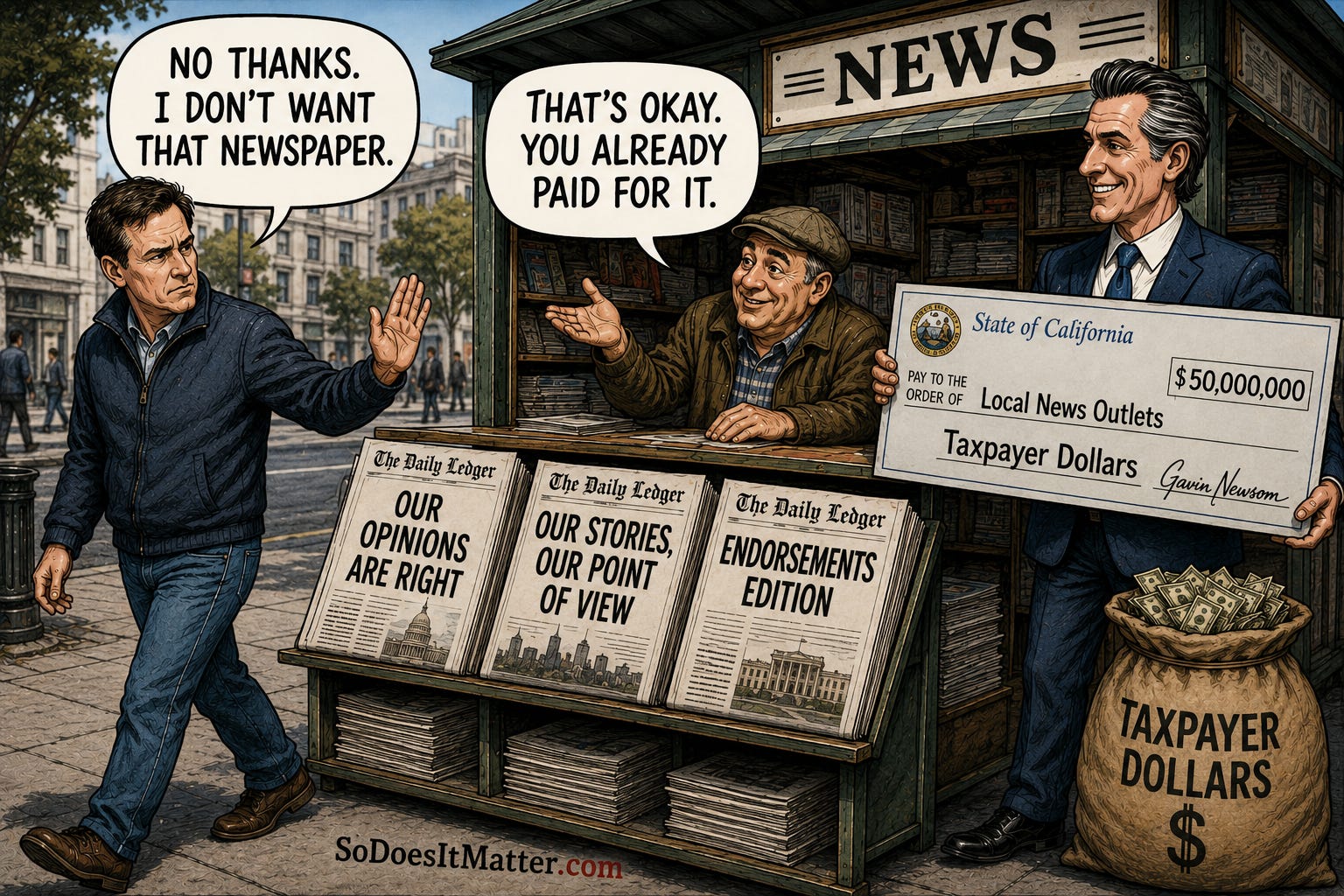
Sacramento now wants you to help pay for the very media organizations responsible for covering Sacramento.
Governor Gavin Newsom this week announced another $20 million in taxpayer grants for California media organizations, matched by another $20 million from Google. His administration calls it an investment in local journalism. I call it something else: government crossing a line it should never cross.
Government should never force taxpayers to subsidize private media.
No private industry has a constitutional right to a government subsidy simply because consumers have stopped buying its product. Journalism shouldn’t be the exception.
It doesn’t matter whether the check goes to a newspaper, a television station, a nonprofit newsroom or an online publication. They’re all in the business of making editorial decisions—what to cover, what to ignore, what deserves an investigation and, in many cases, which candidates deserve an endorsement. Those decisions belong in the marketplace of ideas—not on the receiving end of taxpayer subsidies.
If Californians want to support a news organization, they already know how. Subscribe. Donate. Become a member. Support it voluntarily. Government should never make that choice for them, especially when taxpayers are being compelled to subsidize media organizations whose news coverage, editorial pages and political reporting many Californians view as consistently biased in favor of the political left.
I am a conservative, and I have no interest in hiding that. But this principle does not belong to conservatives. A liberal taxpayer should not be forced to subsidize a right-leaning publication any more than a conservative taxpayer should be forced to subsidize a left-leaning one. Government should not compel anyone to finance private speech they reject.
When The Market Speaks
Supporters argue these subsidies are necessary because journalism is struggling. Many media organizations are certainly struggling. But that does not mean taxpayer subsidies are necessary—or justified. The more important question is why so many news organizations are struggling in the first place.
Yes, the internet changed everything. Craigslist gutted classified advertising. Google and Facebook transformed the ad business. Nobody disputes that.
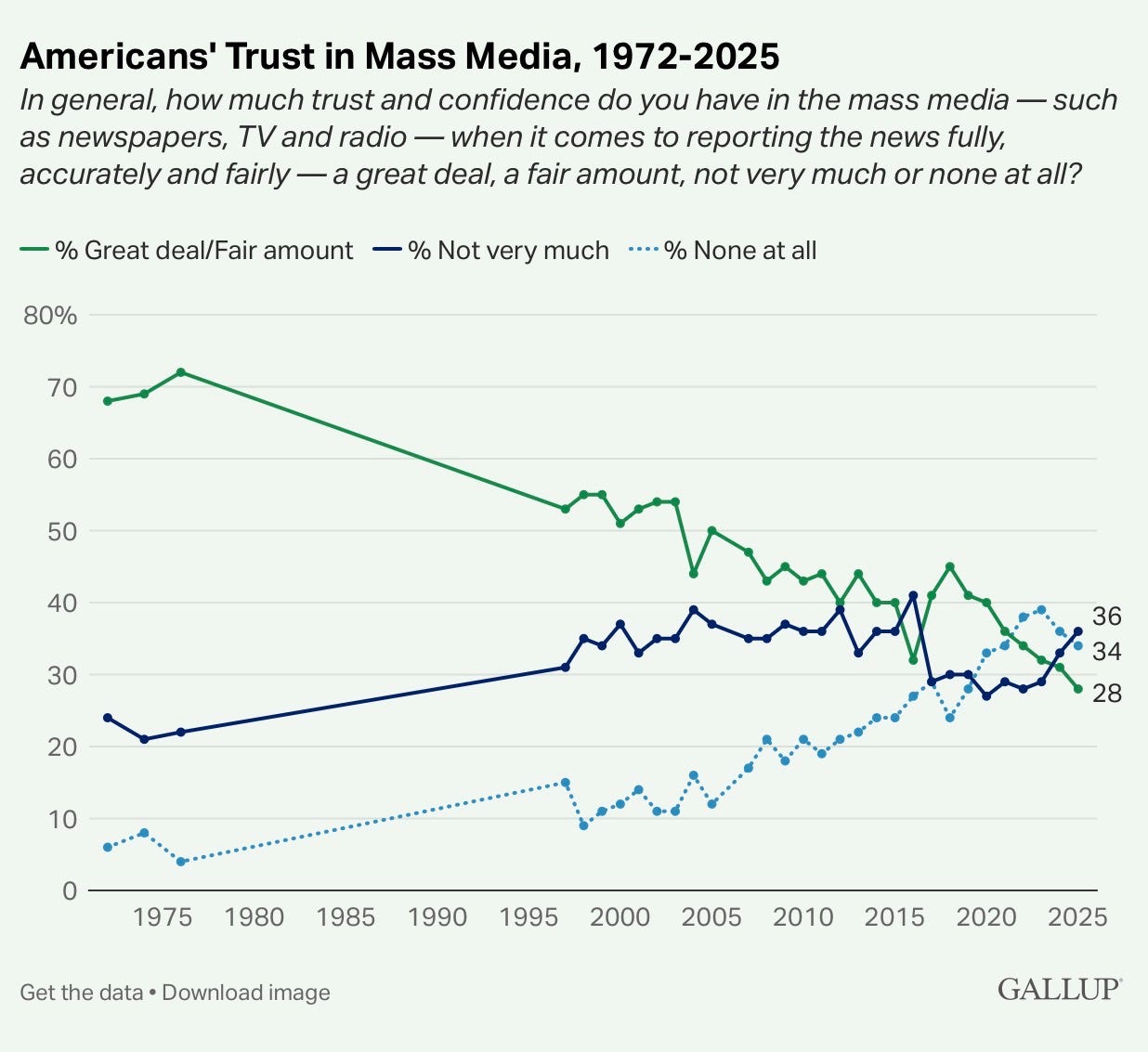
Another reason many legacy media organizations are struggling is that millions of Americans simply stopped trusting them.
Gallup found that only 28% of Americans have a “great deal” or a “fair amount” of confidence that the mass media reports the news “fully, accurately and fairly”—the lowest level Gallup has ever recorded. When Gallup first asked the question more than five decades ago, confidence was roughly 70%.
California’s leading news organizations have every constitutional right to cover the news however they choose. If readers believe the Los Angeles Times, the Sacramento Bee and other major outlets increasingly approach public affairs through a progressive lens, that is their choice.
Readers don’t owe any news organization their loyalty.
If they like what they’re reading, they’ll subscribe.
If they don’t, they’ll leave.
That’s the marketplace doing exactly what it’s supposed to do.
Instead of encouraging the industry to earn those readers back, Sacramento is stepping in to replace part of the revenue the market has already taken away.
When readers leave, the answer isn’t to send taxpayers the bill.
Who Watches The Watchdogs?
Journalism occupies a unique place in our constitutional system. Its responsibility is to investigate government, expose waste, uncover corruption and ask uncomfortable questions on behalf of the public. Its independence is not merely desirable—it is essential.
James Madison understood the importance of a free and informed people when he wrote, “A popular Government, without popular information, or the means of acquiring it, is but a Prologue to a Farce or a Tragedy; or, perhaps both.”
Nearly 200 years later, Madison’s warning still rings true.
But he envisioned a press that informed the people and challenged those in power—not one that depended, even in part, on those same politicians for financial support.
I am not accusing reporters of changing stories because of these grants. The problem is institutional, not personal.
A watchdog should never depend on the people it is supposed to watch for part of its dinner.
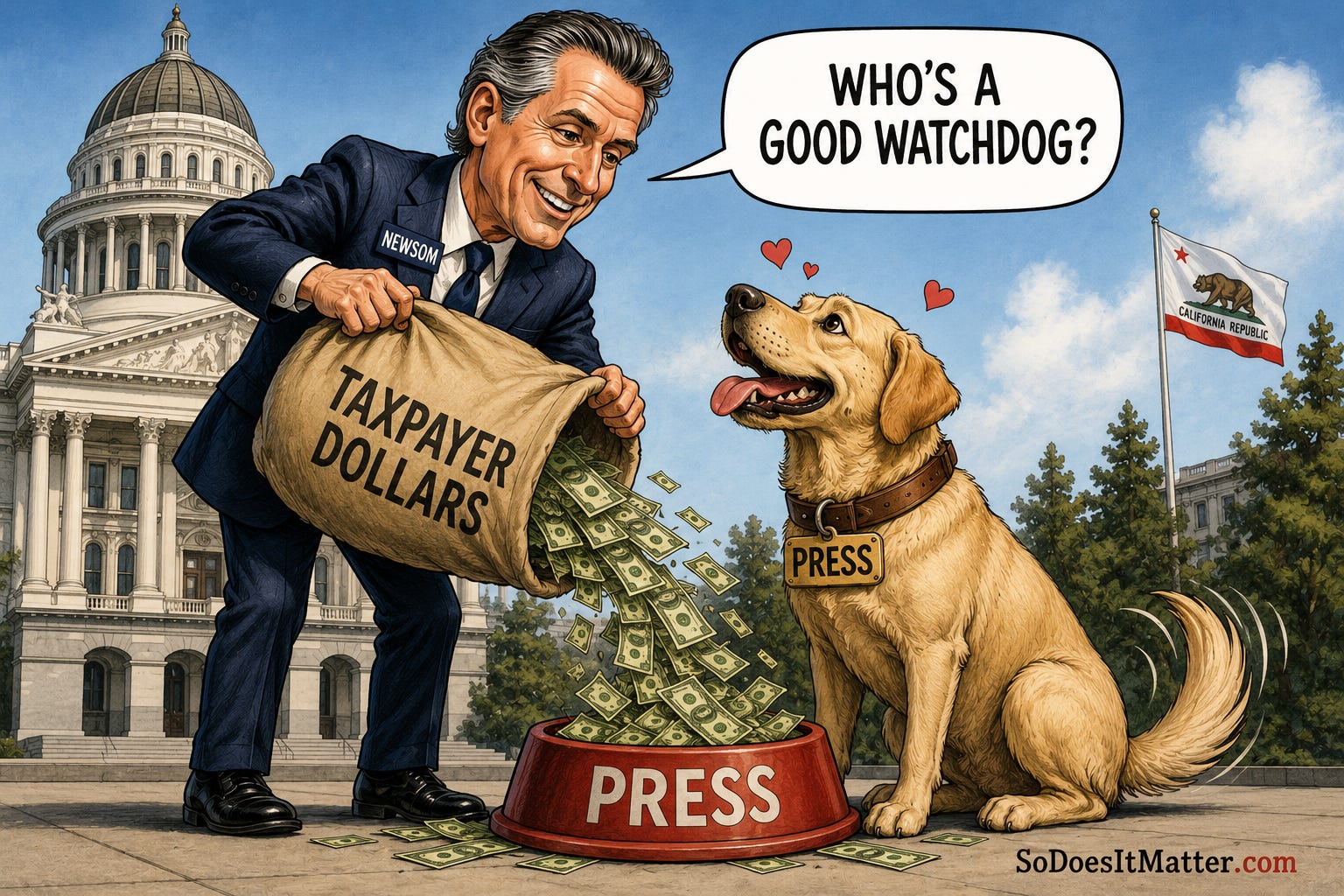
Even if every journalist acts with complete integrity, the public should never have to wonder whether government funding influences the aggressiveness of a newsroom’s reporting. If declining readership can simply be replaced with taxpayer money, where is the incentive to rebuild public trust?
In a healthy republic, government should fear an independent press. The press should never depend on government.
A Message To California’s Newsrooms
If you’re a journalist reading this, I have a sincere question.
Before asking taxpayers to rescue your industry, have you honestly asked why so many taxpayers stopped trusting it?
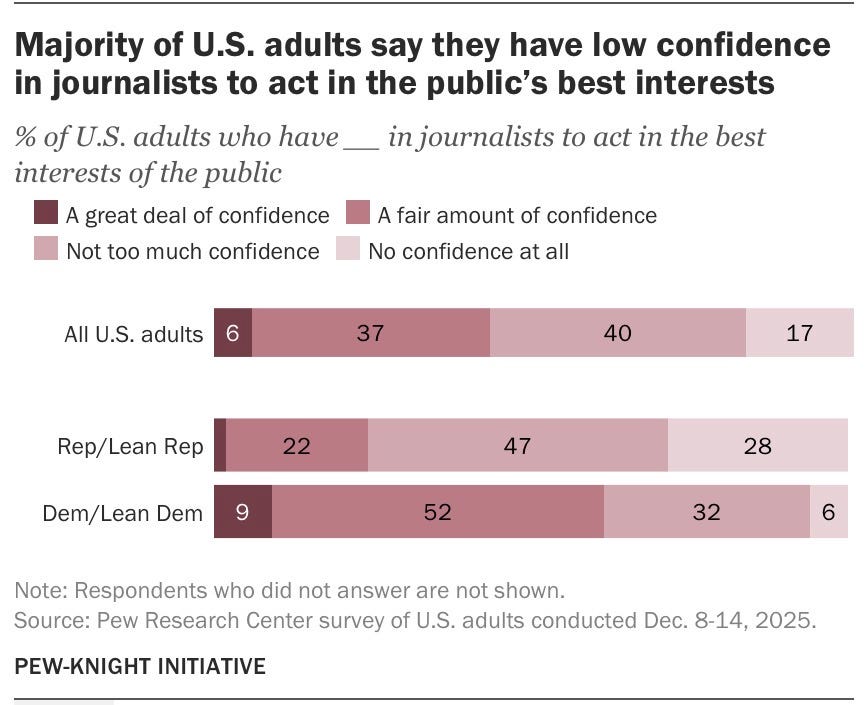
Pew Research found that a majority of Americans have little or no confidence that journalists act in the public’s best interests. Government grants may help pay salaries, but they will not solve that problem.
Journalists demand accountability from everyone else. Maybe it’s time to apply that same standard to themselves.
Journalism speaks constantly about diversity. But does that commitment include diversity of thought? Roughly half of voters supported Donald Trump. How many people in your newsroom did? How many editors opposed accepting taxpayer money on principle?
Maybe readers aren’t leaving because of technology alone.
Maybe they’re leaving because they no longer trust what they’re reading.
That’s a much harder conversation. But it’s the one journalism needs to have.
Government can subsidize payroll. It cannot subsidize credibility.
So, Does It Matter?
A free press is one of the indispensable pillars of a free society. That is exactly why it must remain independent—not only in reality, but in appearance.
Newsom argues he is saving journalism.
I believe he is weakening one of journalism’s greatest strengths—its independence from the government it is supposed to hold accountable.
The Founders protected a free press because they understood that government must always be subject to independent scrutiny. They never intended for government to become one of the press’s financial partners.
Journalism does not have a constitutional right to subscribers. It does not have a constitutional right to advertising. And it certainly does not have a constitutional right to taxpayer money.
A free press answers to its readers. It should never answer to Sacramento.
Counterpoint…
My longtime friend Jim Boren is a supporter of this proposal. He is a retired alum of the Fresno Bee (well that’s an understatement — he was there nearly half a century and spent most of that as their ace political reporter then their opinion page editor) and is now the Director of the Institute for Media & Public Trust at Fresno State University. Jim has written about it on his Substack page, and so I offer the link below as like a “point, counterpoint” type of thing.

