

Fleischman On Two CNN Panels: Michigan, Trump, Max Miller And The Crisis In Higher Education
On CNN, we debated Democrats’ risky Michigan nominee, Todd Blanche’s confirmation battle, the Max Miller scandal and whether America’s college system is failing an entire generation.

My Trip To CNN Studios In Glendale Last Night…
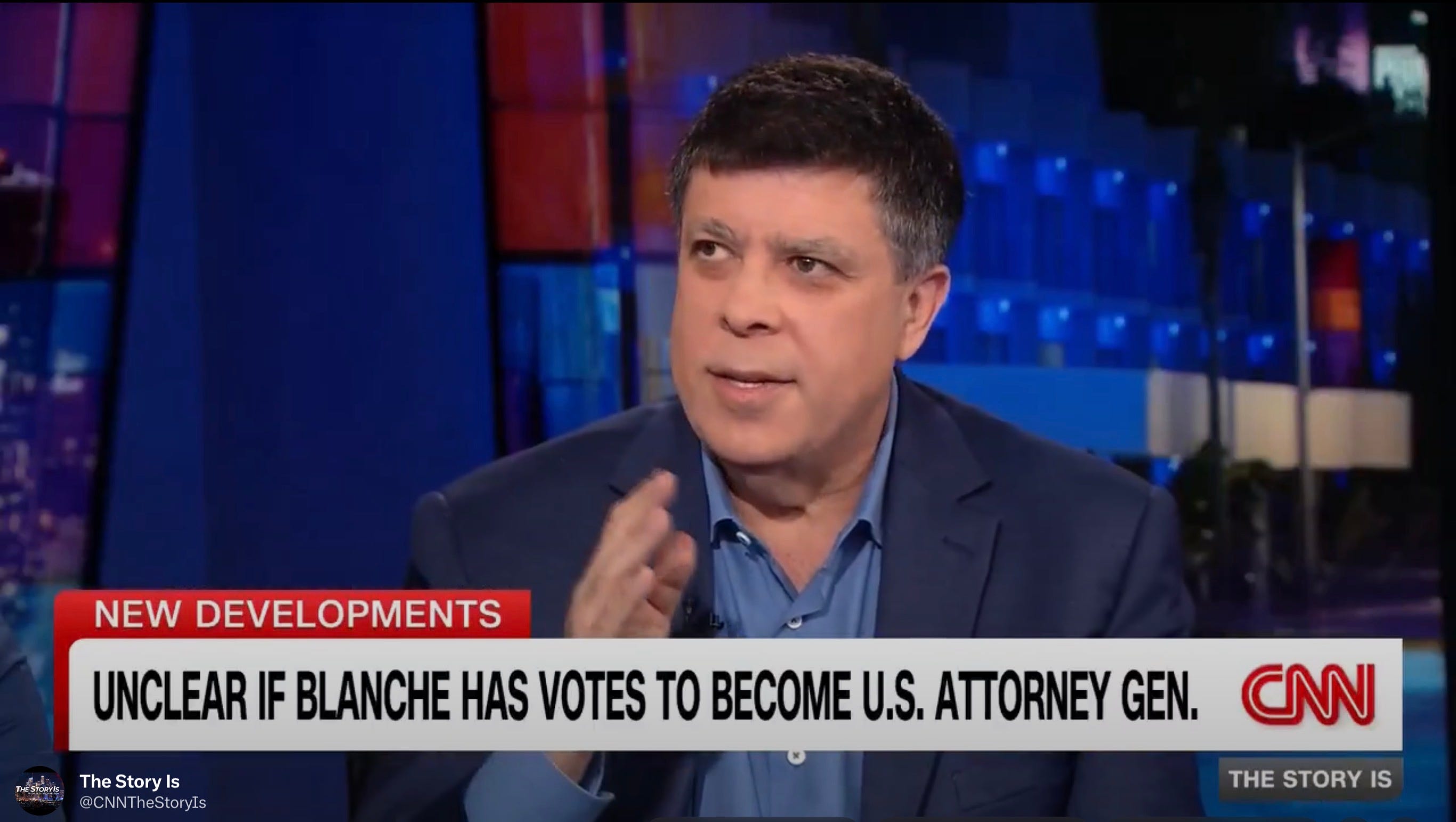
I made two appearances Wednesday night on CNN’s “The Story Is…” with host Elex Michaelson and my co-panelist, Democratic strategist Kevin Liao.
In the first hour, we discussed the political fallout from Michigan’s Senate primary and President Donald Trump’s nomination of Todd Blanche for attorney general. In the second, we turned to the ugly allegations surrounding Republican Congressman Max Miller, the political culture that encourages politicians to fight through almost any scandal and a much broader question about whether America’s higher-education system is still delivering what it promises.
Those may sound like completely unrelated subjects. But all four involve institutions confronting uncomfortable realities—and political leaders deciding whether to acknowledge them or simply keep fighting.
HERE ARE BOTH SEGMENTS PULLED TOGETHER INTO ONE YOUTUBE VIDEO (H/T ELEX!). BELOW IT ARE SOME NARRATIVES FOR BOTH SEGMENTS. SEGMENT TWO STARTS AT ABOUT THE 7:40 MARK!
SEGMENT ONE
Abdul El-Sayed And The Battle For Michigan
Our first panel began with Abdul El-Sayed’s victory in Michigan’s Democratic Senate primary. El-Sayed is unquestionably a talented communicator. He defeated more conventional Democratic candidates by presenting himself as the candidate of an angry progressive base that has little interest in returning to the party’s establishment.
That does not mean he is a strong general-election nominee. Quite the opposite. El-Sayed has embraced Medicare for All and other positions closely associated with the socialist left. He has refused to affirm the legitimacy of Israel as a Jewish state, arguing against nations organized around a particular religion. He has also supported a national approach to gender-transition policy.
Those positions may excite progressive activists. They also give Republicans an enormous amount of material to work with in a general election. The immediate Republican strategy will be to define El-Sayed before he can expand beyond the voters who supported him in the primary. At the same time, Republicans need to introduce former Congressman Mike Rogers as a serious and reasonable alternative who can appeal to independents and more moderate Democrats.
I also made clear that I was not impressed with an early Republican advertisement that dramatically emphasized El-Sayed’s full name. Republicans should attack what he believes. They do not need to play games with how his name sounds.
Michigan had not been expected to become one of the most expensive Senate races in the country. It probably will be now because Democrats rejected the safer nominee and chose someone significantly further to the left. That gives Republicans an opportunity. It does not guarantee they will take advantage of it.
SEGMENT TWO
Can Todd Blanche Get Confirmed?
On CNN, we debated Democrats’ risky Michigan nominee, Todd Blanche’s confirmation battle, the Max Miller scandal and whether America’s college system is failing an entire generation.
My view is that Murkowski is often transactional in these situations. When she is firmly opposed to a Republican nominee, she frequently says so early. When she remains publicly undecided, it can mean that negotiations are continuing over issues important to Alaska.
Cassidy may be the more serious problem. Trump intervened in several Republican primaries and helped force some incumbents toward retirement. Those senators have little reason to feel personally loyal to him. Cassidy may also have legitimate concerns about elevating the president’s former private attorney to lead the Department of Justice.
That relationship becomes particularly sensitive when the administration is already facing questions about whether government decisions have financially benefited the president. I still predicted that Blanche would ultimately be confirmed. But this is not an automatic vote, and Trump’s treatment of Republican senators has created political consequences that could surface when he most needs their support.
Max Miller And “The Phenomenon Of The Pin”
The second panel began with the extraordinarily serious allegations made against Republican Congressman Max Miller by his former wife, who is also the daughter of Ohio Senator Bernie Moreno. Miller has been accused of physical abuse, including throwing scalding water and holding a gun to her head. He denies the allegations and is continuing his campaign for reelection.
I described his strategy as “the phenomenon of the pin.” Once someone has that congressional pin on his lapel, he rarely wants to take it off. Miller’s strategy appears to be simple: Hold on for dear life, fight every allegation, and force voters to remove him. If he loses, it will not be because he voluntarily stepped aside.
He is entitled to the presumption of innocence in a court of law. Politics, however, is not a court of law. The damage extends well beyond Miller. It hurts Congress. It hurts the Republican Party. Most importantly, it forces his former wife and their child to endure a highly public and deeply personal fight.
His political position looks especially bleak because Senator Moreno, the senior Republican senator from Miller’s own state and the father of his former wife, has publicly said Miller needs psychological help and should not remain in Congress. Miller represents a strongly Republican district. I nevertheless said Republicans will probably lose the seat if he remains the nominee.
The discussion also turned to Miller’s earlier work for Trump, when he reportedly became known as “the Music Man” because he knew exactly what music to play at events to keep Trump happy. That personal relationship may help explain why Trump has not publicly pushed him aside.
Trump’s response was not that he was shocked or that Miller should leave Congress. It was essentially that he hoped things would work out for him. That is hardly a signal to withdraw.
Is America’s College System Still Working?
Our final subject was Vice President J.D. Vance’s criticism of higher education and the growing economic frustration among younger Americans. This was the most important conversation of the night because it reaches far beyond one candidate, scandal, or election.
For decades, young people have been told that everyone should attend college. The federal government then made enormous amounts of borrowed money readily available to almost anyone willing to sign the paperwork. Universities responded exactly as market incentives suggested they would: They raised tuition.
Students could borrow more, so colleges charged more. Degrees became increasingly expensive, students emerged deeply in debt, and many discovered that their education had not prepared them for the jobs available in the economy.
Artificial intelligence is now disrupting fields that were once considered particularly safe. Computer science, engineering and programming degrees were supposed to provide reliable access to well-paid careers. AI can already perform some of the work entry-level graduates were trained to do. That makes the underlying problem even worse.
Too many graduates are working in jobs that have little relationship to what they studied. They were sold a promise, borrowed heavily to obtain it, and entered a job market that often fails to deliver the expected return.
Vance is right that we need to rethink how higher education works in America. College is valuable for many people. It is not the only legitimate path, and it should not be treated as a universal entitlement financed through unlimited federal debt.
Kevin argued that this economic frustration helps explain why Medicare for All and other forms of democratic socialism appeal to younger voters. Many believe the existing system has never worked for them, so they are open to tearing it down and replacing it with sweeping government guarantees.
My answer was straightforward. Somebody still has to pay for all of it.
America is already approaching $40 trillion in national debt. Promising trillions of dollars in additional benefits does not solve the economic failures younger Americans face. It simply transfers the bill—and ultimately makes the underlying system even less sustainable.
Perhaps our colleges are teaching graduates how to become socialists. They are apparently doing a less reliable job of teaching them the skills needed to find work and pay off their loans.
Any feedback? Love to get it. If you got this via e-mail, just hit reply. Or send me a message using the big red button…