

Cesar Chavez’s Legacy Is Collapsing Under New Allegations. California Has To Rename Everything...
For decades, California politicians turned Cesar Chavez into a civic icon. Now, new claims from Dolores Huerta force a question that must be confronted pretty quickly.

⏱️ 6 min read
🎧 You can also listen to this on the “So, Does It Matter? Spoken” podcast channel on your favorite podcasting app or go here.
The Allegation That Changes Everything
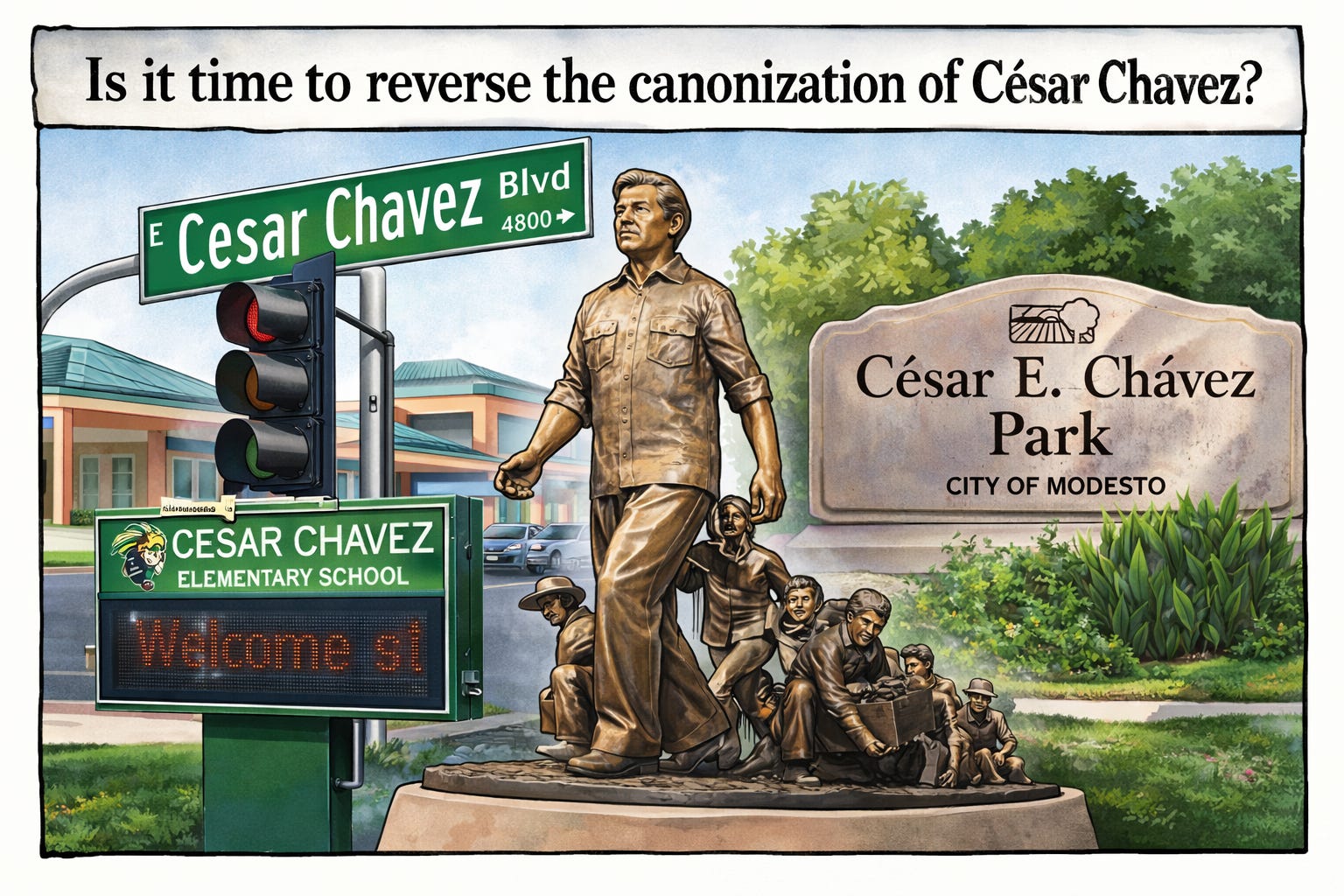
A controversy is moving fast—so fast that most Californians haven’t even noticed. But that won’t last, because of who’s at the center: Cesar Chavez. Chavez, the longtime farmworker leader and United Farm Workers co-founder, was elevated from activist to icon. For decades, he was untouchable. Not just a historical figure, but a symbol stamped onto schools, streets, government buildings, and even a state holiday.
That status is collapsing. Dolores Huerta, Chavez’s closest ally, has now publicly accused him of sexual assault—and, in at least one case, rape. She isn’t vague.
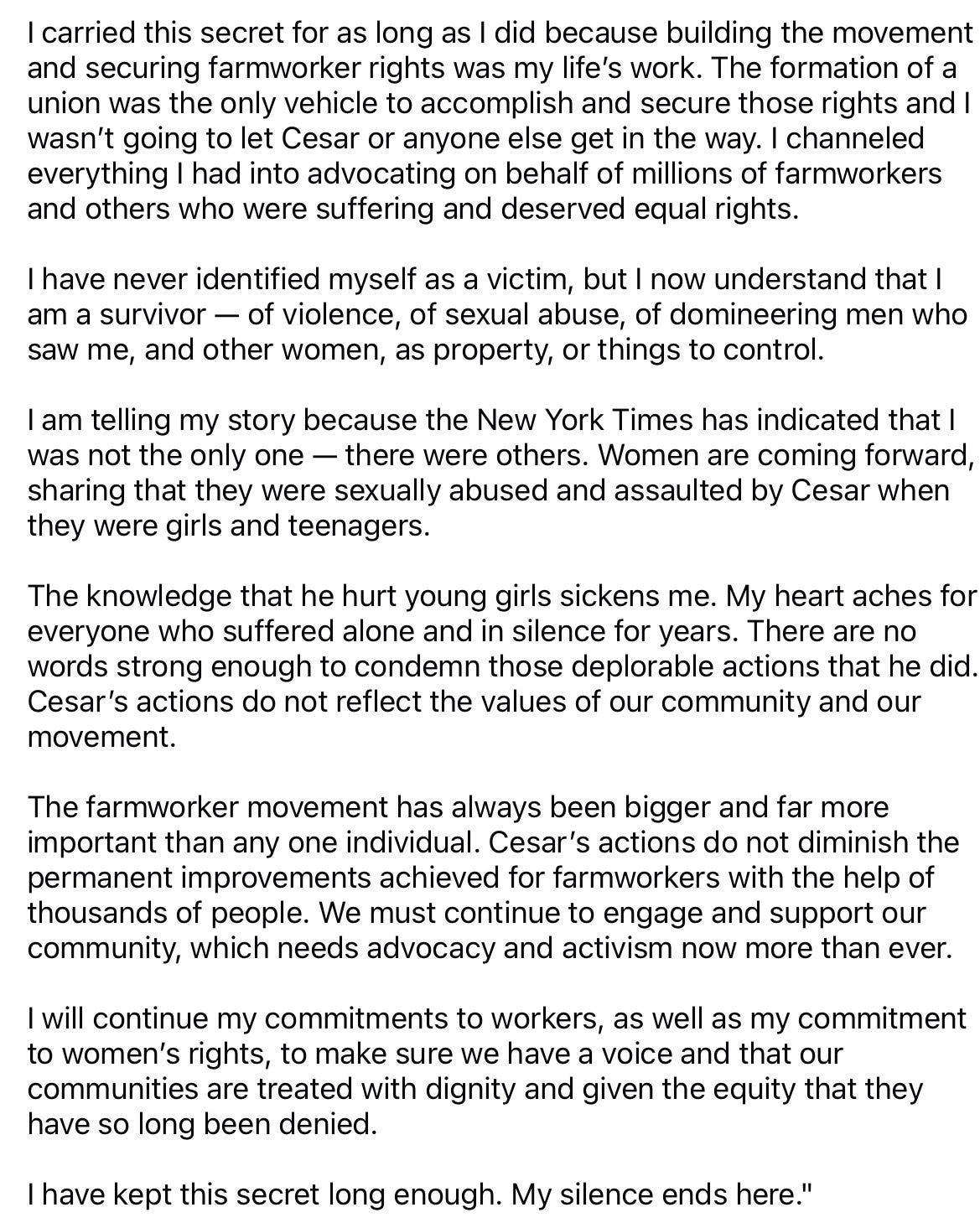
“The second time I was forced, against my will, and in an environment where I felt trapped.” She says these encounters resulted in pregnancies, that she stayed silent for decades to protect the movement, and that other women, including minors, were also abused. That is not coming from a critic, and it is not partisan revisionism — it is the person who stood beside him while the movement was built.
[I have put Huerta’s entire statement below this column.]
From Labor Leader To State Canon
For decades, California’s political class treated Chavez as untouchable. Not just respected. Not just honored. Elevated to canon status. In California, Chavez isn’t just a historical figure. He’s infrastructure.
His name is everywhere: government buildings, public schools, streets, parks, libraries, community centers, universities, and entire civic spaces. The state shuts down on his birthday. That’s not recognition. That’s institutionalized reverence.
That canonization came with an assumption: Chavez could withstand scrutiny. That assumption is collapsing in real time. When Dolores Huerta is the one making the allegation, this isn’t about ideology. It’s about whether California has been honest about the man it chose to elevate.
The Naming Problem Politicians Must Address
If these allegations are serious enough to cancel celebrations and force statements from the groups built to protect his legacy, then they’re serious enough to force a reckoning with every public honor attached to his name. Politicians can’t have it both ways. They can’t call the allegations ‘deeply troubling’ and keep honoring Chavez as if nothing happened.
Start with the obvious: March 31, the state holiday. That name is now a problem. It won’t be the only one. Here’s just a partial list of what’s now in the crosshairs:
Cesar Chavez Day (state holiday), Cesar Chavez Avenue (Los Angeles), Cesar Chavez Street (San Francisco), Cesar Chavez Parkway (San Diego), Cesar Chavez Boulevard (Fresno), Cesar Chavez Drive (Oxnard), Cesar Chavez Road (Salinas), Cesar Chavez Avenue (San Jose), Cesar Chavez High School (Stockton), Cesar Chavez Elementary Schools (multiple districts), Cesar Chavez Middle Schools (multiple districts), Cesar Chavez Academy and charter schools (various locations), Cesar E. Chavez Student Center (UC Berkeley), Cesar Chavez Student Center (San Francisco State University), Cesar Chavez Building (San Jose State University), Cesar Chavez Park (Berkeley), Cesar Chavez Park (Sacramento), Cesar Chavez Plaza (Sacramento), Cesar Chavez Park (San Diego), Cesar Chavez State Office Building (Los Angeles), Cesar Chavez Library (multiple locations), Cesar Chavez Community Centers (various cities), Cesar Chavez National Monument (Keene, California), and a bunch more… And this is just a California list…
I mean, who wants to walk into a school named after an alleged rapist?
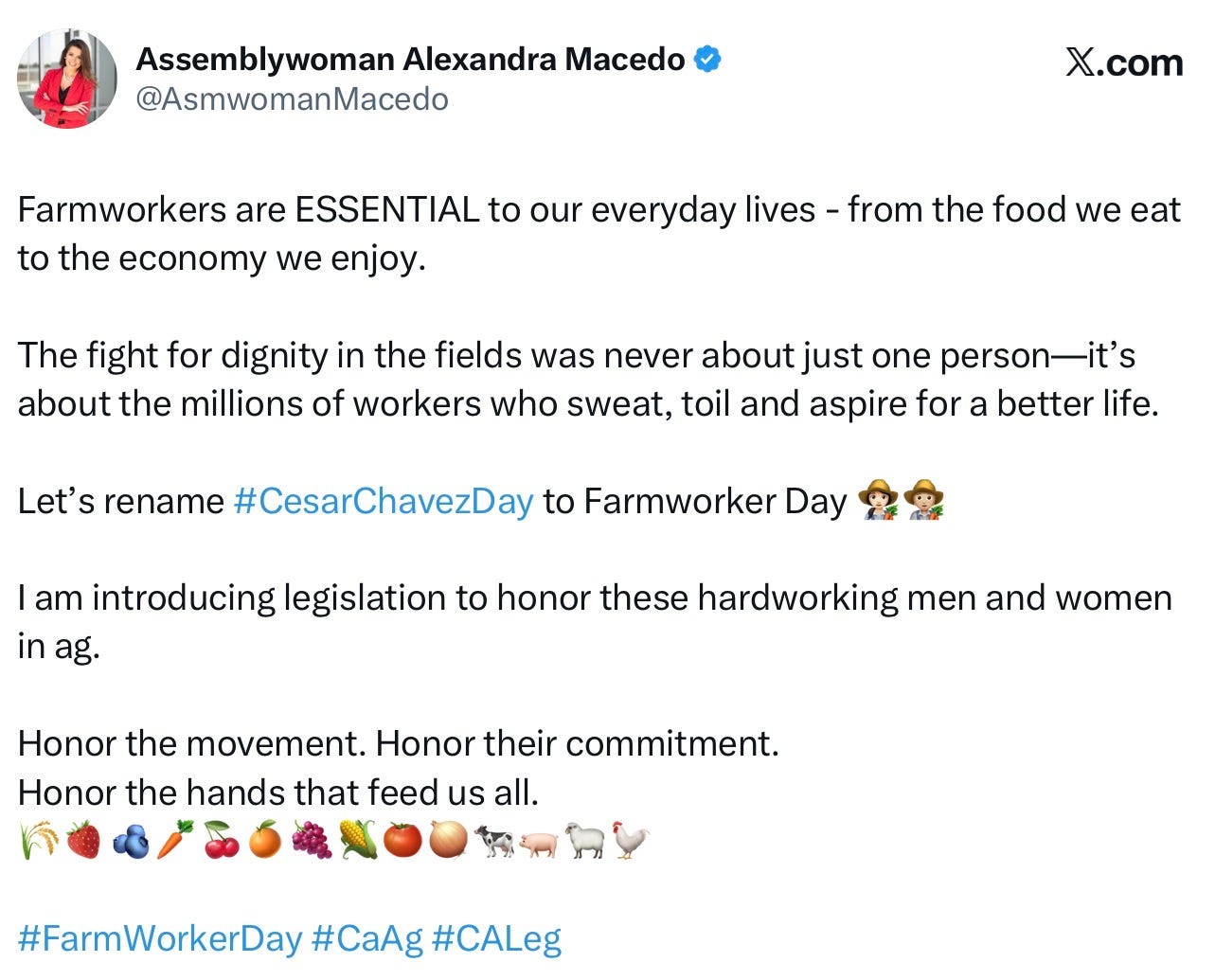
Every political body that oversees something bearing Chávez’s name now has a responsibility to act, and the pressure will not remain theoretical for long. There are already signs that this is beginning, as Assemblymember Ali Macedo is moving to strike Chávez’s name from the state holiday — an appropriate step given that her Central Valley district is deeply rooted in the agricultural communities Chávez built his reputation representing.
As the seriousness of these allegations sinks in, pressure will build on school boards, city councils, county supervisors, and state lawmakers to revisit past decisions and admit they got something wrong.
So, Does It Matter?
Addressing public adorations of Chavez matters because public honor is an endorsement. It’s not neutral. For decades, California didn’t just recognize Chavez. It elevated him, institutionalized him, and held him up as a model. That case is collapsing.
These aren’t outside attacks. These are direct allegations from the person who stood beside him. If true, the conduct is indefensible. At best, California built a myth on an incomplete story. At worst, it canonized a man who abused the very people he claimed to represent. Either way, the result is the same.
The names come down. If California is serious about what it claims to stand for, it can’t keep honoring him. We should pray for his victims. Many have had to live for years surrounded by his name, his image, his legacy. Dreadful.
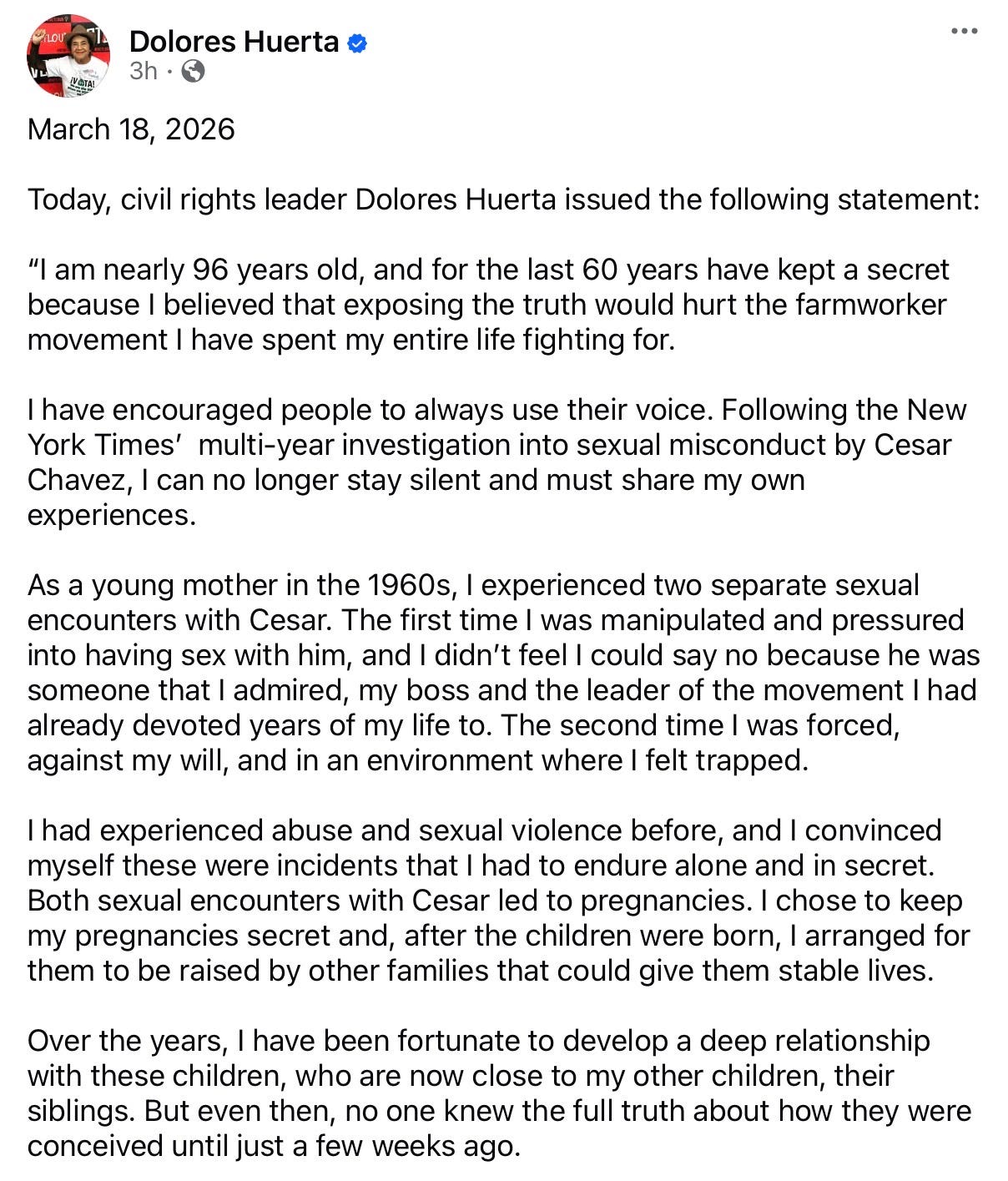
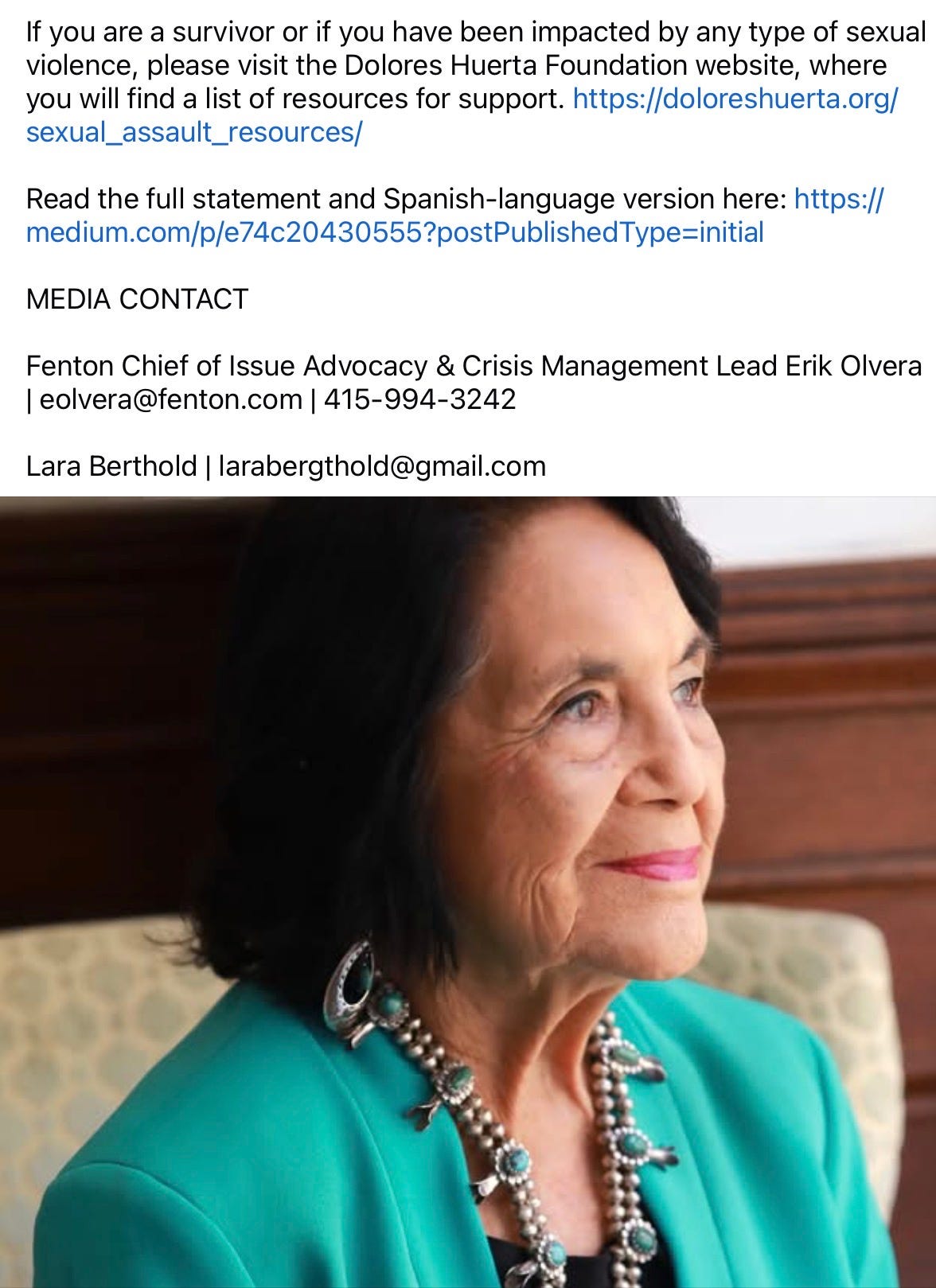
Delores Huerta’s Entire Statement (From her Facebook page…)
Did California officials who canonized him know he abused girls and women before they issued all the honorifics?
Do these allegations change the accomplishments he made?
If what he accomplished was a great thing he is not much different than any other flawed men who accomplished great things.
How about we teach that.
People are human. They make mistakes.
Great Men are sometimes also flawed.
There are no perfect people.
What Chavez did was wrong. But does it wipe away all his accomplishments?
Is Bill Clinton any less of a good president because he couldn't control himself sexually?
He still presided over a prosperous country. Provided an example of bipartisanship one rarely seen these days.
How about we start teaching kids people are complicated. We can hold the two ideas concurrently.
Thomas Jefferson had slaves but so did a lot of people. So it wasn't out of the ordinary for him to do so during that time. We have evolved as a society. Our values change. Jefferson
treated his slaves well. He wasn't a brutal slave holder. He brought Sally Hemmings to Paris society, she spoke French. He didn't sell off the children he had with her in some slave auction.
People say he loved her and she him.
People are complicated. Instead of teaching kids you must reach a state of perfection which is impossible, only sets children up for failure when they realize you can't obtain that status. Any mistake and life becomes pointless if there is no redemption.
That is what's wrong with the entire Progressive Project, erasure if you don't achieve the Utopian Status.
Chavez is not here to answer for the claims against him. We need to stop convicting people who are dead and long gone. Dolores Heureta suffered a terrible thing. I understand this. I'm not downplaying her suffering.
But admitting these allegations now, why? To what end? A guilty conscious as she nears the end of her life. It's been 33 years since his death.
Is she no longer afraid of tarnishing the farm worker movement?
Her act of unburdoning herself has huge consequences for the rest of California. Ethically and financially. We are too broke to change all the names of buildings, streets, parks anyway.