

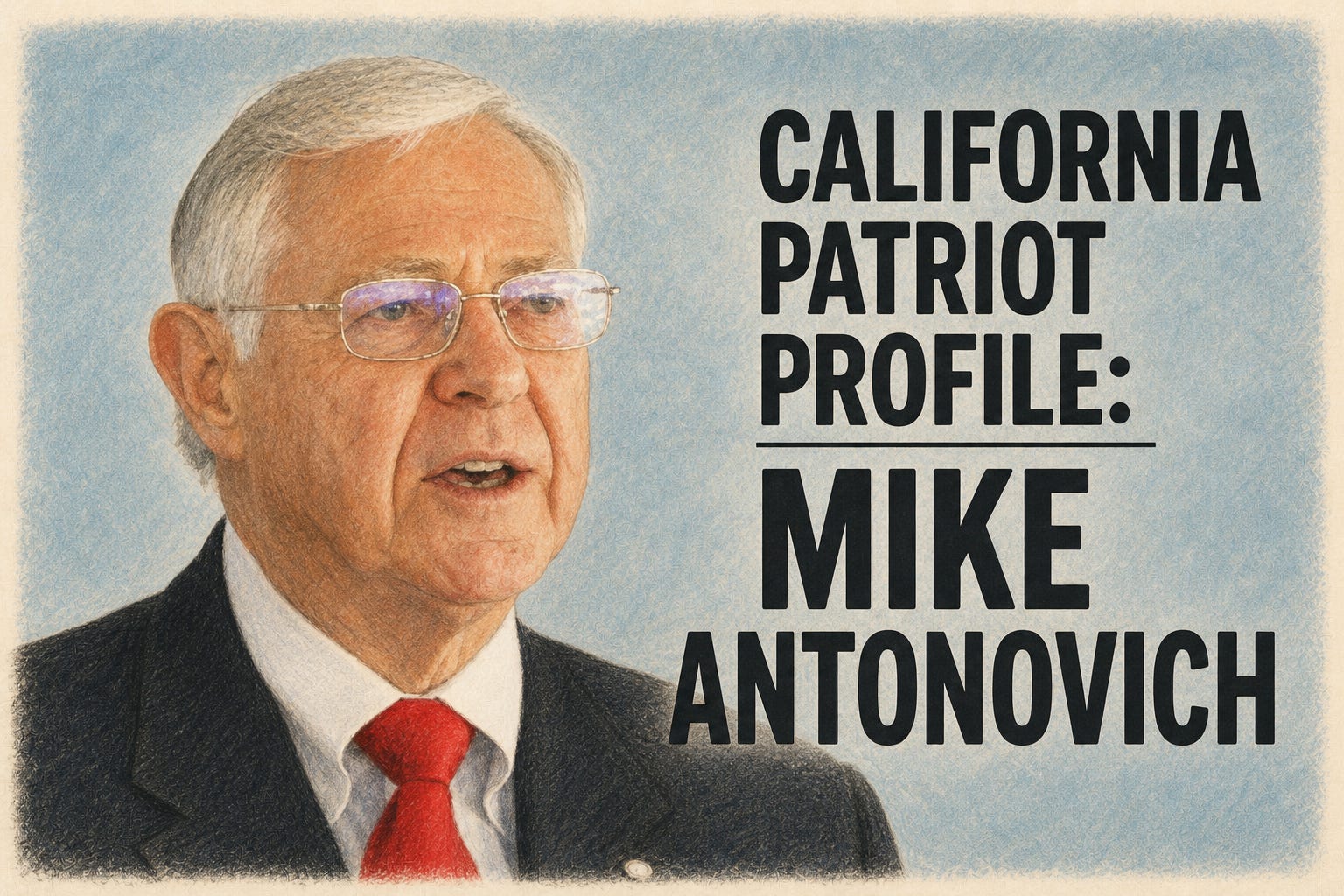
California Patriot Profile: Mike Antonovich, The Conservative Who Governed Los Angeles County
The conservative who spent 36 years governing America’s largest county.

Welcome to another edition of California Patriot Profiles. These profiles are open to all subscribers and guests. You can listen to this post on our podcast feed, So, Does It Matter? SPOKEN. It’s available on your favorite podcasting app, or you can find it here.
A note before we begin: Mike Antonovich has been a personal mentor of mine for nearly four decades and a valued friend. My first paying job in politics was as a campaign aide on his 1988 re-election campaign. I have tried to write this profile honestly, but readers deserve to know the relationship.
🕒 6 Minute Read
The Conservative On The Board
There are only five members of the Los Angeles County Board of Supervisors. Five people — overseeing a county of nearly 10 million residents, managing a budget that rivals that of many states, and exercising direct authority — and in some areas major regional influence — over public safety, public health, foster care, transportation, parks, welfare programs, and a vast network of services that touch the daily lives of millions.
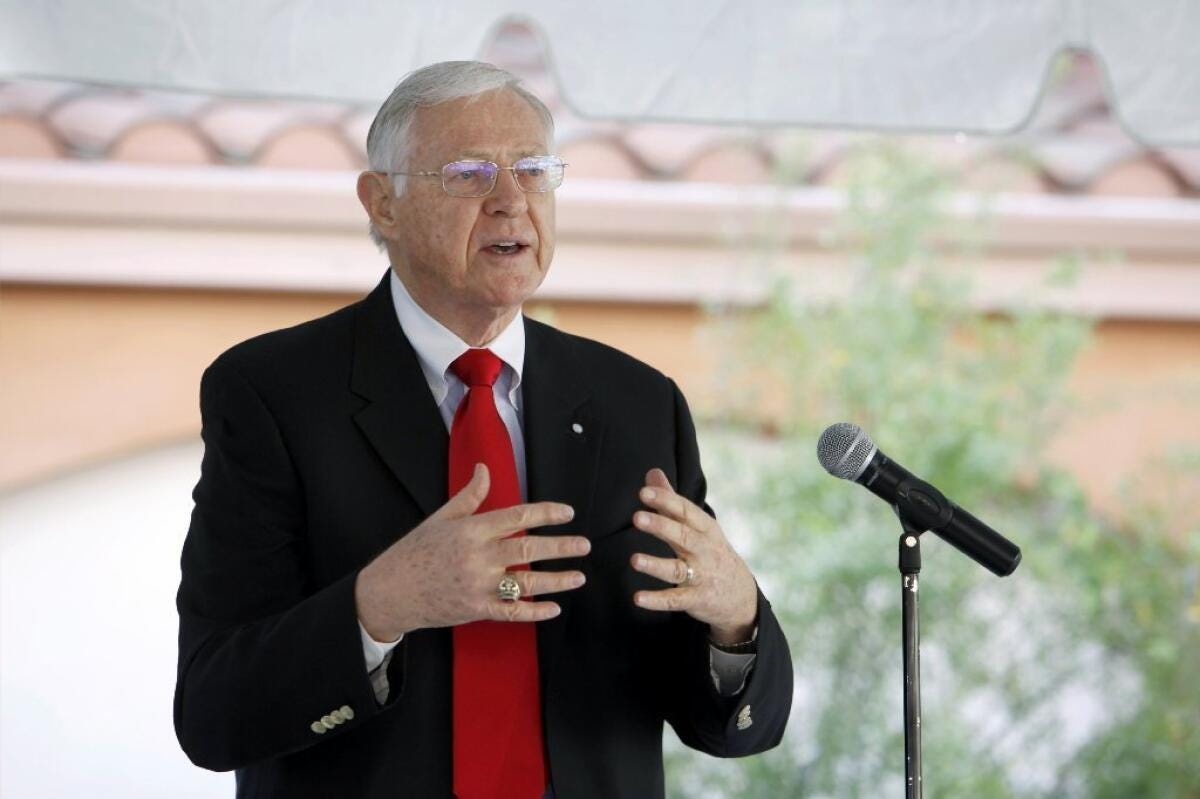
For 36 years, Mike Antonovich was one of those five votes. At times, he had conservative allies, including Pete Schabarum and Deane Dana. But as Los Angeles County politics drifted steadily left, Antonovich became the board’s most durable conservative voice — and eventually, its most consistent one.
This was not a ceremonial role. This was governing—at scale, under pressure, and against the prevailing political winds in a jurisdiction that grew more hostile to conservative ideas with each passing decade. Antonovich brought fiscal restraint into a government built to spend, law-and-order instincts into a county where public safety was endlessly debated, and a clear-eyed view of illegal immigration’s cost to taxpayers at a time when most elected officials preferred to look away.
When Antonovich defeated incumbent Baxter Ward in 1980, he stepped into the role that would define his public life. The Fifth Supervisorial District was enormous — stretching across large portions of northern Los Angeles County, including the San Gabriel, Pomona, San Fernando, Santa Clarita, and Antelope valleys. He represented suburbs, foothill communities, working families, immigrant neighborhoods, rural areas, law enforcement families, small-business owners — people who often felt far from the power centers of downtown Los Angeles.
He took the job seriously because it was a serious job.
Governing Los Angeles County From The Right
County government has a way of testing ideology against reality fast. Believing in fiscal discipline is easy. Applying it inside a government that spends billions and faces relentless pressure to spend billions more is something else entirely. Opposing illegal immigration in speeches costs nothing. Documenting its actual cost to county taxpayers — and absorbing the political heat that follows — is a different matter.
Antonovich did the harder thing, repeatedly.
He opposed tax increases, pushed privatization, and pressed county departments to justify their spending and remember that the money came from somewhere. President Ronald Reagan appointed him to the President’s Commission on Privatization — a recognition that under Antonovich’s pressure, Los Angeles County had already expanded its use of private contracts and produced real savings for taxpayers. If the private sector could do the job better and cheaper, he saw no reason to pretend otherwise.
Public safety ran through everything he did. He supported law enforcement, pushed for accountability of repeat offenders, and backed programs aimed at getting dangerous people off the streets. And his commitment was not rhetorical — he spent 31 years as a reserve South Pasadena police officer, logging more than 3,200 volunteer hours before receiving his retirement badge. That is not the résumé of someone performing toughness for the cameras.
On criminal illegal alien offenders, he moved when others flinched. He implemented HI-CAAP, targeting repeat criminal illegal alien offenders, and initiated D.I.S.A.R.M., aimed at removing firearms from probationers and other offenders. He worked on emergency alert systems and child-safety programs rooted in a simple conviction: protecting innocent people is the first thing government owes its residents.
Still, reducing Antonovich to a conservative dissenter on a liberal board misses something important. He cared genuinely about foster youth and adoption, pushing reforms to move children through the system faster and supporting programs to help young people aging out of foster care find their footing. He worked on transportation, parks, open space, public health, air quality, regional planning, and local economic development — the unglamorous work of governing a vast and complicated place.
And then there were the animals. For years, before board meetings, Antonovich would spotlight dogs and cats available for adoption — using whatever platform he had to help a shelter animal find a home. The same man who fought over billion-dollar budgets, illegal immigration, and pension reform would stop to make sure a beagle got a family. That is not a small thing about a person.
What He Did Not Accomplish
None of this should be mistaken for a record of triumph. Antonovich was outvoted — often, and on things that mattered. Los Angeles County government expanded substantially on his watch. The homeless crisis worsened. Pension obligations piled up to levels that still burden the county today. He raised alarms about the trajectory for years. His colleagues largely ignored him, and the majority kept spending.
One principled vote out of five can slow damage. It can force uncomfortable debates onto the record. What it cannot do, over the long run, is reverse the direction of a large institution that has decided where it wants to go. Antonovich understood this reality better than most. He stayed anyway.
The Goldwater-Reagan Conservative
Antonovich’s public life began long before the Board of Supervisors. He came of age during the rise of the modern conservative movement — volunteering for Barry Goldwater, campaigning for Ronald Reagan, and being part of a generation of California conservatives who treated limited government and constitutional restraint not as bumper-sticker slogans but as the genuine architecture of a free society.
Before politics, he was a government and history teacher in the Los Angeles Unified School District. There was always something of the civics teacher in him. Serious. Grounded in institutions. Impatient with political fashion and intellectual shortcuts. He won his first elected office in 1969, a seat on the Los Angeles Community College District Board of Trustees, and in 1972 was elected to the California State Assembly, where he eventually became Republican Whip.
He was a California delegate to multiple Republican National Conventions, including the 1976 convention in Kansas City — the one where Ronald Reagan came agonizingly close to taking the nomination from Gerald Ford, and where anyone paying attention could see that the conservative movement’s moment was coming regardless. (I admit to being jealous that Mike got to see this live!)
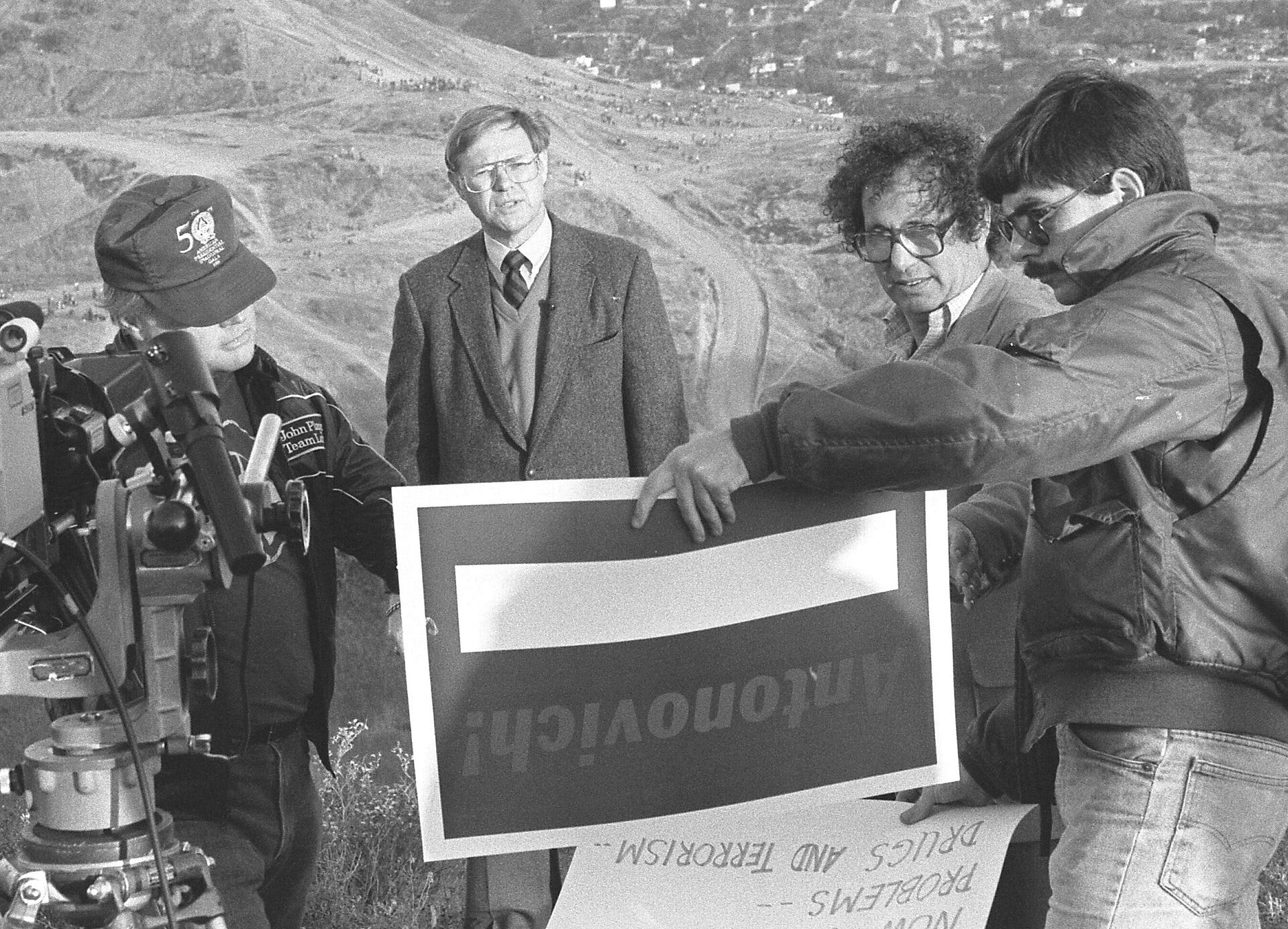
By the early 1980s, Antonovich had run statewide for lieutenant governor, chaired the California Republican Party, run for the U.S. Senate, and been appointed by Presidents Reagan and George H.W. Bush to advisory bodies on privatization, U.S.-Japan relations, Fulbright scholarships, and refugee policy. A significant career by any measure, with the Board of Supervisors as its longest and most consequential chapter.
The Mentor, The Husband, The Father
Mike Antonovich mentored many people over the years, not just me. A generation of California conservatives passed through his orbit and came away with a clearer picture of what principled local governance actually requires. He took ideas seriously. He took younger people seriously. He understood that the conservative movement was bigger than any single office or election cycle, and he behaved accordingly. He knew the difference between performing a principle and practicing it.
He practiced it.
Through all of it, the center of his life remains his wife Christine and his children — the anchor behind everything he does.
So, Does It Matter?
Mike Antonovich matters because he represents something California conservatives should not let themselves forget. He was not a commentator. He was not a critic standing outside the building.
He governed.
For 36 years, inside one of the largest and most complex local governments in America, he voted on budgets, fought with bureaucracies, and pushed his positions on crime, taxes, immigration, welfare, foster care, transportation, and public health. In his final years, as the board grew increasingly dominated by liberals, he kept showing up, kept fighting, and never once trimmed his convictions to make peace with the majority around him.
That is what conservative governance in a hostile environment actually looks like. Not a string of victories. A sustained presence. A refusal to become something else in order to fit in. Antonovich came out of the Goldwater-Reagan movement, served in the Assembly, chaired the state party, ran statewide, ran for Senate, was appointed by presidents, and mentored the next generation. But what defined him was simpler than any of that.
He showed up. He stayed. He never stopped being who he was.
That is exactly why he matters.
Los Angeles County Put Together This Video About Antonovich…
Check Out Our Library: Dozens of Other California Patriot Profiles!
Periodically, we profile an exemplary California conservative. Previous profiles have been of San Diego County Supervisor Joel Anderson Orange County Sheriff Don Barnes, Political Law Attorney Chuck Bell, Federal Judge Roger Benitez, the late Andrew Breitbart, actor and comedian Adam Carolla, HJTA President Jon Coupal, Assistant Attorney General Harmeet Dhillon, San Luis Obispo County District Attorney Dan Dow, conservative activist Steve Frank, actor Kelsey Grammer, investigative journalist Katy Grimes, pro-liberty attorney Julie Hamill, historian Victor Davis Hanson, Dr. Charles Kesler, Editor of the Claremont Review of Books, , longtime Nixon and Reagan speechwriter Ken Khachigian, Congressman Kevin Kiley, talk radio host John Kobylt, Former San Diego County GOP Chairman Tony Krvaric, the late Congressman Doug LaMalfa, Congressman Tom McClintock, Pastor Rob McCoy of Turning Point Faith, Former CAGOP Chairman Ron Nehring, the late Second Amendment champion Sam Paredes, talk radio hosts John Phillips and Dennis Prager, actor Gary Sinise, economist and author Thomas Sowell, actor James Woods, and constitutional scholar John Yoo.
You can go here to see them all! If you have an idea for a profile of a patriot, let me know!
For Our Paid Subscribers….
Below the paywall, I tell the craziest but most fun story ever, on video, about Mike… Like, if you haven’t heard this story, you won’t believe it.
What? Not a paid subscriber? Support my work, and get access to lots of extras on this site all the time!
