

California Anti-Tax Coalition Announces New Statewide Advertising Campaign
As state and local politicians eye new taxes, this effort could not come soon enough.

You can listen to this post on our podcast feed, So, Does It Matter? SPOKEN. It’s available on your favorite podcasting app, or you can find it here. Certain columns, like this one, are made available to all of our readers. Much of our content is reserved for paid subscribers. Find out more here.
⏱️ 4 min read
April 15 Is Just Behind Us, But In California, Every Day Is Tax Day
In California, taxpayers are never really off the clock. The burden is constant, Sacramento’s appetite is endless, and whenever state and local politicians create a new budget problem, their first instinct is to reach deeper into the pockets of the people already paying the bills.
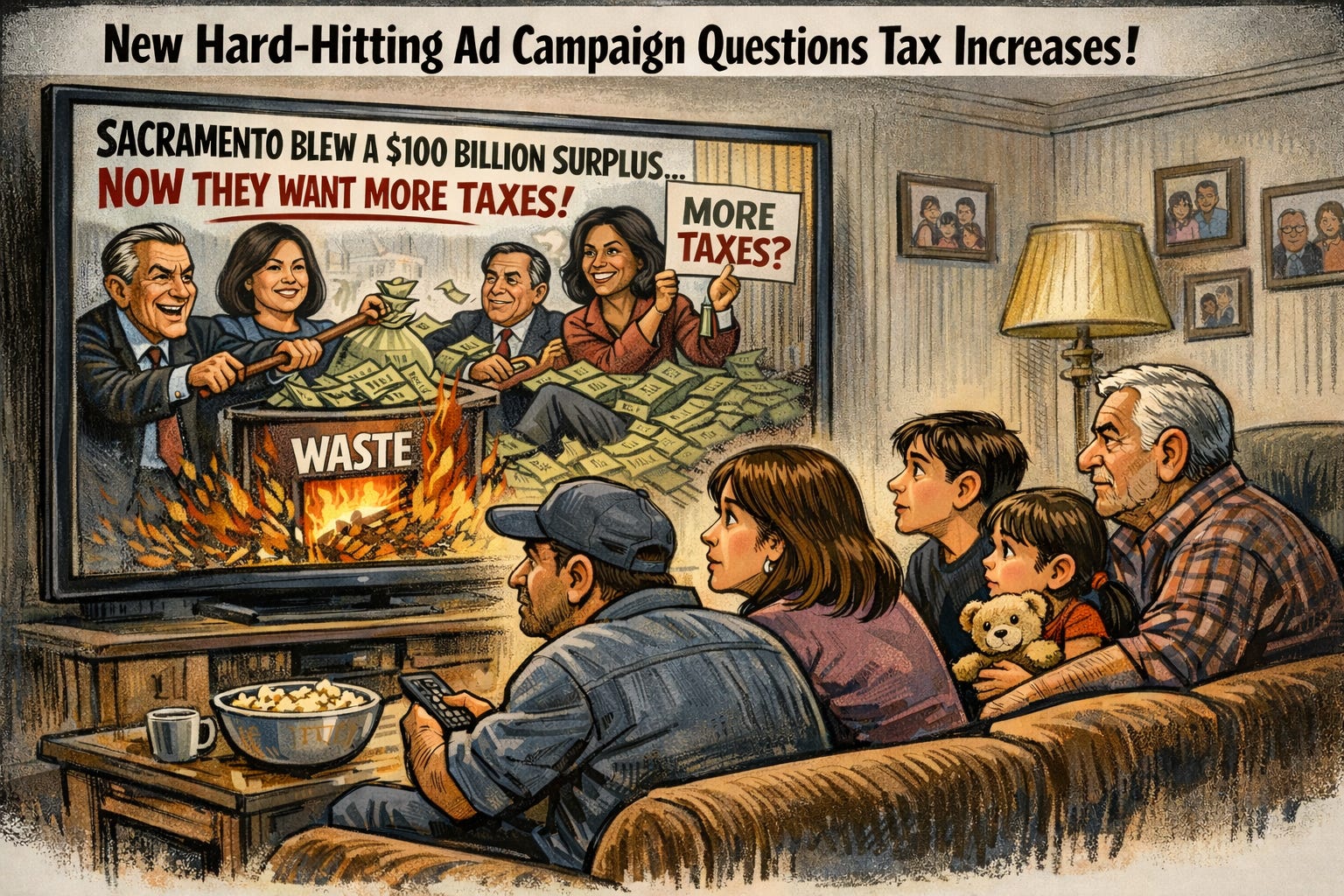
The coalition’s new 30-second ad, which I have posted below, gets straight to the point: Sacramento burned through a historic surplus, and now the same crowd wants taxpayers to bail them out again.
Californians Against Wasteful Spending and Higher Taxes is making a simple argument: California does not have a revenue problem. It has a spending problem. Before politicians ask taxpayers for one more dime, they ought to explain what they did with the last mountain of money they already had.
California politicians had a historic surplus. They had the chance to stabilize spending, clean up waste, and show that, when times were good, they could govern with at least a little discipline. Instead, they spent aggressively, spent politically, and spent as though the money would never stop flowing. Now the surplus is gone, the structural deficit is here, and the same political class that blew through the windfall is back looking for new ways to take more from taxpayers.
Rob Lapsley, president of the California Business Roundtable and co-chair of Californians Against Wasteful Spending and Higher Taxes, put it well when I spoke with him:
“We’re taking this fight directly to the public because California families deserve the truth. Sacramento politicians blew through a historic $100 billion surplus. Now, they want to come back for more taxes.”
Exactly right.
Waste, Mismanagement, And Broken Trust
This is not just another generic anti-tax message about California being expensive. Everyone already knows California is expensive. The real argument is that Sacramento cannot be trusted with more money because it has not shown it can responsibly handle the money it already takes.
And there is no shortage of evidence. The coalition points to billions lost to unemployment fraud during the COVID era. It points to tens of billions spent on homelessness with little to show for it. It points to bloated public works, delayed systems, and the now-familiar pattern of cost overruns, mismanagement, and opaque decision-making that has become standard practice in too much of California government.
The Tax Menu Never Ends
Lawmakers and allied interests keep floating new ways to squeeze more revenue out of Californians: higher sales taxes, broader taxes on services, higher income taxes, changes to deductions, higher corporate taxes, taxes on digital advertising, higher property-related taxes, taxes tied to the number of miles people drive, and, of course, the proposed wealth tax.
What makes this moment especially dangerous is the sheer volume of ideas now floating around at both the state and local levels, piled atop a tax burden Californians already struggle to carry. This is not one isolated debate. It is a habit. Whenever Sacramento wants to spend more, the answer is almost never reform, restraint, or accountability. It is to look for yet another way to squeeze more out of taxpayers who are already paying among the highest taxes in America.
Trust Is The Real Issue
For my part, while all of these tax proposals are awful, the most dreadful of the bunch is the proposed wealth tax. This is not really taxation in the traditional sense so much as it is a government taking. For the first time, California would be asserting the power to examine what a person already owns, assets accumulated over a lifetime of work, investment, saving, and risk-taking, and then simply confiscate a portion of that wealth.
Income taxes at least pretend to tax what comes in. A wealth tax reaches into what has already been earned, already been taxed in many cases, and already been converted into property, investments, or savings. It is invasive, punitive, and corrosive because it changes the relationship between citizen and state. It says your success is never really yours.
When I caught up with Jon Coupal, president of the Howard Jarvis Taxpayers Association, he put it this way:
“Last week was Tax Day, and Californians were reminded once again that Sacramento’s out-of-control spending is the real root cause of these new tax discussions. We cannot allow wasteful spending to be used as an excuse to make the California Dream even more expensive.”
Do Californians trust the people who blew through a huge surplus to suddenly become prudent stewards of new tax revenue? Do they believe the same crowd that tolerated waste, fraud, overruns, and failure is finally ready to reform itself? Do they think politicians who are already floating broader taxes will show restraint once they are handed a new revenue stream?
They should not.
So, Does It Matter?
Regular Californians understand cumulative burden better than politicians do. They know that every new tax, fee, surcharge, mandate, and regulatory cost eventually lands somewhere real: on a family budget, a homeowner, a renter, an employer trying to keep jobs here, or a retiree deciding whether California is still livable.
The political class likes to slice these costs into separate debates. Voters experience them as one reality. Californians are already paying premium prices for a government that too often performs like a discount operation.
So this new statewide campaign arrives at the right time with the right question: after all the waste, fraud, and spending excess Californians have already seen, why would anyone trust Sacramento with more of their money?
Because the real outrage is not just that Californians already pay so much. It is that after taking so much, Sacramento still wants more.