

*Breaking News* Newsom’s Prop. 50 Power Grab Just Got a Green Light From Two Democrat-Appointed Federal Judges
A split court decision has allowed partisan congressional maps to move forward, changing how California could influence the battle for control of Congress.

A Court Decision With National Consequences
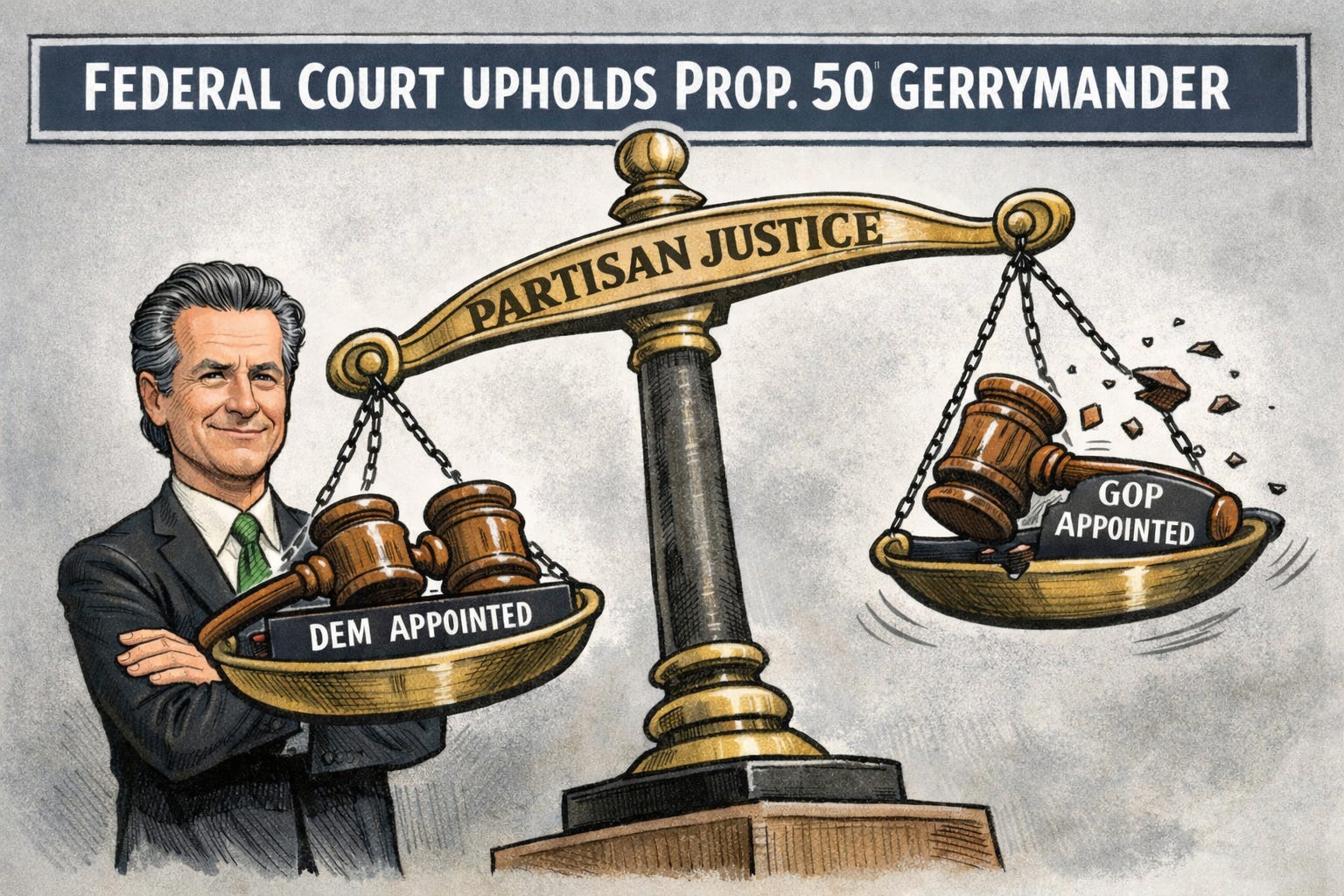
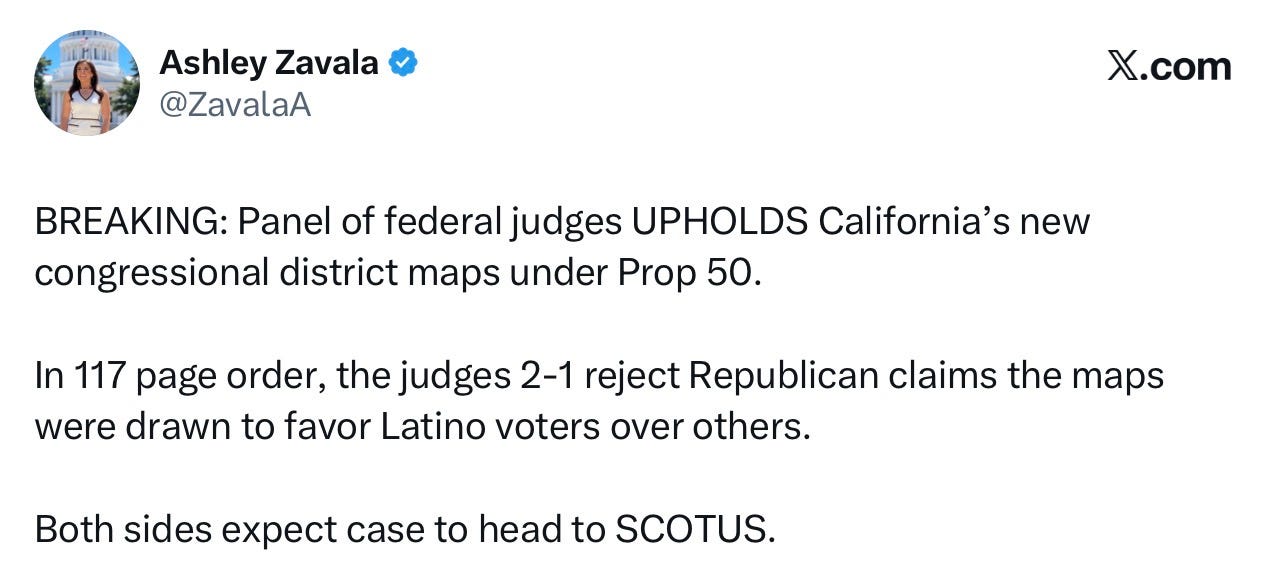
A federal three-judge panel in Los Angeles just dismissed a legal challenge to California’s new congressional maps, so the districts created under Gavin Newsom’s Proposition 50 will now be used. This decision allows maps that are openly intended to help Democrats in future congressional elections.
The judges voted 2 to 1. Two judges appointed by Democratic presidents supported the Newsom administration, while the dissenting judge was appointed by a Republican president. The court decided not to block the maps, saying the challengers did not show that the districts were drawn primarily for racial gain rather than partisanship.
Because of this, the new map will shape California’s congressional elections starting in 2026. It will flip several seats currently held by Republicans and change the balance of power in Congress.
How Prop. 50 Rewrote the Rules
Proposition 50 was presented to voters as a temporary and needed answer to aggressive redistricting by Texas Republicans. In reality, it was a big change from California’s usual effort to keep politicians out of drawing congressional maps. And look for a follow-up measure from Democrats to try to permanently restore line-drawing to the legislature.
For years, state leaders supported an independent redistricting commission to prevent this kind of partisan influence. But when control of Congress was on the line, that idea was set aside. The Legislature and governor stepped in and created maps specifically to change California’s congressional delegation.
The court’s ruling does not challenge the political motive behind the maps. Instead, it accepts it. Right now, federal courts mostly cannot address partisan gerrymandering, so opponents must prove that race was the main factor. The judges decided that this was not proven.
The Supreme Court Clock
Republicans are Republicans are likely to appeal and could ask the U.S. Supreme Court for emergency relief or a quick injunction to stop the maps. This option is still available, but timing is important. If the high court agrees to consider such a request, it is widely viewed as unlikely that the justices would intervene on a schedule that could affect the 2026 congressional elections. The Supreme Court’s calendar, combined with election administration deadlines, makes late-stage disruption improbable.
In practice, the maps approved under Proposition 50 will probably be used for the next election cycle, no matter what happens in court.
So, Does It Matter?
This ruling is not just a neutral use of existing law. Partisanship clearly influenced both the making of these maps and the decision to approve them.
Two judges appointed by Democratic presidents supported a Democratic redistricting plan meant to influence control of Congress. The only dissent came from a judge appointed by a Republican president. This matters because it adds to the idea that case outcomes depend more on who the judges are than on the facts.
The majority agreed that partisan drawing of congressional districts is allowed as long as it is not mainly about race. This decision rewards California’s leaders for avoiding the neutral redistricting process that voters expected would stop this kind of result. The court did not just allow it—they approved a strategy that weakens fair congressional representation.