


⏱️ 7 min read
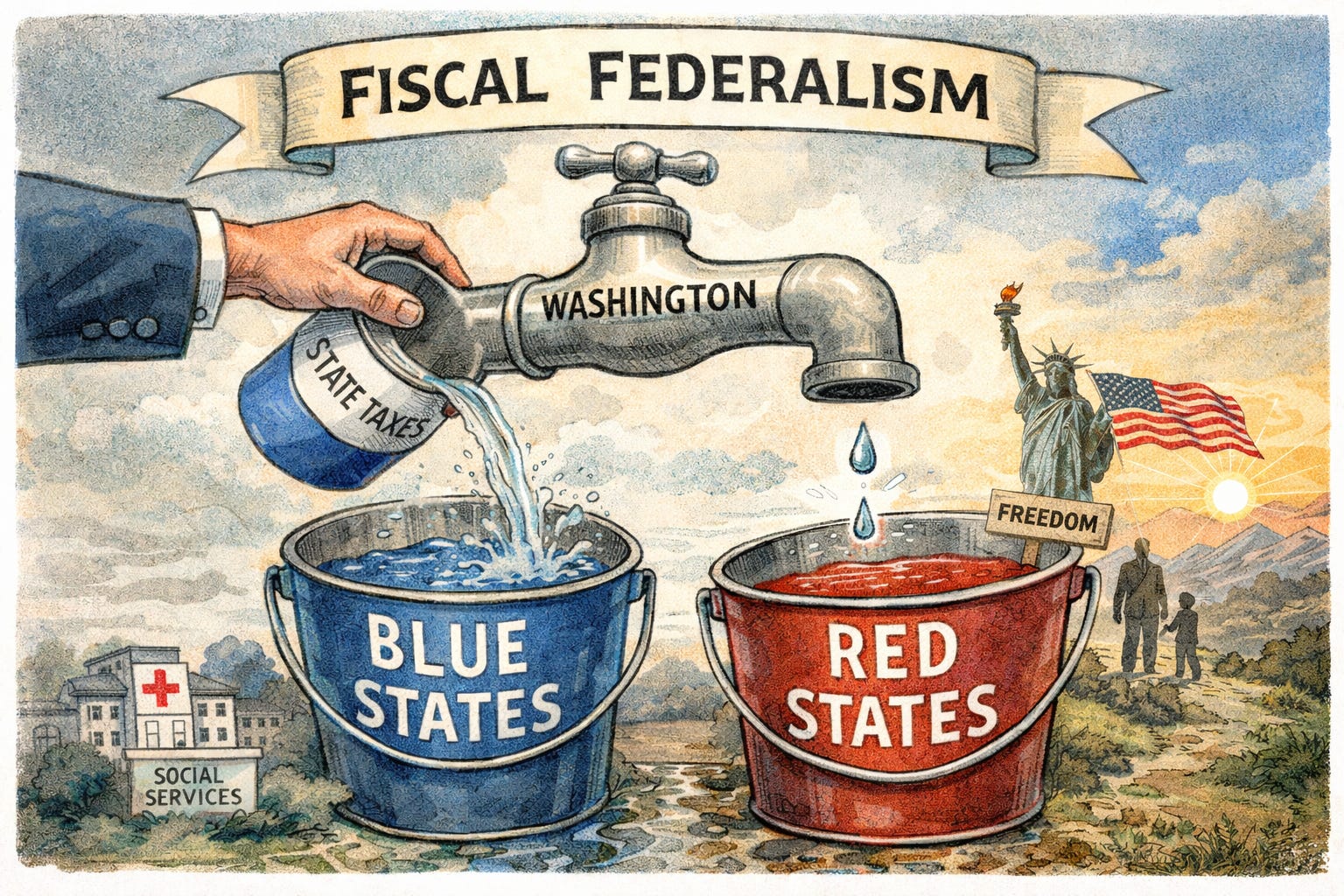
A National Shift, Seen Clearly In California, This Isn’t Just A California Story
In blue states and big blue-run cities, elected officials are confronting the same new reality: Washington has cut funding for major domestic programs, and now state and local governments must decide whether to replace that funding, reduce services, or do both.
Because we live here, California gives us a front-row seat. But what’s happening in the State Capitol, Santa Clara County, Los Angeles County, and cities like San Francisco is part of a broader national sorting process. Different parts of America are responding to the same federal retrenchment in very different ways. That resembles federalism in action, whether the authors of the federal law intended it or not.
What Washington Actually Did
Last year’s One Big Beautiful Bill Act wasn’t a narrow budget tweak. It was a massive reconciliation package packed with a wide range of priorities from a Republican White House and Congress. Taxes, spending, eligibility rules, and program requirements were all rolled into one bill.
It passed using the budget reconciliation process, allowing it to clear the Senate without the usual 60-vote threshold and with only Republican votes. Whatever your view of the policy, the practical effect is clear: the federal government reset the financial terms of major programs. When Washington pays less or adds conditions, the difference doesn’t vanish. It lands in state budgets.
The Bill Lands In State Capitols
That’s where the real action is now.
States face the same math. Federal support is lower or more conditional. Program rules are tighter. Administrative requirements are higher. Governors and legislators have a short list of options: raise more state revenue, cut services, or redesign programs to align with the new federal baseline.
Red-leaning states, in general, have been more willing to accept smaller programs and tighter eligibility requirements to keep taxes lower. Blue-leaning states have generally been more inclined to preserve a broader safety net, even if it means higher taxes or shifting money from other priorities.
These differences aren’t abstract. They show up in budgets, ballots, and line items.
California As A Case Study
Here in California, our Democratic leaders have made it clear that, in certain areas, they are unwilling to accept the full impact of the federal pullback.
A clear example is funding for entities that abort babies. When federal policy changes cut off Medicaid reimbursements to Planned Parenthood clinics, California lawmakers approved (like this week) a one-time $90 million state package to keep those clinics operating. That was a direct decision to replace lost federal dollars with state taxpayer money.
At the same time, Sacramento is not backfilling everything. State budget planning reflects tighter Medi-Cal rules, more frequent eligibility checks and verification requirements, and adjustments to coverage categories that are expected to reduce enrollment over time. California is choosing where to absorb the hit and where to pass it through in the form of smaller programs.
That mix of backfill and retrenchment is not a contradiction. It’s triage. Lawmakers are protecting what they see as core priorities while letting other parts of the system contract.
Counties Are Going Straight To The Voters
The sorting becomes even more visible at the local level.
Santa Clara County voters approved a 5/8-cent sales tax, projected to raise about $330 million a year, a measure county leaders framed as necessary to address a significant health funding gap tied to federal cuts. Officials described the situation as a fiscal emergency and asked residents to help fill the gap left by Washington. The original ballot summary of the measure even targeted President Trump by name, which did not survive judicial scrutiny.
Los Angeles County is moving in a similar direction, voting this week to put a sales tax on the ballot to support government health services that officials say are at risk amid reductions in federal and state health funding. The message is straightforward: if Washington sends less, local taxpayers will need to send more.
That approach is politically viable in many blue counties. Voters who strongly support public health systems and social services are often willing to pay more to maintain them. In other parts of the country, that same proposal would be far less likely to succeed.
Federalism Without The Slogans
For years, arguments about federalism were mostly rhetorical. Now they’re fiscal.
Washington has stepped back. States and local governments are deciding how much of that gap they want to fill and how. In blue jurisdictions, that often means higher taxes and sustained spending. In red jurisdictions, it more often means smaller programs and lower taxes.
Neither model eliminates choices. One asks taxpayers to pay more to maintain a broader safety net. The other asks beneficiaries to adjust to a leaner system. Both reflect political judgments about what voters in those places will tolerate.
This resembles the laboratory-of-the-states idea, not as a theory-class concept but as a set of real-time budget decisions.
A Country Dividing Along Policy Lines
Over time, these choices will compound. The gap between high-tax, high-service states and lower-tax, leaner-service states will widen in residents’ lived experience.
Where you live will increasingly shape the safety net available to you, the taxes you pay, and the level of public services you receive. In some places that will mean higher local taxes and preserved broader access to government programs; in others it will mean narrower eligibility and leaner systems.
Federal retrenchment hasn’t ended the debate over domestic spending. It has shifted it to statehouses, county boards, and city councils, where the consequences are harder to ignore, and the bills are closer to home. To be clear, this concerns a relatively small amount of federal funding allocated to state spending. But it’s a start!
So, Does It Matter?
Federal pullbacks are forcing state and local leaders to put a price tag on their priorities in plain view. If they want to preserve a broad set of services, they have to raise the money themselves. If they want to keep taxes lower, they have to accept leaner programs. Voters can now see those trade-offs more clearly and reward or punish the people making them.
It’s unclear whether this was an intended feature of the federal law or reflects any lasting philosophical shift in Washington regarding the proper balance between federal and state power. This version of fiscal federalism may prove fleeting rather than a permanent reordering.
But while it lasts, it is revealing something important. States are making governance choices that more closely reflect their residents’ preferences. The country may feel more divided, but it is also becoming more honest about who pays, who benefits, and what kind of government each place is willing to fund.
A Video Commentary on “Fiscal Federalism”
Below the paywall is a commentary by Jon Fleischman that dives into fiscal federalism, the challenges posed by the national debt, and the scope of responsibility assumed by the federal government that is much broader than intended by the Constitution.
If you support my independent take on issues, including calling balls and strikes as a constitutional conservative, consider a paid subscription. It helps me to do even more!
